(джаз-гитара)
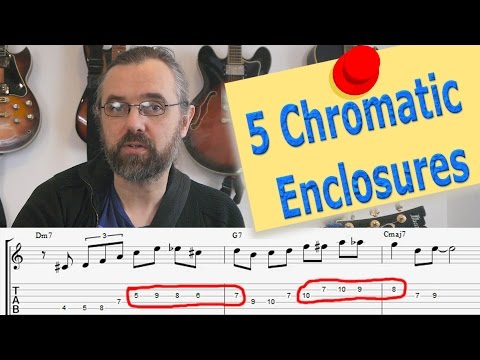
Chromatic approach - 5 Jazz guitar Licks with chromatic notes - Guitar Lesson
YouTube Video · Jens Larsen · 20 июля 2026 г.
Jens Larsen (DK) · educator
Global benchmark for jazz guitar education, deep analysis of modern bebop, enclosures and Barry Harris
Расшифровка видеосубтитры автора · EN · RU
Нажмите на таймкод, чтобы перейти к моменту в видео
(jazz guitar music) - Using chromaticism has been a part of the jazz tradition since bebop. For many people a big part of the sound of a jazz solo, especially a bop melody, is the use of the chromatic passing notes.
(джаз-гитара) Использование хроматики было частью джазовой традиции со времен бибопа. Для многих людей большая часть звучания джазового соло, Особенно боп-мелодия, это использование хроматических проходных нот.
In this video I'm gonna go over five different examples of chromatic enclosures. I'm also gonna go over some examples that are gonna show you how easy it is, that if you know all your basic arpeggios,
В этом видео я расскажу о пяти различных примерах хроматических корпусов. Я также приведу несколько примеров, которые покажут вам, как это легко. Если вы знаете все основные арпеджио,
you can use these chromatic enclosures to get your lines to sound a lot more jazzy. All the examples that I'm gonna go over in this video are in the key of C, so they're just a II V I in the key of C. I'm gonna use the enclosures that I'm talking about and demonstrating in the
вы можете использовать эти хроматические корпуса, чтобы ваши линии звучали намного более джазово. Все примеры, которые я собираюсь рассмотреть в этом видео, находятся в ключе от C. Так что это всего лишь II V I в ключе от C.
beginning of the lesson. Then I'm going to use some fairly basic arpeggios for each of the chords. The first one is actually a personal favorite that I use really a lot. And that's this one. Here I'm starting a half step below so really with the chromatically note below it.
Я буду использовать вольеры, о которых я говорю и демонстрирую в Начало урока. Затем я собираюсь использовать некоторые довольно простые арпеджио для каждого из аккордов. Первый из них, на самом деле, является личным фаворитом, которым я пользуюсь очень часто. И вот этот.
Then I'm skipping up to a whole step above, going down chromatically towards it, then down under again and then I resolve on the three. The second one sounds like this. So the idea here is that we start a whole step below and then we move up towards the
Вот я начинаю на полшага ниже, так что действительно хроматически примечание под ним. Тогда я проскальзываю на шаг выше, Хроматично спускаясь к ней, Затем снова вниз, а затем я решился на три. Второй звучит так.
G but then instead of going to the G we go up a whole step above. So up to the A and then chromatically down.
Итак, идея здесь заключается в том, что мы начинаем целый шаг ниже, а затем двигаемся вверх к G, но вместо того, чтобы идти к G, мы поднимаемся на целый шаг выше. До А, а затем хроматически вниз.
The third example sounds like this. Here I'm slow skipping around first so we are starting fairly far away. I'm starting a whole step above, going a whole step under, and then I'm moving up chromatically. Then the other side chromatically also.
Третий пример звучит так. Сначала я медленно прыгаю, поэтому мы начинаем довольно далеко. Начинаю шаг выше, иду на шаг ниже. А потом я хроматично двигаюсь вверх. Другая сторона хроматически тоже.
Then resolving. The next one sounds like this. This is almost reverse of what we just did. I'm starting a whole step below. Then skipping up to a whole step above. Then I'm going down chromatically.
Тогда решение. Следующий звучит так. Это почти обратное тому, что мы только что сделали. Я начинаю шаг внизу. Затем перепрыгнуть на целый шаг выше. Тогда я хроматично спускаюсь.
Then under, and then resolving. Then we have the last one. Here I'm starting a whole step above. Then moving down to a whole step below. Then chromatically up to resolve. The way you're gonna use this in a line is that you're gonna take a core tone that you decided in advance.
Затем под а затем разрешать. Тогда у нас есть последний. Вот я и начинаю шаг выше. Затем спуститься вниз на целый шаг ниже. Затем хроматично до растворения. То, как вы собираетесь использовать это в строке, так это то, что вы будете иметь основной тон, который Вы решили заранее.
This is the note I want to target. Then you put the enclosure in front of it. This means that you have a way of either suspending` the sound of the chord. You're gonna be starting in the beginning of the bar with the enclosure and then the
Это записка, на которую я хочу ориентироваться. Затем поставь перед ним ограждение. Это означает, что у вас есть способ либо приостановить звучание аккорда. Вы начнете в начале бара с ограждением, а затем Звук аккорда на самом деле не появится, пока вы не будете на третьем бите.
sound of the chord won't really appear until you're on beat three. Or you're using it at the end of the bar and then you're targeting a core tone in the next chord. Both work really well because the idea with the chromatic enclosure is that they're
Или вы используете его в конце бара, а затем вы нацеливаете основной тон в Следующий аккорд. Оба работают очень хорошо, потому что идея с chromatic enclosure заключается в том, что они Они действительно движутся к ноте, на которую они решаются.
really driving towards the note that they're resolving to. In this first example, I'm using the first enclosure that I went over. I'm simply just starting with it. We're essentially delaying the sound of the D minor onto the third beat.
В этом первом примере я использую первый корпус, который я прошёл. Я просто начинаю с этого. По сути, мы откладываем звук D минор на третий удар. Потому что там у нас есть буква «F», которая является запиской, на которую мы нацелены. Это вольер, а затем он переходит к F.
Because that's where we have the F which is the note that we're targeting. That's the enclosure then it resolves to the F. Then I'm skipping down from the F to the fifth to A. Then back up. Then on the G7 I'm again using a chromatic enclosure.
Тогда я спускаюсь с F на пятую до A. Тогда вернись. Затем на G7 я снова использую chromatic enclosure. Это не тот, о котором я говорил на этом уроке, но это также очень распространенное явление. Я начну с четвертого. Тогда я использую три ноты, чтобы добраться до третьей.
It's not one that I actually talked about in this lesson but it's also a very common one. I'm starting on the fourth here. Then I'm using three notes to get to the third. I'm delaying the sound of the G7 until the two round.
Я откладываю звук G7 до двух раундов. Затем я запускаю то, что по сути является плоской G7 9 arpeggio. Затем переходит на третью часть С. Затем по пентатонической шкале E минор.
Then I'm running down what is essentially a G7 flat nine arpeggio. Then resolving to the third of C. Then over an E minor pentatonic scale.
В этой строке я начинаю с очень простой D минор рисунка, который Это всего лишь один, два, три, пять. Так что D, E, F, A. Затем я использую chromatic enclosure, так что второй нацелен на пятую часть G7. Это значит, что в линии «Д минор» я уже решил, что хочу ударить «Д» на «Д».
In this line I'm starting off with a very simple D minor pattern which is just a one, two, three, five. So D, E, F, A. Then I'm using the chromatic enclosure so the second one to target the fifth of G7.
Один из них в G7. Я делаю это с этого корпуса. После этого я иду в D, конечно же, Решить там. Затем несколько аккордов, до 9-й квартиры. Тогда я просто продолжаю diminished arpeggio. После этого на четыре и на третью букву «С», который является E.
That means that in the D minor line I'm already deciding I want to hit the D on the one in the G7. I'm doing that with this enclosure. Then from there I go to the D of course, resolve there. Then a few chord notes, up to the flat nine.
Тогда, как показ таска, Я просто хроматично перехожу от D к B, что С девяти до седьмого по майору.
Then I'm just continuing up the diminished arpeggio. Then resolving that on four and to the third of C, which is E. Then as a show of tack, I'm just going chromatically down from D to B which is from the nine to the seventh on the C major.
В этом примере я начинаю с вольера, и мы снова Нацеливаться на третьего Д минора, потому что это очень хорошая четкая нота для цели. Начинаю шаг выше, Целый шаг ниже. Затем хроматично вверх, а затем хроматически ведущая нота выше. Затем до третьего.
In this example, I'm starting off with the enclosure and we're again targeting the third of D minor because that's a very nice clear note to target. I'm starting a whole step above, a whole step below. Then chromatically up and then the chromatically leading note above.
Тогда отсюда это просто масштабная пробежка. Затем я снова использую chromatic enclosure для задержки Пятая часть Дж. Я делаю это с использованием первого примера, который я рассмотрел в первом примере. Как только я здесь, я просто запускаю diminished arpeggio.
Then down to the third. Then from here it's just a scale run. Then I'm again using a chromatic enclosure to delay the fifth of G. I'm doing that with using the first one that I went over in the first example. Once I'm here I'm just running down the diminished arpeggio.
G7 flat nine будет иметь B diminished arpeggio, и это инверсия arpeggio. Затем добавьте его к пятой части C, а затем просто добавите. Эти тактики заканчиваются на девятке.
G7 flat nine will have a B diminished arpeggio and that's this arpeggio inversion. Then resolving that to the fifth of C and then just adding these tacks to end on the nine.
В этом примере я использую другую идею, которая также очень распространена для более bop-линий. То есть я использую перед arpeggio ноту. Я начну с одного, а потом хочу поиграть в D минор семь arpeggio. Но я начну с острых букв, чтобы привести к Д.
In this example I'm using another idea that's also very common for a more bop lines. That is I'm using a leading note before an arpeggio. I start on the one and and then I want to play a D minor seven arpeggio, but I start with a C sharp to lead into the D.
Тогда я играю большую часть arpeggio как триплет с восемью нотами. Это означает, что это действительно похоже на то, чтобы вывести седьмой здесь на третий. Бит. С этого момента начинается chromatic enclosure. Идея здесь, конечно же, состоит в том, чтобы сделать корпус
Then I'm playing the biggest part of the arpeggio as an eight note triplet. That means that that's really sort of bringing out the seventh here on the third beat. From here I start the chromatic enclosure. The idea here is of course just to make an enclosure
Это будет нацелено на пятую часть G7. Тогда это тот, который я использую весь шаг ниже. Вся ступень выше, половина шага выше, а затем на полшага ниже, а затем разрешать. Тогда, когда я буду на G7 Небольшое бегство. Потом еще один корпус. Эту я на самом деле изложил по-другому.
that's gonna target the fifth of G7. Then that's the one I'm using so whole step below, whole step above, half step above and then half step below, and then resolving. Then once I'm on G7 just a small scale run. Then another enclosure.
Он все еще использует первый приходящий снизу, А потом сверху, а затем и в G, Пятая часть до мажор. А потом этот маленький хвостик, чтобы добраться до Е. То, что я не упоминал раньше, но, конечно, я выписал все вольеры
This one I have actually laid out differently. It's still just using first coming from below, and then from above, and then resolves to G, the fifth of C major. And then this small tail through to get to the E.
как просто играл на одной струне, но большую часть времени, когда вы используете их, вы можете также экспериментировать с использованием нескольких струн, как я делаю здесь. Может быть, немного легче вписаться в ваши реплики.
Something I didn't mention before but of course I've written out all the enclosures as just played on one string, but most of the time when you're using them you can also experiment with using several strings like I'm doing here.
Также это иногда позволит вам использовать некоторые идеи хаммер-он пулл-офф, которые сделают Фразы лучше. Возможно, это то, к чему я смогу вернуться на другой урок. Но я думаю, что очень важно также проверить не только то, как я играю.
It's maybe a little bit easier to get into your lines. Also it sometimes will allow you to use some hammer-on pull-off ideas that will make the phrasing better. Maybe that's something I can return to in another lesson.
в первом примере, но также ищите два струнных решения для игры Эти корпуса.
But I think it's quite important to also check out not only the way I'm playing it in the first example but also look for two string solutions for playing these enclosures.
В этом заключительном примере я снова нацеливаюсь на третью из 7-ми минор. Я начинаю шаг выше, хроматично спускаюсь. После чего весь шаг ниже, Подняться, а затем решить. Тогда я просто играю на triad. Это приводит нас к 7-й плоской девятке с этим arpeggio.
In this final example, I'm again targeting the third of D minor seven. I'm starting a whole step above, going down chromatically. Then a whole step below, moving up and then resolving. Then really to drive home this D minor sound I'm just playing the triad.
Тогда я использую D здесь, как первую ноту в хроматике. Включение E на C мажор. Тогда я прикрепляю фразу с Короткий пентатонический фрагмент. Это было пять примеров некоторых хроматических корпусов, а также некоторые примеры того, как я Их можно использовать в одной строке.
That leads us really nicely into the D seven flat nine with this arpeggio. Then I'm using the D here as the first note in a chromatic enclosure of the E on C major. Then I'm tacking the phrase with this short pentatonic fragment.
То, что вы можете сказать из этих примеров, это то, что я действительно пытаюсь сохранить Линии действительно ясны в том смысле, что Я ориентируюсь на основные тона, Третий и пятый, а иногда и корень.
That was five examples of some chromatic enclosures and also some examples of how I might use them in a line. What you can probably tell from these examples is that I'm really trying to keep the lines really clear in the sense that I'm targeting the basic core tones,
Причина, по которой я это делаю, заключается в том, чтобы держать это ясно и потому что тогда вы можете Наверное, легко услышать, что происходит. Конечно, вы также можете начать нацеливать девятки и плоские девятки, изменения и расширений, но это только на данный момент.
the third and the fifth and sometimes the root. The reason why I'm doing that is just to keep it clear and because then you can probably easily hear what is going on. Of course you can also start to target nines and flat nines and alterations and
Это может быть немного неясным работать с, поэтому я подумал, что лучше просто держать Он как бы ниже в аккорде. Если вы хотите скачать pdf примеров, которые я рассмотрел в этом видео, то Вы можете перейти к статье в моем блоге. Есть pdf-загрузка всех примеров линий и корпусов.
extensions but that's just for now. It may be a little bit unclear to work with so I thought it was better just to keep it sort of lower in the chord. If you want to download a pdf of the examples that I went over in this video then you can go to the article on my blog.
Пока вы там, вы можете, конечно, подписаться на мою рассылку. Если вы это сделаете, вы получите электронную книгу с 15 двумя, 5, один фразы с altered dominant. Если у вас есть какие-либо вопросы или комментарии или предложения для уроков, то не стесняйтесь
There's a pdf download of all the examples of the lines and the enclosures. While you're there you can of course also subscribe to my newsletter. If you do so you will receive an e-book with 15 two, five, one licks with an altered dominant.
Оставьте комментарий к видео или свяжитесь со мной в социальных сетях. Я на Facebook, Twitter, Google plus или Instagram. Этот урок на самом деле исходит из вопроса, который я получил на видео о том, как сделать урок или видео на корпусах.
If you have any questions or comments or suggestions for lessons then feel free to leave a comment on the video or connect with me on social media. I'm on Facebook, Twitter, Google plus, or Instagram.
Пожалуйста, не стесняйтесь, если у вас есть идея, то всегда приятно слышать, что вы, ребята. Я хочу услышать видео и, возможно, что-то, во что я действительно могу войти, чтобы тогда мы могли Получите такие видео.
This lesson is actually coming out of a question that I got on a video about making a lesson or a video on enclosures. Please do feel free if you have an idea then it's always nice to hear what you guys
Если вы хотите, чтобы я снимал все эти видео и вы хотите поддержать меня в этом Затем проверьте мою страницу Patreon. У меня есть небольшое сообщество патриотов прямо сейчас, которое действительно помогает я много в поиске времени и найти деньги, чтобы продолжать делать все эти
want to hear videos on and maybe something I can actually get into so then we can get videos like this one. If you want to keep me making all these videos and you want to support me in that then check out my patreon page.
Видео. Я очень благодарен за это. Если вы думаете, что можете внести свой вклад в то, вы уже можете это сделать. от одного доллара Еженедельный урок Youtube. Загляни на мою страничку. Вот ссылка в описании. Вот и на этой неделе. Спасибо за просмотр и до следующей недели.
I have a small patreon community right now that is really helping me a lot in finding the time and finding the money to keep on making all these videos. I'm really grateful for that. If you think that you might want to contribute something you can do that already from one dollar
—
per weekly Youtube lesson. Check out my patreon page. That's the link in the description. That's about it for this week. Thank you for watching and until next week.
—