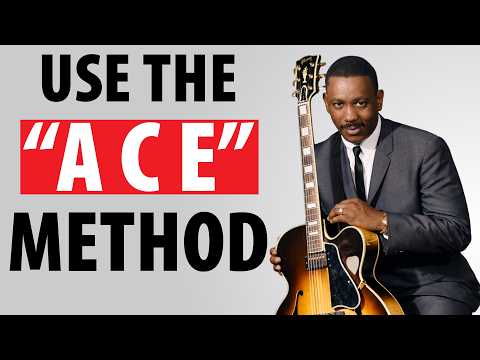
Надежная практика может помочь вам научиться джазу в 10 раз быстрее.
Замер сборщика: 2 часа назад (17.11.2026)
This “Boring” Practice Routine Will Save You Years! (But Most Ignore It)
YouTube Video · Jens Larsen · 29 октября 2026 г.
Jens Larsen (DK) · educator
Global benchmark for jazz guitar education, deep analysis of modern bebop, enclosures and Barry Harris
Расшифровка видеосубтитры автора · EN · RU
Нажмите на таймкод, чтобы перейти к моменту в видео
A solid practice routine can help you learn jazz 10 times faster, but when I started out, I was practicing all the scales and arpeggios without learning how to use them in music. That didn't get me anywhere until a masterclass from Barry Harris completely changed
Надежная практика может помочь вам научиться джазу в 10 раз быстрее. Но когда я начинал, я практиковал все весы и арпеджио без Научитесь использовать их в музыке. Это никуда меня не привело, пока мастер-класс Барри Харриса полностью не изменился. Мой подход и все упростил.
my approach and made everything simpler. So in this video, I'm gonna show you how a routine of boring exercises can save you years and improve your jazz playing like nothing else. And I'll show you how these exercises directly connect to soloing by helping you
В этом видео я покажу вам, как рутина скучных упражнений может спасти вас. лет и улучшайте свой джаз, играя как ничто другое. И я покажу вам, как эти упражнения напрямую связаны с соло, помогая вам. Просто посмотрите лайки на fretboard.
simply see the licks on the fretboard. I used to spend hours on exotic scales and arpeggios in every position of the neck, but when I had to solo, it felt like solving complicated math problems while trying to also keep track of the form of Lady Bird.
Я часами проводил на экзотических чешуях и арпеджио в каждом положении шеи. но когда мне пришлось соло, это было похоже на решение сложных математических задач при попытке Также нужно следить за формой Lady Bird. Проблема не в том, что я слишком мало практиковался.
Now, the problem wasn't that I practiced too little. Nothing I practiced just sounded like the solos that I wanted to play. And a good practice routine is the opposite of that. Every exercise is already a piece of a jazz line so that when you solo,
Ничто из того, что я практиковал, не звучало так, как соло, которое я хотел играть. И хорошая практика — это противоположность этому. Каждое упражнение уже является частью джазовой линии, так что когда вы соло, Линии почти уже есть. Вот так.
the lines are almost already there. Like this. That is what Barry Harris showed me. Practice what is actually in the lines. Let me show you how to turn that into a simple routine that doesn't drown you in thousands of exercises.
Вот что показал мне Барри Харрис. Практикуйте то, что на самом деле находится в строках. Позволь мне показать тебе, как превратить это в простую рутину, которая не утопит тебя. тысячи упражнений. На его мастер-классе в Гааге я сидел там со своим Стратокастером, пытаясь
At his masterclass in The Hague, I was sitting there with my Stratocaster trying to keep up while Barry taught us one great jazz line after another, but he didn't just give us licks. He broke them down and showed us exactly what to practice to make those lines
Не отставай, пока Барри учил нас одной великой джазовой линии за другой. Но он не просто облизывал нас. Он разбил их и показал нам, что именно нужно практиковать, чтобы сделать эти линии. Возможно. Упражнения и музыка были одним и тем же. Вот что ты делаешь.
possible. The exercises and the music were the same thing. Now, here's what you do. Start with one scale in one position. Instead of scratching the surface with five scales and 12 keys in all positions, make it simple.
Начните с одной шкалы в одной позиции. Вместо того, чтобы царапать поверхность пятью шкалами и 12 ключами во всех положениях, Сделай это просто. Возьмите одну шкалу в одной позиции и используйте ее для практики и получения словарного запаса. Ваши пальцы и в ухо.
Take one scale in one position and use that to practice and get vocabulary both into your fingers and into your ear. Everything you practice like that pays off forever. Let's start with a simple C major scale in the eighth position.
Всё, что ты так практикуешь, окупается навсегда. Начнем с простой шкалы C на восьмой позиции.
But if you only play scales in your solos, it will sound terrible, and Barry had a way to give us the material that we actually needed to play jazz solos. Now, we are improvising over songs, and if you look at a jazz standard like Autumn Leaves,
Но если вы играете только весы в соло, Это будет звучать ужасно, и Барри смог дать нам материал, который мы на самом деле Нужно было играть джазовые соло. Мы импровизируем над песнями, И если вы посмотрите на джазовый стандарт, как Осенние листья,
then notice how all the chords are seventh chords. The arpeggios of those chords are great solo material, but you want them inside the scale, one arpeggio from every note, and there's a way to ease into practicing them.
Затем обратите внимание, что все аккорды являются седьмыми аккордами. Арпеджио этих аккордов - отличный сольный материал, Но вы хотите, чтобы они были внутри шкалы, один arpeggio из каждой ноты, и есть способ легко практиковать их.
And it all starts with one interval every arpeggio is made from. Instead of practicing separate arpeggio positions that you then later have to match with a scale, you can play them inside the scale so they sit in all the other material that you use for soloing,
И все начинается с одного интервала, из которого сделан каждый arpeggio. Вместо того, чтобы практиковать отдельные позиции arpeggio, которые вам позже придется соответствовать с масштабом, вы можете играть их внутри шкалы так они сидят во всех других
and that's a really important connection. An easier way to learn the seventh chord arpeggios is to build them note by note. So a seventh chord arpeggio has four notes, root, third, fifth, and seventh. So this is a four-step process, and after that,
материал, который вы используете для соло, И это очень важная связь. Самый простой способ выучить арпеджио седьмого аккорда — это построить их ноту за нотой. Итак, седьмой аккорд arpeggio имеет четыре ноты. Корень, третий, пятый и седьмой.
you'll see some of the building blocks from the lick that I played at the beginning of the video. Now you already know the C major scale, and you can already play it. Let's start with the first interval, root to third. If you play diatonic thirds in the scale, you get this.
Итак, это четырехступенчатый процесс, и после этого вы увидите некоторые строительные блоки из лилиза, который я играл в начале Теперь вы уже знаете масштаб C, Вы уже можете играть в нее. Начнем с первого интервала, root to third. Если вы играете на диатонических третях в шкале,
When you practice these exercises, try to hear them as melodies. A third is a simple melody, and you can actually kind of hear if you're right. Then you don't have to think as much, and you are working on getting it into your ear, which is, of course, also very important.
Ты поймёшь. Когда вы практикуете эти упражнения, Старайтесь слушать их как мелодии. Третья - это простая мелодия, и вы можете услышать, если вы правы. Тогда не нужно думать так много, и вы работаете над тем, чтобы получить его в ухо, Что, конечно же, тоже очень важно.
Now the next step is to add another third on top. This gives you the diatonic triads, and now you have root, third, and fifth.
Теперь следующий шаг - добавить еще одну треть сверху. Это дает вам диатонические триады, Теперь у вас есть корень, третий и пятый.
The final step is to stack another third on top, which gives you the diatonic seventh chords, so that you can play the melodic version of the chords in the song.
Последний шаг - сложить еще одну треть сверху, седьмых аккордов, чтобы вы могли играть мелодичную версию аккордов в песне.
You don't have to learn all of this by heart of the video. You can download the free PDF with all the exercises and examples, so that you can actually practice them. There's a link in the description. Now look at the line that I played at the beginning of the video.
Вам не нужно учиться всему этому наизусть видео. Вы можете скачать бесплатный PDF со всеми упражнениями и примерами, чтобы вы действительно могли их практиковать. В описании есть ссылка. Теперь взгляните на строчку, которую я играл в начале видео.
The triad is right there, and so is the C major seven arpeggio, but the arpeggio doesn't sound like the exercise, because the rhythm is different. It's played as a triplet, and that's the next step,
triad находится прямо там, как и C major 7 arpeggio. но arpeggio не звучит как упражнение, Потому что ритм отличается. Он играется как триплет, и это следующий шаг. ритм. На самом деле это был момент мастер-класса Барьера, где все щелкнуло
rhythm. This was actually the moment in Barrier's master class where it all clicked for me. I immediately realized how the exercises directly turn into licks. Certain rhythms are just everywhere in jazz solos, and once you spot them, you can't unhear them.
для меня. Я сразу поняла, как упражнения прямо превращаются в лижики. Определенные ритмы есть везде в джазовых соло, И как только вы их заметите, вы не сможете их расслышать. Уверен, ты узнаешь звук того, как Пэт Мартино играет эти арпеджио.
I'm sure you recognize the sound of how Pat Martino is playing these arpeggios.
На семерке Пэт Мартино играет Б плоский мажор семь arpeggio в качестве триплета с а Ведущая нота. А потом он повторяет это на семерке В, двигаясь вниз на полшага, давая вам A major семь arpeggio до того, как он перейдет в Б-Б-Семерку.
On the C seven, Pat Martino plays a B flat major seven arpeggio as a triplet with a leading note. And then he repeats this on the B seven, moving down a half step, giving you an A major seven arpeggio before he resolves to the B flat major seven.
Барри показал нам, что этот звук также может быть упражнением. Вы берете его через шкалу, чтобы у вас было отличное лизание для каждого arpeggio. в масштабе.
Barry showed us that this sound can also be an exercise. You take it through the scale so that you have a great lick for every arpeggio. in the scale.
Узор всегда одинаков. Так что у вас есть ведущая нота в корень, так в этом случае, B в C, а затем вы играете остаток arpeggio как триплет, где вы приземлитесь на седьмое место в следующем бите. Простой, но мгновенный бибоп.
The pattern is always the same. So you have a leading note into the root, so in this case, B into C, and then you play the rest of the arpeggio as a triplet, where you land on the seventh on the next beat. Simple, but instant bebop.
Ритм - это то, что заставляет его звучать как джазовая линия вместо упражнения. И именно здесь вы начинаете видеть лайки на fretboard. arpeggio - это форма, которую вы уже знаете по шкале. И ритм и фраза превращают его в лизание. И это не только Мартино.
The rhythm is what makes it sound like a jazz line instead of an exercise. And this is where you start to see the licks on the fretboard. The arpeggio is a shape that you already know from the scale, and the rhythm and phrasing turn it into a lick. And it's not just Martino.
Вот как Уэс использует их в своем соло на 4 и 6. Как только вы практикуете это, вы начинаете слышать его повсюду. Который будет частью вашей игры. Теперь вернемся к линии с самого начала. Этот C-major 7 arpeggio - тот же строительный блок.
Here's how Wes uses them in his solo on four and six. Once you practice it, you start hearing it everywhere, which will be a part of getting it into your playing. Now go back to the line from the beginning. That C major seven arpeggio is the same building block.
Это упражнение, которое ты только что сыграл. И обратите внимание, что Мартино, Уэс и линия все используют одну и ту же самую основную семерку. Как только вы узнаете это по шкале, вы узнаете его повсюду на fretboard.
It's the exercise you just played used in a line. And notice that Martino, Wes, and the line all use the same major seven shape. Once you know it from the scale, you recognize it everywhere on the fretboard.
И это также подход, который я использую в моем курсе дорожной карты джазовой гитары. Ты изучаешь основной материал, а потом я покажу тебе, как превратить его в солидные джазовые соло. Настоящий джазовый стандарт. На сегодняшний день она помогла более чем 9000 студентам.
And this is also the approach that I'm using in my jazz guitar roadmap course. You learn basic material, and then I show you how to turn it into solid jazz solos on a real jazz standard. It has helped more than 9,000 students so far.
И если вы хотите перестать звучать так, будто вы играете в упражнения и начать играть настоящие джазовые соло, затем проверьте ссылку в описании. Так что у арпеджио есть ритм, но если вы только поднимаетесь и опускаетесь,
And if you want to stop sounding like you're playing exercises and start playing real jazz solos, then check out the link in the description. So now the arpeggios have rhythm, but if you only sort of go up and down, your lines still move in a very predictable way.
Ваши линии по-прежнему движутся очень предсказуемым образом. Следующий строительный блок это исправит. Возможно, вам сказали практиковать каждую инверсию арпеджио седьмого аккорда. Это много работы, и на самом деле большинство этих форм не появляются в джазе.
The next building block fixes that. You might have been told to practice every inversion of the seventh chord arpeggios. That's a lot of work, and actually most of those shapes don't really show up in jazz solos. Barry had a much more useful idea.
У Барри была гораздо более полезная идея. Вот базовый седьмой аккорд arpeggio, добавляющий примечание к шкале, которое разрешает arpeggio. Сыграв так, мелодия меняет направление один раз. Но в джазе мы действительно любим эти повороты и повороты, чтобы держать вещи свежими.
Here's a basic seventh chord arpeggio adding a scale note that resolves the arpeggio. Played like this, the melody changes direction once, but in jazz, we really love those twists and turns to keep things fresh. And the trick is to move the first note up an octave.
И хитрость в том, чтобы переместить первую ноту на октаву. Это все еще arpeggio, и это имеет смысл как мелодия. Но мы получаем этот прекрасный шестой интервал в начале. Барри назвал это поворотным arpeggio.
It's still an arpeggio, and it makes sense as a melody, but we get that beautiful sixth interval in the beginning. Barry called this a pivot arpeggio. You get a nice interval skip, but the line still flows and fits the chord. Check out how Grant Green uses this.
Вы получаете хороший промежуточный пропуск, но линия все еще течет и соответствует аккорду. Посмотрите, как Grant Green использует это. Он любил использовать арпеджио. Изначально это F, но я перенес его на C мажор для этого видео.
He loved using pivot arpeggios. It's originally an F, but I've transposed it to C major for this video. And you can practice this by taking the diatonic arpeggio exercise, move up the first note an octave for each chord, and add that resolution note at the end of each arpeggio.
И вы можете практиковать это, принимая диатоническое упражнение arpeggio, переместите первую ноту на октаву для каждого аккорда, и добавить это примечание к разрешению в конце каждого arpeggio. Опять же, лайк для каждой ноты в масштабе.
Again, a lick for every note in the scale. And this is the third building block from the line at the beginning. The line starts with an E minor seven pivot arpeggio, which fits perfectly on C major seven, and the rest is just a scale run.
И это третий строительный блок от линии в начале. Линия начинается с E минор семь поворотов arpeggio, который идеально подходит для седьмого мажора, Остальное – это просто шкала. Это шкала C, с которой мы начинаем.
This is the C major scale that we start with. So the whole line is built from the things that you practiced in one scale, in one position, and you actually can get even more out of the arpeggios that you already know. Let me show you.
Вся линия построена из того, что вы практиковали в одном масштабе. в одной позиции, и вы действительно можете получить еще больше от арпеджио, которые вы Я тебе покажу. Вернёмся к семи минорной семерке из семи аккордов.
Let's go back to that E minor seven over the C major seven chord. That's not a coincidence, and it's something that you can use on every chord. Look at the two, five, one in C major. Normally you'd build your lines from the arpeggios of each chord.
Это не совпадение, и это то, что можно использовать на каждом аккорде. Взгляните на два, пять, один в мажор. Обычно вы строите свои линии из арпеджио каждого аккорда.
But you can also play the arpeggio from the third of each chord. So D minor seven is D, F, A, and C. Now the third is F. So you can use the F major seven arpeggio, which is of course a diatonic arpeggio on that note. On G seven, we have G, B, D, and F.
Но вы также можете играть arpeggio с третьего аккорда. Ди минор семь - это Д, Ф, А. С. Теперь третий – это Ф. Вы можете использовать F major 7 arpeggio, Это, конечно, диатонический arpeggio на этой ноте. На G 7 у нас есть G, B, D и F.
The third is B, and here we have a B half-diminished arpeggio. For C major seven, we have C, E, F, A, and C. For C major seven, we have C, E, G, and B. And the third is E, giving us an E minor seven arpeggio. As you can see, the notes overlap a lot,
Третьим является B, и здесь у нас есть B half-diminished arpeggio. Для седьмого класса у нас есть C, E, F, А и С. Для седьмого класса у нас есть C, E, G и B. И третий - E, дающий нам E минор семь arpeggio. Как видите, заметки перекрывают много,
so they still fit the chord, but you also get an extra color, the ninth, which makes your lines sound richer. And since you already practiced all the diatonic arpeggios, there's really nothing new to learn. You just use what you already know,
так что они по-прежнему соответствуют аккорду, но вы также получаете дополнительный цвет, Девятый, что делает ваши строки богаче. И так как вы уже практиковали все диатонические арпеджио, На самом деле нет ничего нового, чему можно научиться.
and you start to see more licks for each chord. So here's a two, five, one lick using F major seven over D minor seven, B half-diminished over G seven, and E minor seven over C major seven.
Вы просто используете то, что уже знаете, И вы начинаете видеть больше лайков для каждого аккорда. Итак, вот два, пять, один лайк с использованием F мажор 7 над D минор 7, B half-diminished над G7 и E minor 7 над C мажором 7.
Remember that if you want to go over the exercises and examples away from the video, you can grab the free PDF. The link is in the description. This routine might seem boring, but if you practice like this, you're not just learning the scale,
Помните, что если вы хотите пройти через упражнения и примеры вдали от видео, Вы можете получить бесплатный PDF. Ссылка есть в описании. Эта рутина может показаться скучной, но если вы практикуете вот так, Вы не просто изучаете масштаб,
you're learning the vocabulary that you hear in solos by Pat Martino, Wes, and Grant Green, and it's ready to use when you play. That's what all exercises should do. And once you can hear these exercises, moving them to other positions gets a lot easier.
Ты изучаешь словарь, который слышишь в соло Пэт Мартино. Уэс, и Грант Грин, и он готов к использованию, когда ты играешь. Именно это должны делать все упражнения. И как только вы услышите эти упражнения, Переместить их на другие позиции становится намного проще.
Your ear helps you fill in the rest of the fretboard. Working like this gives you material for your solos, but you also need to know how to learn songs, how to comp, and how to turn your solos into stories. And that's what I cover in this video.
Ваше ухо помогает вам заполнить остальную часть fretboard. Работая таким образом, вы получаете материал для своих соло. Но вы также должны знать, как учить песни, Как сочинять, и как превратить свои соло в истории. И это то, что я освещаю в этом видео.
Check it out, learn jazz, make music.
Проверь, учись джазу, сочинять музыку.