This guitarist uses NO overdrive 😳 | Reinier Baas in Gitaarmannen
YouTube Shorts · Reinier Baas · 22 April 2026
Reinier Baas (NL) · artist
Amsterdam jazz icon, leading avant-garde composer for guitar with astonishing harmonic unpredictability
Video transcriptauthor captions · EN
Click a timecode to jump to that moment in the video
Yes, welcome to Gitaarmannen the podcast. Today I have a very special guest here in the studio. It's Reinier Baas. Reinier has won the Boy Edgar prize. And that's not just any prize. Wow, no, it's something else right. Welcome, great to have you here Reinier.
Same here. What was it like to receive that prize? The ceremony wasn't that long ago. No, that's right. That was last week. Yeah, I'm still recovering a little bit from it. It was a great time. Yeah? But it was a very special evening.
I essentially got carte blanche to put together an evening at Bimhuis in Amsterdam. And I'm really glad I got to do that with a number of people I hold in very high regard. And some good friends. Including T-Pex, an incredible comic artist.
He made a lot of artwork and stuff like that. He built a little museum. And he made this beautiful little book, one of those flip books. That becomes a short film. Han Bennink was part of it. And Bever Gelder, Joris Roelofs. The National Youth Jazz Orchestra.
Wow. Yeah, it was a colorful evening. Very special. Is that also something the jazz world isn't really known for? That it can just be a really good time too? That depends on who you ask, I think. it's been true in recent years. At least for me anyway.
And from what I see and experience. What I find really special to see. Is that the generation below us, so to speak. I'm forty now. But the people who are in their early twenties right now. So who are also playing in the orchestra for example.
The way they interact with each other is genuinely very supportive. And constructive and respectful. And yeah, there's not much jockeying for position. And not much ego. Did you experience things differently? Well, it's not like things were all doom and gloom for us or anything.
Not at all. But I do think there's a new generation coming through. Where there's even more focus on the group and the collective. And it's less individual than when we were starting out. Yeah, I also read a piece in de Volkskrant.
Was that about the National Youth Jazz Orchestra? Yes, that's right. Where you're kind of the spiritual leader. Yeah, I read that too. I found that pretty interesting. And I think that also connects a bit to how you're describing it here now.
That you did it very subtly, so to speak. So giving people direction in an orchestra like that. Yeah, I had a good laugh at that. I was really pleased with the piece. I'm really glad that Gijsbert Kamer, the journalist from de Volkskrant, came along for the ride.
But at some point, after sitting there for a few hours, he did ask. Are you actually going to do anything? But I actually took that as a compliment. I think that has kind of been my goal. To slowly make myself redundant. Because they can all do it themselves. How do you do that?
I think, every two years there's a different lineup and also a different artistic director. So that's me at the moment. But there have already been eight editions before me. And I think it's also kind of inherent to that orchestra. That a lot of trust is given to the musicians.
And a lot of responsibility too. Yeah. It's really a kind of Montessori approach. So they have to manage their own instruments... You write it in colors, on your paper. Yeah, yeah. Go figure it out. And that goes for logistical things too.
So they have to organize a lot themselves. But also write the music. And a number of them are now arranging as well. So I think that's been important. Just to give them trust in what they're actually capable of. Is that necessary in jazz too? I mean, I come from the pop world,
of course. Those are obviously different ecosystems. That exist side by side and occasionally overlap. Yeah. But is it necessary for young jazz musicians today to learn... how to actually handle and manage things themselves? Is that different from, say, when you were young?
Or the generation before that? Yeah, very different. I think we were right on a dividing line. We just barely grew up without smartphones. And without streaming. And I still had to go to the library to copy CDs onto a cassette tape. The analog internet.
The analog era. Yeah, exactly. So I think that listening behavior... Or I don't just think that. Listening behavior has changed enormously. Over the past two decades. I think an album has become a bit less important. That people listen more to individual tracks. And playlists.
And also... strangely enough... more individually. So that actually goes a bit against... what I notice with young people. In how they interact with each other. But people listen more on their own. And less together. I don't know how it was for you back then.
Yeah, I'm thinking about how it was for me back then. Yeah... I mostly listened a lot on my own. Yeah, okay. Because my friends had somewhat different tastes. You know? Yeah, that's true. I had to discover all of that on my own anyway. I've always been a lone wolf.
So I'm not very representative of that. My theory could immediately fall apart. In this case it does. But I get what you mean. Because back then I also saw... In the grunge era, let's say. That was precisely about the shared experience. Being together was really important.
A kind of feeling of... We're a group. We all love the same things. That social cohesion that comes from that. Yeah. How does that work now in jazz? Well, that experience is still pretty strong in jazz. Also because jam sessions are an essential part of it. Everyone goes there.
And everyone plays with each other. And helps each other. Or gives each other feedback. But it can also be supportive. So that's something you do together. And it's also inherent to that music, I think. That it's something that happens right there in the moment.
And that can also go wrong. It's music that doesn't necessarily always translate well to a recording. It's something you have to experience live. Yeah. It's just something that comes from having such a wealth of licks. Of theoretical knowledge. Of putting in the hours.
That you can do it right there in the moment... Because for me that's what improvising is. I don't know, what is improvising to you actually? Yeah, that's a good question. I think the comparison with a conversation... A lot of give and take.
With the difference that you can also talk at the same time. And still follow what's going on. But we're also going into a conversation. And we already have a bit of an idea of what's going to happen today. And where we are at this beautiful place. Really nice to be here.
And to see how you do that. Thank you. But I obviously took a look at how you do that with other people. And I assume you also read up on your guests. And that kind of stuff that you do. We talked about having some prior knowledge. But we have no idea what's going to happen now.
No. And things can go sideways too. The outlines are there. Yeah. The details. Is that the same with a jam session? I think it's comparable. So you know, okay we're in this key. We're going to do that rhythm, that's roughly it. That vibe, that groove.
Yeah. And then from that point. Yeah, so there are certain assumptions that are made. And certain restrictions that are established. And that's what everyone basically works with. So you play over a form that keeps repeating. Over a chord progression.
And there are also certain things you just don't do. So what's called free jazz. You know, all the way at the far end of the spectrum. Where basically no rules apply. I always find it really interesting to see that even there there's a certain
vocabulary. And that you wouldn't just play a major triad or something. Then everyone's like, what are you doing? Yeah. There definitely are certain assumptions. Can you play a major triad for the people who don't know what that is? I'll probably recognize it.
Look, this one still works though. Yeah, just a bare triad. Yeah, just a triad of course. Like this it already sounds a lot nicer I think. Yeah. That's how my brain works. It used to be the same. When the teacher would explain something really simple to the class,
I'd shut down. Couldn't remember a thing. Yeah, exactly. Major triad, of course. Just the triad. That wasn't played in free jazz. Well, I think it probably is done occasionally. But is it then more like a statement or something? Yeah, I think so. To challenge things or whatever.
Yeah, so you're basically breaking certain unwritten rules that are very much present. Even in improvised music. And if you just, yeah, look back at when you started playing. And I always try to relate that a little bit to the people watching now. Who maybe just started playing.
Who think like yeah, okay, a jam session. Yeah, I can get away with the blues. Yeah, but when it gets a bit harder. How do you make those big leaps from not being able to do it to actually being able to? What are the milestones you need to hit to get there?
Yeah, what a great question. It starts, it also really depends on the patience of others. And other people who are further along than you. Yeah. So I'm genuinely indebted to the people who played with me when I really couldn't do it at all yet.
And so that's kind of a prerequisite. That you find people around you who are further along than you. So that's a good start. Okay. And they can often point you in the right direction. What exactly you need to do to learn that. I think it starts with listening.
And singing along to things you hear on records or CDs or streaming or whatever. Whatever format you happen to be listening to. Yeah. So I always recommend singing it first and then trying to play it.
So that you build a strong connection between what you hear in your head and how you get that out of your instrument. That it really becomes an instrument in the true sense of the word, you know. Exactly. Just an extension of yourself. Of your inner voice.
Yeah. So that you don't just start pressing things randomly. Where you think okay this works over that chord or whatever. But there's a certain honesty that comes with it. If you really hear what you're playing. You're already a long way there. So lots of listening.
And okay sure. Then you're working on that. And it's also about putting on stuff that you actually like. To go and explore that. I saw that myself with Jimi Hendrix. That's something I did, for example. Yeah me too. That was really the entry point. Yeah absolutely.
You know what I mean. Yeah. That you thought hey wait but why. Oh half a step or a whole step lower you know. So Jimi was also a thing for you. Definitely yeah. Was he the first? Really yeah. I had guitar lessons quite early from a really great teacher Vincent Pot.
Who was studying at the conservatory. And he's the one who told me that Jimi Hendrix made it all up kind of on the spot. And I was, I was eleven at the time. I had no idea that all of that was possible and allowed. So I found that incredibly impressive.
And my dad had all of that in his record collection. Yeah. Even now when I hear it. It's unbelievable. What does Jimi Hendrix have to do with jazz? It depends on your definition of jazz I think. That's a very dangerous word. That people have a lot of associations with.
I think there's also a difference between the jazz style and the process that underlies it. So the style is often what people think of. Like Jamie Cullum or Frank Sinatra or a smoky basement with. Yeah. A woman in a long dress. So a kind of nostalgic image.
But the process of jazz I think is very similar to what Jimi Hendrix had. The process of jazz is very similar to what Jimi Hendrix did. Namely that you're willing to let things emerge in the moment again and take risks. Which means on one hand things can go wrong,
but on the other hand it can also produce something that only exists in that moment. You know. And that's just really special and really exciting to listen to and watch. I saw that mostly in his live work. Yeah. That's where that search for something a little wild lived.
What jazz, when I think of jazz, I just think of wild free music. That's my own association with it. I don't know if that's incredibly generalizing, but that's at least the feeling of freedom. Daar zat die zoektocht naar toch een beetje dat wilde.
Wat jazz, als ik aan jazz denk, dan denk ik gewoon aan wilde vrije muziek. Dat is mijn eigen associatie ermee. Ik weet niet of dat onwijs generaliserend is, maar dat is in ieder geval het gevoel van vrijheid.
Yes. And what personally holds me back from going in that direction is my ignorance. My theoretical background, which is pretty much zero. Yeah. And I find that funny. That you immediately get a book shoved in your hands. Yeah, I immediately get a book shoved in my hands.
This one right here. Let me see if I can make it appear. Oh, and someone's calling me in the meantime. Phone. Why am I getting a call? Claudia de Breij. I'll just pick that up real quick. Yeah, go ahead.
I'm in the middle of a podcast recording with Boy Edgar award winner Reinier. Hey Claudia. But is this a good moment to plug yourself? I'm really glad you're here to quickly advertise on Gitaarman the Podcast for your new podcast that's coming out soon. That sounds good yeah.
Because I think there's a huge overlap between the Gitaarman listeners and the Claudia show listeners. Yeah, I think so too actually. So yeah, feel free to wave at the people. Oh, thank you that's sweet of you. Thank you. Yeah.
The Claudia show coming soon on every podcast platform where you get your podcasts. Yeah, and if she ever figures out how to use this cable, then I'll call Struijlaart. Of course, if you want to know how cables get connected, you call Struijlaart indeed.
I'll call you back in just over an hour. Yeah yeah, make something beautiful over there. We will. Bye. Yeah, Claudia de Breij. Yeah, she's starting a new podcast. That's needed. And I'm helping her a little with the podcast. Awesome. With the technical stuff.
With the that that that that that that that that that that that that that that that that that that that that that that that that that that that that that that that
that that that that that that that that that that that that that that that that that that that that I call this the Chromatic Major Modes Magazine. Yeah, I've sold two million copies. They fly off the shelves.
But the great thing about it is that there's an app that comes with it. And that app lets you do all these exercises. Yeah, that's a good way to make it playful. It's incredibly complex, mega nerdy. But with that app you just need to press numbers 1 through 7 on your keyboard.
And then you're there. Yeah man. So I have basically nothing with theory. Well, I do have something with it, it just doesn't work for me. Do you have for people like me the golden tip to find a way into that world, so that I'll start enjoying it?
Yeah, what for me is the most beautiful, the most poetic thing about that theory. Is the overtone series. or the harmonic series in English. Which basically means that when you pluck a string or make something vibrate, air vibrating in a saxophone for example.
That you don't hear one note. So you don't hear an E. But on top of that note there are more. Quite a few more. Actually the subdivisions of the string you hear simultaneously. So an octave is in there. Which you hear here. A fifth. Another octave. Third.
And then there's a kind of seventh somewhere here. And then it gets increasingly weird. Yeah. And what I find so beautiful and special about that. Is that it's all contained within the laws of the universe. You know at least the laws of nature. Acoustics.
So you hear it too when you turn on your electric shaver or let your washing machine run. So you keep hearing an octave and then a fifth and then a major third at some point. So everything vibrates in a kind of bare triad. I find that really remarkable.
So if you approach it that way and then from that curiosity. A kind of diving into. Into that. Yeah. Then for people like me who kind of. It just happened again. You said bare triad. And I shut down. What are you talking about? I know. Yeah.
But yeah. That's just a kind of insecurity. That makes you just shut down. I totally get that. And I've been looking for that key for years. Yeah. To unlock that. So that I just. Because I can play. I know what I need to do. Just connecting that to what it actually is.
Well yeah. Yeah. That's where the difficulty lies I think. Are there certain methods where you'd say. Then you should check those methods. Or should you. That's a good one. I think. There are a lot of good methods. And I think you just need to look for.
The one that resonates most with you. But what's been important for me. Is to realize that it's an explanation after the fact. Yeah. So you're trying to put words to. At least that part of music that you can describe. And you can do that in many different ways.
It can get very technical. You can get lost in that too. But. Yeah. I think that's a good starting point. And then you can look for which method works for you. I would pick one. Where singing is important. That you actually hear. What you're doing.
That there's a strong connection. Between the description of what you hear. So you might also say solfège. That always seems like a good start to me. Yeah. That's a really important point. My guitar teacher did try hard with that. Years ago. Yeah man. Thank you John.
Laughing at me. Not laughing at you. Yeah. It's time to move on to the next segment. And that is the guitar of the month. And the guitar of the month. This is made possible by the Fellowship of Acoustics. And I let Jurgen from the Fellowship know in advance. Who my guest is.
And then he sends me an email. And I'm just going to read it out loud word for word. It's right here. I can literally read from my script. I can't start without first congratulating Reinier on the Boy Edgar Award. Yeah. Thank you. Which he got to receive this year.
Exclamation mark. A beautiful and well-deserved recognition. His music often has a nice dose of bite and guts. And I suspect that this search for the edge. Could be one of the reasons he usually plays his Gibson ES-345. Instead of a traditional full hollow jazz guitar.
Although at the time of writing we have a really beautiful 345 from 1945. hanging in the shop. My eye fell on a custom i35 LC by Collings. It's no longer a surprise at this point. Because this Collings too is finished at an insanely high level.
And this custom model has a beautifully subtle boatburst. And a pair of Lollar mini humbuckers. These have a lower output with a bit less low end. And a tighter attack than the standard Imperials. It results in exceptional definition and presence.
Which means it can cut through the mix nicely. A gorgeous guitar to go looking for that edge with. Let's take a look and listen to the guitar of the month. MUSIC
Something that's not typical in the scene I operate in, let's say. So I've had a bit of that too, I've pushed back against it a bit, definitely in the past. I am getting a lot more mellow these days though. Getting a bit older too. That mellowness comes with the years of course.
But I've always enjoyed looking for a way, an approach to the guitar in jazz music that doesn't necessarily come straight from that tradition. It also has to do with register and things like that. So that guitar has a certain sound that just cuts through nicely.
And it's got a bit less of that woolly, yeah I sometimes find it a bit dusty sound, that a lot of jazz guitarists have. Treble rolled off. Yeah, just that tone knob all the way like that. Yeah. That feel. Yeah, so that's been more or less intentional.
I've really pushed back against that a bit. And this is the result. But this is also a really weird guitar. Because it has nylon bridge saddles here, these things. Which normally are, yeah, nickel or something. Steel at least. So it's very percussive.
It actually has a very, very short sustain. Yeah. So it's almost like a kind of pitched percussion, you know. It's actually kind of a drum style with a... With pitch. And that's what I really love about it. So you can really play it percussively too.
Yeah, in that way it's... If you mute it a little... Yeah, exactly. Exactly. It's very percussive, that's what I really love about it. And how did you come across this guitar? Yeah, I tried it out in a shop and there were really,
I think something like twelve 335's hanging there and a few 345's. So that's this model. And this one just stood head and shoulders above the rest. And that was actually immediately very clear. I honestly didn't expect that when I went looking for a new guitar.
Because I had actually saved up enough money. Yeah, and where that comes from, that's actually very mysterious. It's something you have to experience firsthand. But I really held them side by side and this one just sounded much better. Yeah, that's weird isn't it.
Yeah, sometimes it's just a matter of... Well, not... How expensive a guitar is or the brand or... Yeah, it's more just about what feels right to you. Yeah, yeah. And yeah, how exactly that works again... Does it have to do with for example the pickups on it?
Yeah, that could easily be the case. But these are just the factory pickups. The standard pickups, yeah. So there's not much credit to claim there. They're just, I think, good units. It does get set up really well occasionally. Also by Hans Pluut and Willem Oosterdorp.
The good guitar techs. That also has a big influence on the tone and the playability. It actually doesn't play that easily. Do you have high or low action? What do you prefer? Yeah, I'm always looking for the sweet spot.
So where it just barely doesn't fret out and has enough tone, but doesn't play too heavy. So I really like... Yeah... I find it really great that with fast runs of notes... Hopefully not to throw sand in people's eyes or anything. But I like it when a guitar feels kind of agile.
That you can handle it lightly. Without having to work really hard. Yeah. Can you play something? Yeah sure. The people watching, they're really thinking now... Come on, is he ever going to play? What's going on? We're 27 minutes in, it's been locked down.
Because that that that that that that that that that that that that that that that that that that that that that that that that that that that that that that that that that that that that that that that that that that that that that that that that that
that that that that that that that that that that that that that that that that that that that that that that that that that that that that that that that that that that that that that that that that that that that that that that that that that that that
that that that that that that that that that that that that that that that that that that that that that that that that that that that that that that that that that that that that that that that that that that that that that that that that that that that
that that that that that that that that that that that that that that that that that that that that that that that that that that that that that that that that that that that that that that that that that that that that that that that that that that that
that that that that that that that that that that that that that that that that that that that that that that that that that that that that that that that that that that that that that that that that that that that that that that that that that that that
which I haven't really found an application for yet. But for the more rock and roll stuff. I'm also in a kind of punk band of Benjamin Herman. Oh, yeah. Yeah, there it's really just this. Yeah, and I read that Benjamin Herman spoke very highly of you.
Yeah. Yeah, well, I have the same to say about him. That's one of the most fun things I do. Bug House is what his band is called. Tell us about it. Yeah, well, first of all Benjamin Herman has always been someone who...
He's one of those people who gives a lot of trust to the younger generation. And also offers them a stage, even when they're not that great yet. That was certainly the case for me. So I'm very grateful to him for that. And also the passion he brings to all of it.
That's been a huge source of inspiration and still is. And that band started with Olaf van den Berg. So he's the drummer from CN Red. Insane punk band. And Peter Peskens plays bass from Django by Night. Yeah. And it's really special.
It's different from everything else I've ever done. First of all the volume is just... It's 25 times louder than what I normally do. And also 140 times faster. And it's really something special to experience what happens behind you when Olaf
starts playing. The amount of energy that comes with it. Also the place from which he makes that music. Very inspiring. Very uncompromising. And what does that do to your own playing? Well, live it all goes twice as fast again as on those records. That's something else.
First of all I really have to get into a kind of race mode. So I bought a Squier Jazzmaster I think. Or a Jaguar. Yeah. It's kind of like a sewing machine. A short scale guitar. That's a shorter neck. You can just play really fast on it. Without pressing too hard.
So that's one of the tools that allows me to keep up. Do you also use different strings on it? Lighter strings for example? Yeah. Yeah, it's really a different beast. Oh yeah. The music goes so incredibly fast. And when you compare that to what you do yourself.
Is it really like diametrically opposed? Or does it also have things in common? Yeah, absolutely. Yeah. I think the kind of punk mentality and all that. And especially the kind of DIY thing that goes along with it. With that punk music.
I think that's very comparable to how we do things in the jazz world. So doing a lot of things yourself. And all on your own terms. And releasing your own records under your own name. That's all pretty comparable actually.
Yeah. So I think that music comes from a similar place in a way. But what I find really inspiring about the punk scene. Is that they. Sometimes genuinely play with six bands in one night. They do twenty songs in twenty minutes. And there are so many people on stage.
And they often choose to actually have a day job on top of it. So that their music isn't influenced by having to make money from it. And I think that's really admirable. And again, uncompromising. Yeah. And. Inspiring. How is that for you? Making money. In jazz.
I think for me and many of my colleagues, teaching is also part of it. That's at least for me personally and I think for many others the way to take the pressure off. And to have more freedom in the music itself, to be able to say no to things for example.
And to do things on your own terms. So that is for me really. Essential. I get that. But I also have the luck that I really enjoy teaching and get a lot of satisfaction from it. Yeah. So it doesn't actually feel like a compromise. No. Hey. Just a quick break.
Besides Gitaarmannen the podcast and the Gitaarmannen theater shows, I also do living room concerts. I come to people's homes to play with my guitar. I bring my own songs and a few great covers. Intimate, personal, and different every time.
Think of it as a mini theater show at your place. And that's something you can do. You can just book that. Through the link in the description you'll find all the info and can request a date. And especially for the viewers and listeners of Gitaarmannen the podcast.
Use the discount code Gitaarmannen when booking and you'll get a discount on a living room concert. So if you want live music in your home? Check the link in the description and maybe see you soon in your living room.
And is it also true that within jazz you can naturally already work in a more uncompromising way. Because it. Naturally already has that in it. Yeah, that can be. Yeah, again. Or does something like truly commercial jazz also exist? Yeah, absolutely. Yeah, for sure.
What would you throw into the commercial jazz bin? Well, I'd try not to name names, but there are all kinds of movements. Jazz, what is called jazz anyway the style jazz, but is also often used as background music for instance. Yeah. In hotel lobbies and in elevators.
It's music that doesn't bother you. Muzak. And that's not the kind of largely improvised stress jazz that also exists. But indeed real muzak. Yeah. Which can actually be really cool in its own way. We're also starting to appreciate that more and more. Hm.
But it essentially has none of the aesthetic value that we try to uphold. It's very produced and actually often not improvised at all. No. So it's a kind of, yeah, stylistic music that references jazz. Yeah. Not necessarily the idea behind it. It touches it.
Tangentially. It grazes it. It grazes the soul of jazz. Something like that, yeah. Yeah, yeah, yeah. Yeah, exactly. But because you teach you can just stay uncompromising in making what you want to make. Yeah. What are things you still want to make in the coming period?
What are you working on? I ask myself the same thing. I'm writing a book. It's about, about composition. Which is actually about how you can practice composition, writing music. That's the starting point for it. And it's much more than a book.
It's much more complicated than I thought. Oh. To write that down in a kind of clear and meaningful way. But writing music has given me a lot. Has taught me a lot about music, but also about myself. Yes. And what I find important and how I deal with perfectionism for instance.
And what's meaningful to me. And where the struggle is. And what makes it worth doing. So those are all pretty essential things. But you have to find a way to practice that. That took me a very long time. Also because there's this kind of very romantic image about writing music.
So you sit down with your quill pen. Yes. You wait for the inspiration to descend. Exactly that. And in practice it just doesn't work that way. It's something you have to practice. And do often and a lot. Before it. Yes. Before you develop an identity.
And before the meaning rises up. That takes a while. Exactly. That's always the story of 5% inspiration, 95% perspiration. Yes. Unfortunately. Unfortunately yes. And I really enjoyed reading about some of my heroes.
There's a really nice little book called Daily Rituals by Mason Curry. It's about the routines and rituals of famous artists. Oh, cool. And it really struck me that, yeah, you have an image of certain people and then you read about what their life was actually like.
And often they're just people who had kind of a nine-to-five, you know. Yes. Like Stravinsky or something. He'd just sit down at his desk or his piano at four in the morning. To write music. In the afternoon have lunch and answer letters. And then again in the evening.
Yes. Do orchestration. Four hours. And that's what his day looked like, you know. That's very structured, which might feel to us like it goes completely against the idea of a free spirit and a wild artist. So I really enjoyed doing that research.
And when you apply that to yourself? Yeah, I approached it differently after I dug into that. And I'm naturally not a structured person at all, you know. My family and friends can confirm that. And here they are. Yes. But at some point I did start doing it.
Like writing a piece of music in four hours. And then literally phone off. Step one, you know. Making sure Claudia de Breijen can't call. Yes. Well, that's very sociable. So time pressure has been a way for me to make the process repeatable and reliable.
And also using kind of different approaches each time to write a piece of music. But also kind of the same time every day. I tried for a while to write every day from nine until one in the morning. Yes. And that was amazing. I kept that up for a few months.
That was also because it was during corona then. Different times. Yeah, so the circumstances there aren't always ideal, of course. Yeah. But it was really special to feel what happens to your body and your subconscious.
You're genuinely invited to pick up where you left off the day before. And I really did have to stop after four hours. I often really wanted to keep going. And then I'd think, oh no, not yet, you know. Yeah, that is pretty special,
right? Yeah. And strangely enough you might wish you could do this forever. But it always comes in phases. Yeah, that's true too. That's also something you have to accept maybe. Yeah, absolutely. Because you sometimes have to kind of steer yourself towards a certain phase,
as it were. Yeah, that's right. I totally agree with that. And at the same time you can remove a number of the barriers. You know, like when you keep thinking, what am I going to write? Or when? Or where? Or how do I start? You know. Yeah. So you can find a process for yourself.
That helps take away those questions. And that's such a win. Yeah, I get that. And that's what you're addressing in the book you're writing right now. Are you trying to capture that in some kind of method? Am I reading that right? Yeah, basically.
Yeah, I'm trying to invite people to look for a process like that that works for them. It doesn't have to be mine specifically. But it's also pretty practical. There are a lot of examples in it, exercises. Yeah, yeah, exactly. So also really concrete stuff for the guitarist,
like actually play this, do that. No, not that. No, it's not specifically for guitarists. It's really for all kinds of people. For people? Yeah, for people. People who make music? Yeah. And what kind of exercises, what should I think of? What are those exercises like?
A central exercise in the book is actually a listening exercise, where you listen to the same piece of music seven times. And each time you write down what stands out to you about a different parameter, a different musical ingredient.
Oh right. So the first time you listen you try to focus only on the form of the piece. So what gets repeated? What comes back? And the second time you listen only to the harmony, so the chords. Is it major? Is it minor? Does it modulate a lot or not at all?
Or is it more limited? Stranger than that. And the third time melody, then dynamics, texture. Those are indeed different exercises than just play this scale. Yeah, so it's about becoming aware, more and more aware of exactly what's going on in the music you love.
Yeah, exactly. And then you can use that in your compositions. That's a steal. If you sort of switch that on in yourself, you'll start using it in your making too. That's the idea. Yeah, and also, you steal one ingredient from something you love and not everything
at once. Exactly. So then you can write something that's inspired by something you love without the result necessarily sounding like it. Yeah. resultaat er noodzakelijk wijze op lijkt. Ja. That's the idea. Yeah, because that's just how it works, you get inspired by things.
But you're not gonna sit down and write out the intro to Stil in mij by Van Dik Hout note for note. No, then you've got a problem. Yeah, exactly. But then you can do that. Because you've analyzed it, you've been working with it,
you can think, okay, but then I could do something with double stops or something that gives it that vibe, well at least, those characteristics. Yeah, exactly that. Interesting. Yeah. Let's talk about gear for a bit.
Yeah sure. Because I normally always have a little Black Star amp here. It's always sitting there all nice and ready. I always say, look, I've got an amp here, you don't need to drag one along. Well, Reinier shows up and goes, I just brought my,
my, my, my, my beautiful Vibro Lux Fender along. Yeah, and you carried it for him. I carried it. I thought that was really sweet. Yeah, no, but I could use a bit of movement with my body. So in that sense, well, we've already taken care of that.
Tell me about this amp, because it looks vintage. It is very vintage. It's from 1966. Wow. And quite a lot has happened to the inside over the years. But it's still really remarkable to notice. That those old things truly stand the test of time.
It genuinely sounds fundamentally different from things being made today. Again, exactly how that works is a real mystery to me. It probably has something to do with the vibrations and the materials that were used and the connections. And it's also kind of filtered over time.
So the good ones survive. Exactly, yeah. But yeah, it's an incredibly heavy thing. I have kind of a love-hate relationship with it. So I'm really glad I have it. But yeah, I wish it weighed 2.5 kilos. That would make my life a lot easier.
Yeah, but then you end up with a Quad Cortex or a Fractal FM3. Yeah. You still choose to play through a real amp. Is that actually a choice for you or is it just a no-brainer? Right now it feels like a no-brainer. I have used one before.
I've got something at home to record with. A nice unit. It's a speaker simulator. So with that I can work at home with the volume at zero. Which is really handy. The OX Box. Yeah. That way you still keep the amp kind of in the chain. Exactly. Yeah, it does use the amp,
just not the speaker. Yeah, the experience while playing makes the biggest difference for me I think. Because with today's technology you can get really close to the same result. Yeah. But the response and the feel on stage is really really different. It is genuinely different,
right? Do you keep it low on stage or do you always have it up a bit higher? No, I keep it low. It's way too loud otherwise. Yeah, yeah. So where's it at right now? Well, it's at two and a half right now, but it's already pretty serious volume.
You always run it in the vibrato channel. Yeah. Yeah, so that one has reverb too. Yeah, so that's the issue with those things. They need to, and this is always my excuse to my fellow musicians and sound engineers. It needs to be able to breathe a little,
to be on and open up before it really starts to sound good. Hij moet wel een beetje open kunnen staan en aan staan voordat hij echt mooi gaat klinken. Do they ever say like, hey you know, just turn it down a bit. Yeah. Put it on the side of the stage or something.
Yeah, that kind of thing yeah. And what do you say then? Well, in the past I think I have, really driven people to the edge. I've been pushed pretty far with it and I've learned from those mistakes. I want them to have a good night too. Yeah. Standing on the stage.
So sometimes you just have to accept that it doesn't sound optimal. And yeah, oh well. I still always see those people in front of me in the front row. You know like. Completely grey. Yeah, those people you often get in the theater in the front row,
older people, season ticket holders. Yeah. And me still wanting a real amp on stage that was also turned up loud. Sitting there sawing their ears off. And then the first thing they want, but it's really like that. The way they look like, where can I go? I can go somewhere.
Sorry. Yeah. No, so I do understand that actually. But now you've kind of found a mode for yourself with that. And um, well in terms of volume, because right now it's on. Two and a half. you said. Yeah. And normally on stage, how loud? Something like that too.
Yeah, usually it does have to go a bit softer in the end. But with this one it's really about a middle. A millimeter. Yeah, yeah. That you really. Can really make the difference. Yeah. With that old tube amp yeah. Yeah man.
And do you still have amps, things on your wish list where you'd say, if I, if I ever have unlimited funds, then uh. Gosh. Yeah, actually that's pretty manageable. I would love another nice guitar alongside this one. And I'm looking for something with a slightly larger nut size,
as it's called, where the strings are spaced a little further apart. Yeah. This one has a slightly smaller one than normal. So I sometimes accidentally mute a string. Oh yeah. That's something I run into. So yeah, that's more about playability than about tone per se.
What are you thinking then? What kind. Good question. Yeah. Well, I really like this, because we have a very enthusiastic Gitaarmannen WhatsApp community. Yeah, I should pop by soon. Well yeah, we have a WhatsApp community with almost 600 people in it.
These are the guitar experts of the Netherlands. Yeah man. That's how I like to describe them. And well, if you're not a member of that community yet, then there's now something sliding into view, a QR code. You can scan it and then you become a member of that group.
You've got a for sale section. You've got a Gitaarmannen café. Where you can just talk about anything. For example that Angen de Portrine you know that? I'm probably pronouncing it wrong. That's a boomer thing. But anyway. I'm not that into it myself either.
There's a lot of deliberating about that. Daar wordt heel veel over gedelebreerd. Join the community. And if you're a member of the community. And if you're watching right now, let us know in the comments. What would be a guitar for Reinier? That has a slightly broader nut.
Pass along those tips. I'm sure, you're watching right now and you think I know exactly what they need. I actually have one for sale. For example, just saying. So leave it in the comments. How are you with your pedals? Yeah, it's very modest.
This is exactly the setup I always use live and on tour and stuff. Let me film it for a second, so we can show that in the video too. Let's see. That's actually a great question for you. Yeah, it's pretty janky. Yeah, no, that's kind of part of it.
It doesn't always have to be perfectly neat. No. But say, you're watching right now and you're thinking. Ed, I want to win a Pedaltrain Nano. Then I say, that's possible. Because we have a giveaway with the folks from Pedaltrain. By the way, really cool.
I don't know if you know it, that site pedalboardplanner.com. I find that so useful. Like sometimes when I'm lying in bed, I'm thinking about that one pedal and that other pedal. But will it fit? You know? You can see it on screen right now too.
You can just neatly model it exactly how you want. You can fill in your whole pedalboard. You just need to check with your wife first. Whether you're allowed to buy it. But do you want to win a Pedaltrain Nano? It's very simple. Just leave a comment in the comments.
And send an email to info@gitaarmannen.nl If you want to win that Pedaltrain Nano. Then I have a question for you Reinier. Say, this is the Nano Plus. Yeah man. So this is like a slightly bigger version.
But say you have a Pedaltrain Nano and you're allowed to take three pedals to a deserted island. Which ones would they be? Yeah, well I'm never really into product placement. But this is indeed a Pedaltrain Nano. It's been doing great for a really long time.
But my goal is to be able to play completely without pedals. So I'd actually bring nothing. That would probably be good for me. Just your guitar? Yeah, I have a few things on my pedalboard now that can make sounds. That I really can't get out of my guitar.
But I usually go looking for textures and stuff. Can you let us hear a bit? Because I see the POG 2. Yeah. Not to pog, but it's a beautiful thing. That can really do something you normally can't get. It's basically an octaver, but with multiple octaves at the same time.
So it kind of acts like a church organ. I often use it to play an octave lower. In a setting where there's no bass for example. And it sounds like this.
It can have a slow attack or a fast attack. Yeah. That's pretty cool right? And I really like this setting too. There's now a kind of slow swell coming in behind what you're playing. With a few extra octaves. So normally that really sounds more like a church organ.
And that is dat dat dat dat dat dat dat dat dat dat dat dat dat dat dat dat dat dat dat dat dat dat dat dat dat dat dat dat dat dat dat dat dat dat dat dat dat dat dat dat dat dat dat dat dat dat dat dat dat dat dat dat dat dat dat dat dat dat dat dat
dat dat dat dat dat dat dat dat dat dat dat dat dat dat dat dat dat dat dat dat dat dat dat dat dat dat dat dat dat dat dat dat dat dat dat dat dat dat dat dat dat dat dat dat dat dat dat dat dat dat dat dat dat dat dat dat dat dat dat dat dat dat dat
dat dat dat dat dat dat dat dat dat dat dat dat dat dat dat dat dat dat dat dat dat dat dat dat dat dat dat dat dat dat dat dat dat dat dat dat dat dat dat dat dat dat dat dat dat dat dat dat dat dat dat dat dat dat dat dat dat dat dat dat dat dat dat
dat dat dat dat dat dat dat dat dat dat dat dat dat dat dat dat dat dat dat dat dat dat dat dat dat dat dat dat dat dat Does, wonder of wonders, I think I've had it for about twenty years or so. I mainly use it now as a kind of hall reverb. So for these kinds of effects.
Oh yeah. Do you have that on by default? No. Do you normally use the reverb straight from your amp? When it works, yeah. Oh really? It's often broken. Oh, sorry Mike. Yeah. Yeah, and then that broken spring on the FibroLux. How wet do you have it set?
I think I see three, two and a half. Yeah, I actually have it a little wetter than usual right now. That's partly because of the room we're in. But I try to be pretty sparing with it. Yeah. So I like a fairly direct and dry sound. An interface. Like a kind of no makeup thing.
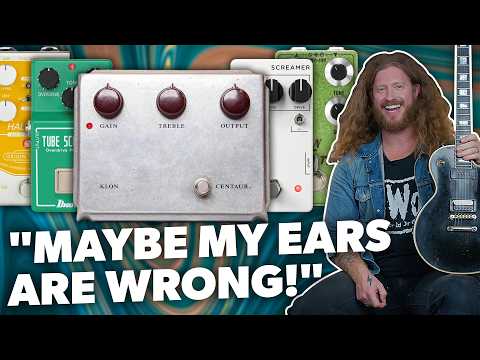
But things like compression pedals and that kind of stuff. I've tried all of it. Yeah, no. But that's actually exactly what I'm not looking for. And also, I think you're actually the very first person ever on this podcast without an overdrive pedal. Oh really. Yeah.
What's your relationship with overdrive pedals? Yeah, complicated. Some therapy has been involved. Yeah man. That's been years. Yeah. So, the sound I've come closest to what I want is just a small amp on 10. Really the overdrive from the amp itself. I have a small Fender Champ.
I've got two tubes in it. Yeah, let me see, I've got it right here too. Oh yeah. Yeah, so cool. Yeah. If you just crank it full, especially in the studio, it sounds absolutely massive. It has like a, I think, a 6 inch speaker or something. Uhm.
So that's what I think is the coolest thing. In Benjamin's band Backhouse, I usually just play through this amp, but also really at volume 10. So it's completely breaking up. So then you roll it back on your guitar to... For example. Yeah. I do that with a volume pedal.
Oh yeah. Uhm. So yeah, I have all kinds of overdrive pedals, but there really isn't one where I get the same feeling as actual analog-style overdrive. Yeah, that's tricky. That is pretty bizarre. If anyone has tips. Haha. Tips for cool overdrive pedals.
Yeah, yeah. Just throw them over the fence honestly. And yet you get so many different tones out of it. Is it really mostly in the hands? Yeah, and in the guitar. It's, um, Segovia was a famous classical guitarist and teacher.
He says it really beautifully in an interview with a gorgeous Spanish accent. He calls the guitar an orchestra that you're looking at through the wrong end of a telescope. I think what he means is that everything in the orchestra is present in the guitar,
but smaller. So you can imitate a lot of other instruments on a guitar. And you might not get all the way there to that sound, but you get to something, yeah, something new or unusual. Yeah. Yeah, that is, uh... The harp for example. Those kinds of sounds, right.
Yeah, a bit like you're doing this on a harp, you know. Yeah, but this is also a specific technique that I'm showing you now, because not every mortal can do this. No, well... Because you let it ring out somehow. You let it ring out, yeah. How, uh, can you kind of...
Break it down, I want to... Yeah. How do you explain to me what you're doing? Uhm... Well, the steps are actually relatively simple, but then actually playing it, that takes a while. It's a kind of, yeah, your brain needs to be recalibrated,
because you're always plucking a string and not pressing it down. But I started looking at what the functions within the scale are for each bass note on the guitar. So if you play an F, then the A is a major third. D is a second. G is a six. G is a two or a nine.
A sharp four and a major seven. So those are just the positions those notes occupy within the chromatic scale. And, uhm, then there are a number of scale options that contain those notes. Yeah. It was called Lydie's or Lydian augmented in English.
Uhm, and those scales can take you back into the scales again, but you can then play them, uhm, I do that in third position and descending, so from high to low. And then you replace as many notes as possible with an open string. So that's basically the whole process.
But again, the execution of that is tricky. So this is a kind of major scale, an F, it's called Lydie's. It starts on an F and instead of playing it this way you... You play it like this, with open strings and you try to let everything ring as long
as possible. And then you get this kind of harp effect. Like that. Yeah. And you can do that for every bass note, you can go through that process. Exactly, yeah. And then you just need to know really well what does what and what relates to what. Yeah, exactly. Quite a thing.
Haha. Yeah, well this sounds really awesome. But yeah, that's it. Let's move on to a new segment. Because Gitaarmannen Podcast has a new sponsor. That's Never Enough Stretch. You obviously know them from the blindfold videos we made.
The Vintage Veenendaal fair that I was at last week. And now they've become a permanent part of the podcast with their own segment. Yeah, and I really love that. Because Glenn gave me a really beautiful Strat. Take a look at this. This is the one. Just have a look.
This one shines like crazy. Yeah, that's something. Yeah, this is really a unit. And now I thought it'd be fun Reinier. Yeah. And that's actually the question we're going to ask every guitarist from now on who is the guest on.
What do you pay attention to when you play a guitar for the first time that you've never played before? Yeah, go ahead. I get to say it too. You can say it even if you don't like it. Yeah, I said to Glenn. Mate, if it's nothing special, they need to be able to say that too.
He said of course. But he also added yeah, how could anyone not like a Strat? Well, he's got a point there. Yeah. Fun. And well, the color is already amazing right away. Yeah, it's funky. I'd call it that. Yeah, funky. Ja, funky.
I'd almost say Nile Rodgers wouldn't say no to it. Yeah. Now if you pick up a guitar like that for the first time, say you walk into a guitar shop on a Saturday, somewhere in Amsterdam, and you think oh, that one looks nice.
What do you look for? What's the first thing you do? Yeah, I actually check. Well, right now I check the tuning. That's maybe the very first thing. I always want to know if the intonation is good. Whether it's not off-pitch by itself.
Some guitars, you can tune them fine on open strings, but the moment you fret a note, they're as out of tune as anything. And you can often fix that by adjusting the bridge saddles. You can do that yourself, but sometimes you just can't get it right.
So yeah, I basically do that check first. You play a harmonic at the twelfth fret and then you fret it and see if it's the same pitch or not.
So this one's slightly sharp, but it's really well done though. Yeah. So that's already a good sign. I always pay attention to playability. That's a bit tricky, because guitars in a shop are often not set up optimally yet. At least not to your preference.
But you still try to check whether, for example, the balance between the strings is good. That everything is equally loud. And beyond that it's actually pretty intuitive. You know, can you get the sound out of it that you...
hear in your head, and does the guitar want to meet you halfway, so to speak. Yeah, yeah, because what you're saying I find interesting, because indeed a guitar when it's set up well, yeah, it can just come to you straight away in a sense.
But how do you know that in a shop when it hasn't happened yet or it's only roughly set up? Are there like certain things, because I always compare it to buying a car. Yeah, I've never actually done that.
Well you know, back when my dad was still alive I'd always bring my dad along. Yeah. Yeah, I've never actually done that. Well you know, back when my dad was still alive I'd always bring my dad along. Like, have a look will you? And he'd go like this and a bit like yeah,
yeah, mm, mm. It's a good one, you know? Yeah. I don't know. Do you have certain things you look for? Do you hold it like this or, you know? I used to do that, but honestly I had no idea what I was looking for, you know? Fair enough, yeah. That always looks very...
Interesting, right? Like you know what you're talking about, you know? Uhm, no, I actually feel pretty quickly with my left hand how the strings are set up. By now I've kind of got an eye for it. Yeah. And listening and feeling. Uhm, so yeah, it's more about,
uhm, a bit abstract to explain, but I often pay attention to the high E string and how, how it sounds. Hans Pluut calls that bells. That's a good guitar term, Hans. Ah. Uhm, so how many overtones you... how many tones you, let's say, get out of that high E.
Yeah. That's something I watch for. Uhm, yeah, and sometimes, sometimes it really fights you and still feels heavy to play. That's a bad sign for me. And, and the other way around. Like if something feels really easy and,
and the strings still have enough room to breathe and make tone. That's a good sign. So yeah, I always try all the switches and knobs... Check if they don't make noise. ...if it doesn't crackle. Yeah, yeah, but then you can fix that with WD-40 again...
A lot can be solved with WD-40. ...contact spray. Uhm, I always enjoy checking this. What kind of, uhm, yeah... Unique individual characteristics a thing like this has. Yeah. How this works for example. So that neck, it sits pretty solid on there, you know.
Yeah, that's a cool thing. Okay. Right, so this one is... Approved. ...passed inspection. Yeah, it's nice. Well, interesting. If you ever want to come and have a look at Never Enough Strats, check out neverenoughstrats.com.
And there you can book an appointment directly in Glenn's calendar. And who knows, you might walk out soon with a nice Strat, or a Telly, right, because he has Telecasters too. Oh, cool, right. Shall we take yours off your hands? Yeah, sure. There we go.
I also put it in my own bag. Yeah, yeah, exactly. Yeah. Well the nice thing, I think about this... Glenn had brought it along to Vintage Veenendaal. He says, yeah, which one do you want to take? I say, I like this one.
Yeah. And then I got home and I sat down and played it for a bit. And I genuinely thought, oh, the thing is how ugly it is. But at the same time I kind of find it... Beautiful for an ugliness. Yeah, yeah, I think that's kind of a statement too, you know. So... Yeah.
I kind of want to think of those old hair gel, you know? Oh yeah. Those jars with... Exactly, yeah. Yellow, you know, with those little glitters in it. Yeah, I remember those too, yeah. But it sounds good. That's what matters.
Yeah, great. Hey Reinier, do you have things coming up this year, 2026? Things that are on the horizon or... Yeah, all kinds of concerts. There are also more shows coming up with the orchestra, with the National Youth Jazz Orchestra.
I'll be playing a lot with Ben van Gelder as a saxophone player. In the Netherlands, but also abroad. We're also going to Australia and Korea, Japan. Oh wow. I'm looking forward to it, yeah. Yeah. Yeah, so lots going on. No complaints. No. And in terms of new music, albums or...
Yeah, so... ...releases or how does that work in jazz? yeah. We actually release quite a lot right away. Yeah that is that that that that that that that that that that that that that that that that that that that that that that that that that that that that that that that
that that that that that that that that that that that that that that that that that that that that that that that that that that that that that that that that that that that that that that that that that that that that that that that that that that that
that that that that that that that that that that that that that that that that that that that that that that that that that that that that that that that that that that that that that that that that that that that that that that that that that that that
that that that that that that that that that that that that that that that that that that that that that that that that that that that that that that that that that that that that that that that that that that that that that that that that that that that
that that that that that that that that that that that that that that that that that that that that that that that that that that that that that that often people look at how many likes and how many streams you get yeah and that that the kind of thing
you have to watch out for with who you collaborate with or not releasing too much or you mean I get the sense that in the jazz world it's actually about just making things yeah I think that's right most people have a pretty high output yeah they're all
kind of in-the-moment recordings and I think that has to do with the nature of the music too trying to capture something yeah that actually happens live yeah yeah can I thank you tremendously for your studio your thank you very much best of
luck with everything and we'll keep an eye out nice thank you hey thanks for watching and listening if you enjoyed this episode then you'll probably also love the rest of Gitaarmannen the podcast you can subscribe so you don't miss
anything and also follow me right now on Instagram and TikTok and hit the link below and I'll see you next time with a new video
until next time Gitaarmannen the podcast