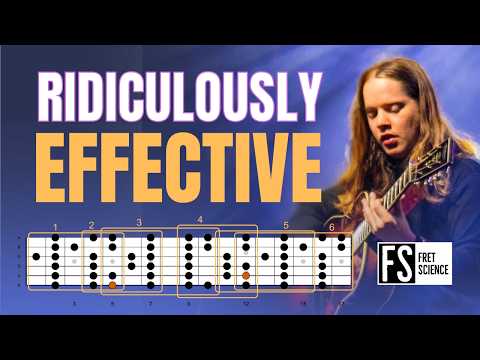
David Gilmour Solo Breakdown: Pink Floyd's "Time"
YouTube Video · Fret Science · 20 июля 2026 г.
Fret Science (US) · educator
Mathematical and geometric approach to visualizing intervals, scales and symmetry across the guitar neck
Расшифровка видеоавто-субтитры · EN · RU
Нажмите на таймкод, чтобы перейти к моменту в видео
David Gilmore's solo on time from Dark Side of the Moon is a masterclass in lyrical bending and no choice and emotional storytelling. In this video, I'll show you two powerful techniques he uses in this solo that you should add to your own soloing toolbox.
Соло Дэвида Гилмора во времени из Dark Side of the Moon — мастер-класс по лирическому bending без выбора и эмоционального повествования. В этом видео я покажу вам две мощные техники, которые он использует в этом соло. Добавьте в свой собственный набор инструментов.
With these tools, you'll be able to target chord tones with expressive bends on demand, and you'll be able to play melodically on one string while still targeting chord tones. Along the way, I'll show you how and why many of the phrases in this classic solo
С помощью этих инструментов вы сможете нацелиться на chord tones с выразительными изгибами спрос, и вы сможете играть мелодично на одной струне, все еще ориентируясь chord tones. По пути я покажу вам, как и почему многие фразы в этом классическом соло
work and how to visualize the fretboard so that you could improvise something similar. Welcome to Fret Science. My name is Keith, and this channel is all about making improvising over chord changes easier by providing better mental models and visualization techniques.
работать и как визуализировать гриф, чтобы вы могли импровизировать что-то аналогичное. Добро пожаловать в Fret Science. Меня зовут Кит, и этот канал посвящен импровизации аккорда. изменения легче, обеспечивая лучшие умственные модели и методы визуализации.
Improvising doesn't require as much scale and arpeggio memorization as you might think, and I believe it's something that any guitar player can learn how to do. So, let's dive in. We'll start with the harmonic foundation.
Импровизация не требует такого большого масштаба и запоминания arpeggio, как вы могли бы Я думаю, и я верю, что это то, что любой guitar player может научиться делать. Итак, давайте погрузимся. Начнем с гармонической основы.
To really understand the notes, we have to understand the context. The solo has two sections. There's a minor sounding verse section, and then there's a chorus section that feels like the sun breaking through the clouds. If we mark all of these chords on a cycle of fifths chart,
Чтобы по-настоящему понять заметки, мы должны понимать контекст. Соло состоит из двух разделов. Есть небольшой звучащий стих, а затем есть хоровая секция, которая чувствует себя как солнце прорывается сквозь Если мы пометим все эти аккорды на графике пятых,
we can see that they fill in three adjacent wedges. And anytime that happens, it means that all of the chords come from the same key. Whenever you see this pattern, the major chord in the middle of the wedge gives us the name of the key.
Мы видим, что они заполняют три смежных клинка. И каждый раз, когда это происходит, это означает, что все аккорды исходят из одного и того же ключа. Всякий раз, когда вы видите этот рисунок, главный аккорд посреди клина дает нам Имя ключа.
So all the chords in this song come from the key of A major. However, when we listen to it, especially in the verse section, F# minor feels like home. So we would say that this song is in the key of F# minor. And as you may know, F# is the relative minor of A major.
Так что все аккорды в этой песне исходят от ключа A major. Однако, когда мы слушаем его, особенно в стихах, F# minor чувствует себя как дома. Поэтому мы бы сказали, что эта песня находится в ключе от F# минор. И, как вы знаете, F# является относительным минором майора.
So this is just two ways of describing the same set of notes. But the distinction is important here because we want to think of these chords in terms of Nashville notation, which will make things much easier to visualize on the fretboard.
Таким образом, это всего лишь два способа описания одного и того же набора нот. Но различие здесь важно, потому что мы хотим думать об этих аккордах в условия нотации Нэшвилла, что сделает вещи намного проще визуализировать на гриф.
That means that even though this song sounds like it's in a minor key, we'll refer to everything based on the parent major scale. So we'll refer to A as our one chord, E is the five, and F# minor is the minor 6. D is the four chord in A.
Это значит, что хотя эта песня звучит так, будто она в минорной клавише, Мы будем ссылаться на все, основываясь на родительском масштабе. Так что мы будем называть А нашим аккордом, E — это пятеро, а F# минор — минор 6. D — это четыре аккорда в A.
And if you extend any one chord or four chord with a seventh from inside the key, you get a chord with a major 7 flavor. So those chords from the chorus section all fit the key perfectly. C# sharp minor is the minor 3 and B minor is the minor 2.
И если вы продлите один аккорд или четыре аккорда седьмым внутри ключа, Вы получаете аккорд с основным 7 вкусом. Так что все аккорды из секции хора идеально подходят для ключа. C# острый минор — это минор 3, а B минор — минор 2. Итак, раздел стихов сольных циклов через минор, A,
Okay. So the verse section of the solo cycles through F# minor, A, E, F# minor four times. And the obvious scale choices to use over that part of the solo would be F# minor pentatonic or F# natural minor which is the Aolon mode.
E, F# minor четыре раза. И очевидный выбор масштаба для использования над этой частью соло будет F# минор. пентатоник или F# натуральный минор, который является режимом Aolon. Заметки обеих этих шкал находятся в ключе А майора.
The notes of both of those scales are in the key of A major. And we can think of the Aolon mode as adding two notes to the minor pentatonic scale. So anyway you look at it, we're really just looking at the same five to seven notes just from different angles.
И мы можем думать о режиме Аолон как о добавлении двух нот к малой пентатонике. В любом случае, вы посмотрите на это, мы просто смотрим на те же пять-семь Заметки только с разных ракурсов. Гилмор в основном использует F# минор пентатоник в этой части соло,
Gilmore mainly uses F# minor pentatonic in this part of the solo, but I think his genius lies in how he uses it to bend up to chord tones on every chord transition. Gilmore opens things with a series of long bends around form one of the F# minor pentatonic at the second fret.
но я думаю, что его гений заключается в том, как он использует его для bend до chord tones на каждом Переход аккордов. Гилмор открывает вещи с серии длинных изгибов вокруг одной из F# минор Пентатоник на втором ладе.
And as he's playing, he's very careful to emphasize chord tones every time the chord changes. I'll highlight the chord tones that he's targeting in the diagram as I play this part of the solo.
И когда он играет, он очень старается подчеркивать chord tones каждый раз, когда аккорд изменения. Я подчеркну chord tones, на который он нацелен в диаграмме, когда я играю Эта часть соло.
It's not that hard to improvise these kinds of lines if you visualize the fretboard in the right way. If you haven't seen my visualizations before, I break the five standard pentatonic fingering patterns down into two smaller patterns that repeat across the fretboard.
Это не так сложно импровизировать эти виды линий, если вы визуализируете гриф в правильном пути. Если вы не видели мои визуализации раньше, Я разбиваю пять стандартных пентатонических рисунков на два меньших паттерны, которые повторяются через гриф.
The red one I call the rectangle, and the blue one I call the stack. These shapes end up being a really powerful visualization tool for finding chord tones and playing a wide range of scales. The dashed red line on the fretboard's called the warp.
Красный я называю прямоугольником, а синий — стеком. Эти формы становятся действительно мощным инструментом визуализации для поиска аккорда Тонны и игра в широкий диапазон весов. Пунктирная красная линия на гриф называется варп.
And anytime a pattern like a rectangle or stack lies across the warp, the part that's on the B and E strings is shifted one fret toward the bridge. This is just an artifact of the way the guitar is tuned. I cover all that in depth in my other videos.
И всякий раз, когда узор, как прямоугольник или стек, лежит через варп, часть, которая находится на струнах B и E, смещена на один лад к мосту. Это просто артефакт того, как настраивается гитара. Обо всем этом я подробно рассказываю в других своих видео.
I'll put links in the video description if you want to check them out. The most efficient way to find chord tones in and around the pentatonic scale is to memorize a small set of overlays, one for each of the seven triads you can build from the major scale.
Я поставлю ссылки в описании видео, если вы хотите проверить их. Самый эффективный способ найти chord tones в пентатонической шкале и вокруг нее — это Запомните небольшой набор накладок, по одному для каждой из семи триад вы можете построить. от крупного масштаба.
And then it's easy to find those chord tones no matter what key you're playing in or where you're playing across the fretboard because they always fall in the same places relative to the rectangle and stack. For this part of the solo, we only need the overlays for the six,
И тогда легко найти эти chord tones независимо от того, в каком ключе вы играете или где вы играете через гриф, потому что они всегда попадают в одно и то же места относительно прямоугольника и стека. Для этой части соло нам нужны только накладки для шестерки,
the one, and the five chords. The chord tones for F# minor, which is the six chord, are right inside the pentatonic scale. And so are the chord tones for A, which is the one chord. E, which is the five chord, has one note that isn't inside the scale, but it's right nearby.
Один, и пять аккордов. chord tones для F# минор, то есть шесть аккордов, Они находятся внутри пентатонической шкалы. И chord tones для A, который является одним аккордом. E, который является пятью аккордами, имеет одну ноту, которая не находится внутри шкалы. Но он рядом.
Whenever there's a target note that isn't in the pentatonic scale, it's worth paying attention because hitting it at the right time makes it really obvious to the listener that you know what you're doing. So, those are our potential chord tone targets for F# minor,
Всякий раз, когда есть заметка-мишень, которая не в пентатонической шкале, это стоит обратить внимание, потому что удар в нужное время делает его действительно Для слушателя очевидно, что вы знаете, что делаете. Итак, это наши потенциальные цели по тону аккордов для F# минор,
for A, and for E, which is all we need for the first half of the solo. And if you know the rectangle and stack system for the pentatonic scale, they'll work across the entire fretboard. It's worth repeating that the coolest thing about this method is that it works in
для А, и для Е, это все, что нам нужно для первой половины соло. И если вы знаете систему прямоугольника и стека для пентатонической шкалы, Они будут работать по всему гриф. Стоит повторить, что самое крутое в этом методе заключается в том, что он работает в
every key. And if you're using the Nashville numbers, the patterns don't change from one key to another. The target notes for the five chord, for example, are always in the same place relative to the pentatonic scale.
И если вы используете номера Нэшвилла, паттерны не меняются от одного ключа к другому. target notes для пяти аккордов, Например, они всегда находятся в одном месте относительно пентатонической шкалы.
It doesn't even matter if you're using major pentatonic instead of minor pentatonic. It just always works. Now, to bend up to these notes, we just have to know that bending up a whole step or the equivalent of two frets reaches the same note as moving up one string and back
Неважно, используете ли вы основной пентатоник вместо второстепенного пентатонического. Это всегда работает. Теперь, к bend до этих нот, мы просто должны знать, что bending вверх целый шаг или
three frets. So, if I'm bending the fifth fret of the B string up two frets, it matches the note at the second fret of the E string. The distance changes to two frets down if you're bending the G string because of the
эквивалент двух ладов достигает той же ноты, что и движение вверх по одной строке и назад Итак, если я bending пятый лад B-струны на два лада, он соответствует ноте на втором ладе струны E. Расстояние меняется на два лада вниз, если вы bending строка G из-за
warp. So bending the fourth fret of the G string sounds the same as the note at the second fret of the B string. To practice playing these bends in tune, I recommend first playing the target note on the next string and then bending up to hit the same pitch.
warp. Таким образом, bending четвертый лад строки G звучит так же, как и нота на Второй лад B-струны. Чтобы потренироваться, играя эти повороты в мелодии, Я рекомендую сначала играть на целевой ноте на следующей строке, а затем bending до Попасть на ту же самую точку.
You really have to use your ears to do it accurately, but after a while, your muscle memory will do 90% of the work. In that opening section, Gilmore targets F#, which is the root of the F# minor chord. He hits that with a hammer on.
Вы действительно должны использовать свои уши, чтобы сделать это точно. Но через некоторое время ваша мышечная память будет выполнять 90% работы. В этом вступительном разделе Гилмор нацелен на F#, который является корнем F# минор аккорда. Он ударяет молотком.
And then over the A chord, he targets C sharp, which is the third of A. And we can visualize that as being the second fret of the B string, and play it by bending up the fourth fret of the G string. Then he targets B, which is the fifth of E.
А потом над аккордом А он нацелился на С остро, который является третьим из А. И мы можем представить, что это второй лад строки «Б», и играть его bending на четвертом ладе строки G. Затем он нацеливается на Б, который является пятым из Е.
And then he targets F#arp, which is the root of F# minor. And he does that by bending up to G sharp, which is the third of E, and then releasing. Here's the target note on the G string. And then here's the bend on the D string.
А затем он нацеливается на F#arp, который является корнем F# минор. И он делает это с помощью bending до G резкого, Это третья часть Е, а затем высвобождается. Вот мишень на строке G. А вот bend на строке D. В этот момент Гилмор начинает двигаться вокруг шеи.
At this point, Gilmore starts moving around the neck. And again, the rectangle and stack shapes make this easy. He slides up into the house of the blues at the fifth fret, which is just another pentatonic stack diagonally connected to the one he was just
И опять же, прямоугольник и стек формы делают это легко. Он скользит в дом блюза на пятом ладе, который является просто еще одним пентатоническим стеком по диагонали соединенным с тем, что он только что был
playing. It's warped slightly because it falls on both the G and B strings. Gilmore ends his phrase by playing a descending F# minor arpeggio all inside the pentatonic scale and then landing on F# again. For the second pass through the chords,
играющ. Он слегка искривлен, потому что он падает как на струн G, так и B. Гилмор заканчивает свою фразу, играя нисходящий F# minor arpeggio все внутри пентатонический масштаб, а затем приземление на F# Опять. Для второго прохода через аккорды,
he starts out similarly, starting with the F sharp he just landed on and bending up to a C# sharp over the A chord again. Then he slides up to a sixth interval at the ninth fret.
Он начинает аналогично, начиная с F острие он только что приземлился и bending вверх на C# снова острый над аккордом. Затем он скользит до шестого интервала на девятом ладе.
We can think of this as both being part of an A triad there or part of the form four A major F# minor pentatonic. In this phrase, Gilmore makes it clear that he's thinking A major. He bends the third of A up a half step,
Мы можем рассматривать это как часть A triad там или часть формы четыре. Крупный пентатоник. В этой фразе Гилмор ясно дает понять, что он думает о майоре. Он наклоняет третью часть А вверх на полшага,
which we can practice by playing the note one fret higher and then bending to match it. We can visualize the notes of the A major or F# Aolon scale by adding two notes inside the rectangle like this and two notes around the stack like this.
который мы можем практиковать, играя ноту на один фрет выше и затем bending чтобы соответствовать Это. Мы можем визуализировать ноты шкалы A major или F# Aolon, добавив две ноты внутри прямоугольника, вот так и две ноты вокруг стека.
And again, this works in every playing position. Then he bends up to B, which is the fifth of the E chord just as the chord changes to E. Again, we can practice that by playing the note two frets higher and then bending to match the pitch.
И опять же, это работает на всех игровых позициях. Затем он наклоняется до B, который является пятым аккордом E так же, как и аккорд меняется. Е. Опять же, мы можем практиковать это, играя ноту на два лада выше, а затем bending до Совпадение с полем.
From there, his melody also emphasizes G sharp, which is the third of E before bending up to A and then bending to F sharp just as the chord changes to F sharp minor. That phrase is a little tricky to keep in tune with those two backto back bends.
Оттуда его мелодия также подчеркивает G Sharp, который является третьим E перед bending до A, а затем bending до F резко так же, как Аккорд меняется на F острый minor. Эта фраза немного сложна, чтобы держать в гармонии с этими двумя поворотами спины.
You can practice them by first playing the phrase, fretting the target notes, and then practice making the bends match what you heard. I find it easiest to use my ring finger for the first bend and my middle finger for the second one.
Вы можете практиковать их, сначала сыграв фразу, фреттинг target notes, а затем практикуйте, чтобы изгибы соответствовали тому, что вы слышали. Я считаю, что проще всего использовать мой безымянный палец для первого bend и мой средний палец для Второй.
For the third cycle, he moves up to the 14th fret, which is a repeat of the form one pentatonic. He starts out with an F# minor arpeggio which we can visualize inside the rectangle and stack using the minor 6 target notes. That first big bend is bending up to the F sharp root.
В третьем цикле он поднимается на 14-й лад, которая является повторением одной пентатонической формы. Он начинает с F# minor arpeggio, который мы можем визуализировать внутри прямоугольника. и стек, используя минор 6 target notes.
He moves around the pentatonic scale and bends up to the third of the A chord.
Первый большой bend — это bending до F резкого корня. Он перемещается по пятитонной шкале и сгибается до третьего аккорда А.
And then he does a quintessential David Gilmore bend. While holding that first bend, he overbends up to the fourth and then releases to the third again. We can visualize those notes here in the rectangle.
А потом он исполняет квинтэссенцию David Gilmore bend. Придерживаясь первого bend, он перегибает до четвертого, а затем выпускает Третий снова. Мы можем визуализировать эти заметки в прямоугольнике.
That sequence of bends is really hard for a lot of guitar players to do in tune. And I think the hardest part is nailing the partial release. I find it's easiest and it sounds best if I release a little bit more than I need to
Эта последовательность изгибов действительно трудно для многих гитаристов сделать настройку. И я думаю, что самое сложное — это частичное освобождение. Я считаю, что это проще и звучит лучше, если я выпущу немного больше, чем мне нужно.
and then bend back up slightly until it sounds in tune. To practice it again, I recommend playing the notes you're targeting without the bend so that you can hear what they should sound like and then practice bending to match the pitches you just heard.
и затем bend немного отстает, пока он не будет звучать в мелодии. Чтобы практиковать его снова, я рекомендую играть ноты, на которые вы нацелены без bend, чтобы вы могли слышать, как они должны звучать, а затем практиковать bending для
Again, over the E chord, he targets the fifth, which is a B note, and he lands on an F sharp when it transitions to the F# minor chord. Over
Совпадают с полями, которые вы только что слышали. И снова, над аккордом Е, он нацелился на пятую, который является B нотой, и он приземляется на F острый, когда он переходит на F# минор аккорд. Over Over
the F sharp minor chord, there's a subtle bend. He bends up to the fourth and then does a very small bend on the minor third. This is typical of a lot of blues phrasing where whenever you hit a minor third, you nudge it up just a little bit.
F острый минорный аккорд, есть тонкий bend. Он сгибается до четвертого, а затем делает очень маленький bend на младшей трети. Это типично для многих блюзовых фраз, когда каждый раз, когда вы ударяете маленькую треть, Немного подтолкни его.
It's not quite a halfstep bend up to the major third, but it's just enough to bring it into the gray area between minor and major. This is another area where the rectangle and stack visualization helps a lot.
Это не совсем полушаговый bend до основной трети, но этого достаточно, чтобы привести его в серую зону между незначительным и Майор. Это еще одна область, где визуализация прямоугольника и стека очень помогает.
In the minor pentatonic scale, the minor third is always in the same position in both the rectangle and stack. So, it's easy to keep track of which notes need that little bend, no matter which pentatonic position you're playing in. For the fourth pass through the chords,
В малой пентатонической шкале малая треть всегда находится в одном и том же положении. как прямоугольник, так и стек. Так что легко отслеживать, какие ноты нуждаются в этом маленьком bend, Неважно, в какой пентатонической позиции вы играете. Для четвертого прохода через аккорды,
he adds in some pre-bend releases, which is another great technique to work on once you have pretty good muscle memory for regular bends. With those, you bend up silently, pluck the string, and then release the bend. He does two of them in a row here.
Он добавляет в некоторые релизы pre-bend, которая еще одна отличная техника для работы, как только у вас есть довольно хорошая мышечная память для регулярных изгибов. С этими, вы bend молча поднимаетесь, выдергиваете строку, Затем выпустите bend. Он делает два из них подряд.
And again, you can practice these by playing the target notes without bends at first to hear how they should sound like, and then practice making the bends match those pitches. The last phrase of this section is a bend up to the third of A over the A chord that
И снова, вы можете практиковать их, играя в target notes без изгибов сначала Чтобы услышать, как они должны звучать, а затем практикуют, чтобы изгибы соответствовали этим питчи. Последняя фраза этого раздела — это bend до трети А над аккордом А, что
releases down to the fifth of E over the E chord. And he plays an E major arpeggio in the familiar D chord shape and slides up to the F sharp just as we hit the last F# minor chord. He ends the phrase by walking down the pentatonic scale to a C#arp, which is the fifth of F#
Выпускает до пятой части E над аккордом E. И он играет E-major arpeggio в знакомой форме аккорда D и скользит до F резко, как мы нажмем последний ф# минор аккорд. Он заканчивает фразу, идя по пентатонической шкале до C#arp. Что является пятым по счету F# minor.
minor. Now, just to take a step back for a moment here, what we've seen is that Gilmore has basically stuck to F# minor pentatonic for the whole solo so far. And he's hitting chord tones every time the chord changes.
Теперь, чтобы сделать шаг назад на мгновение здесь, Что мы видели, так это то, что Гилмор в основном придерживался пентатонического F# минор для F#. До сих пор в полном одиночестве. И он бьет chord tones каждый раз, когда аккорд меняется. Он прокладывает путь от гайки до гриф.
He's working his way from the nut all the way up the fretboard. The chorus section alternates back and forth between D major 7 and A major 7 and then transitions back to the verse by cycling through the other chords. We can still think of all of this as F# minor,
Секция хора чередуется между D major 7 и A Major 7, а затем возвращается к стиху, катаясь по другим аккордам. Мы все еще можем думать обо всем этом как о F# минор, Но ощущения здесь разные. Акцент на аккорде D мажор 74 придает ему вкус Lydian,
but the feel here is different. The emphasis on the D major 74 chord gives it a Lydian flavor, which is partly why it sounds like the sun breaking through the clouds. Lydian's the brightest sounding of all the major scale modes, and often when you emphasize the four chord,
Отчасти поэтому это звучит как солнце, пробивающееся сквозь облака. Lydian — самое яркое звучание из всех основных режимов масштаба, И часто, когда вы подчеркиваете четыре аккорда, Это звук, который ты получаешь.
that's the sound you get. We could switch to the D major pentatonic scale or the D Lydian mode here. And of course, all of those notes are also the same as the key of A major. So, we wouldn't be changing keys so much as changing which notes inside the key would be emphasizing.
Здесь мы можем перейти на пентатоническую шкалу D или режим D Lydian. И, конечно же, все эти заметки такие же, как и ключ А майора. Таким образом, мы не будем менять ключи так сильно, как менять заметки внутри ключа. будет подчеркивать.
Gilmore does start out with D major pentatonic in this section, but then he makes a surprising scale choice that's a lot less obvious, and I'll come back to that when we get to that part of the solo.
Гилмор начинает с пентатонического ди мажор в этом разделе, но потом он делает удивительный выбор масштаба, который гораздо менее очевидный, И я вернусь к этому, когда мы перейдем к этой части соло. Он начинает в форме 4 пентатоники с arpeggio, который скользит до формы Один.
He starts in form four of the pentatonic with an arpeggio that slides up to form one. And then here he switches gears. For the next part of the solo, he uses E major pentatonic over the alternating D major 7 and A major 7. E major pentatonic is a surprising choice at first,
А тут он переключает передачи. Для следующей части соло он использует E major pentatonic над чередующимся D Большой 7 и майор 7. E major pentatonic поначалу является удивительным выбором, Но на самом деле это очень умно, если вы немного углубитесь в теорию музыки.
but it's actually really smart if you dig into the music theory a little bit. We're still in the key signature of A major. And inside the A major scale, there are three major pentatonic scales, A, D, and E.
Мы все еще в ключевой подписи майора. А внутри крупного масштаба есть три основных пентатонических чешуи, A, D и E. Оказывается, вы можете использовать любой из них для этой части соло, пока вы подчеркиваете chord tones при смене аккордов.
Turns out you can use any of them for this part of the solo as long as you emphasize chord tones when the chords change. The reason E major pentatonic is the surprising best choice is that it's the only one of those three scales that contains the G sharp note.
Причина, по которой E major pentatonic является удивительным лучшим выбором, заключается в том, что он единственный одна из трех шкал, содержащих ноту G. Если вы помните, я упомянул, что акцент на D мажор 7 в хоре дает ему Lydian чувствуется. Характерная нота режима Lydian,
If you remember, I mentioned that the emphasis on D major 7 in the chorus gives it a Lydian feel. The characteristic note of the Lydian mode, the note that makes it sound like Lydian is the sharp four. And in D Lydian, that note is G# sharp.
Нота, которая звучит как Lydian — это острая четвёрка. И в D Lydian эта нота является G# резкой. Так что это нелогично, но E major pentatonic в этой части соло — это то, что позволяет Gilmore придать этому разделу ощущение Lydian.
So, it's counterintuitive, but E major pentatonic in this part of the solo is what allows Gilmore to give this section a Lydian feel. He goes for it right away, targeting G sharp over the first A major 7 chord. G# sharp's the natural seventh of A major 7.
Он идет на это сразу, нацелившись на G острый за первый аккорд A Major 7. G# — естественная седьмая из A Major 7. На самом деле это один из chord tones. Затем он скользит вниз к Е, которая является пятой из основных. 7.
So, it's actually one of the chord tones. Then he slides down to E, which is the fifth of A major 7. He leans into the G sharp again when the chord changes back to D major 7. And this is the first time in the solo that he's targeting a note that isn't in the
Он снова наклоняется в острие G, когда аккорд возвращается к D мажор 7. И это первый раз в соло, что он нацелен на ноту, которой нет в аккорд. И делает это, чтобы подчеркнуть звук Lydian. Затем он метит F острый, который является третьим из D мажор 7.
chord. And he does it to emphasize the Lydian sound. Then he tags F sharp, which is the third of D major 7, before landing on C sharp, which is the third of A major 7. In this whole section, he's playing everything on just the B string. And this is a great skill to work on,
перед посадкой на C острый, который является третьим по величине 7. Во всем этом разделе он играет все на струнах «Б». И это великое умение работать над, возможность играть мелодично, используя пентатоническую шкалу на одной струне, пока все еще chord tones.
being able to play melodically using a pentatonic scale on one string while still targeting chord tones. This is a lot more challenging to visualize than what we were doing with the F# minor pentatonic because these chords don't all relate cleanly to E major.
Это намного сложнее визуализировать, чем то, что мы делали с F#. Малый пентатонический, потому что эти аккорды не все чисто относятся к E-major. Я не собираюсь вдаваться в подробности этого, но это хорошее время, чтобы указать, что есть загружаемая PDF-версия этого
I'm not going to go into the full details of that here, but this is a good time to point out that there's a downloadable PDF version of this lesson that does talk through those details and also explains the visualization techniques that I'm using in this video.
урок, который говорит через эти детали, а также объясняет визуализацию Технологии, которые я использую в этом видео. Есть также минусовка с предварительно сделанными петлями для различных секций, и они скажут вам, какой аккорд играет в любой момент времени;
There's also a backing track with pre-made loops for the various solo sections, and those will tell you what chord is playing at any given time, which is a great way to practice. Those are available to all of my paid Patreon subscribers,
Это отличный способ практиковаться. Они доступны всем моим платным подписчикам Patreon, Так что проверьте это, если вы хотите пойти на другой уровень глубже. Абоненты золотого и платинового уровня также получают доступ к моему полному курсу improv 101,
so check that out if you want to go another level deeper. Gold and platinum tier subscribers also get access to my complete improv 101 course, which teaches all the music theory and visualization techniques you need to learn to improvise melodic solos over chord changes.
которая учит всем техникам теории музыки и визуализации, которые вам нужно научиться импровизировать мелодичные соло над изменениями аккордов. И я хочу поблагодарить моих золотых платиновых участников Patreon за спонсирование этого видео.
And I want to thank my golden platinum Patreon members for sponsoring this video. Their support makes videos like this possible. If you like this kind of analysis, definitely check out the Fret Science Patreon.
Их поддержка делает подобные видео возможными. Если вам нравится такой анализ, Обязательно проверьте Fret Science Patreon. Теперь, чтобы играть пентатоническую шкалу вдоль одной струны, одновременно ориентируясь на chord tones, Мы должны объединить эти две вещи.
Now, to play a pentatonic scale along one string while also targeting chord tones, we need to combine those two things. First, we need to be able to visualize the pentatonic scale on one string and play melodies on it.
Во-первых, мы должны иметь возможность визуализировать пентатоническую шкалу на одной струне и играть. мелодии на нем. Узор довольно прост, и основной пентатонический корень легко найти. Это самая низкая нота внутри группы из трех нот, разделенных двумя ладами.
The pattern's pretty simple, and the major pentatonic root is easy to find. It's the lowest note inside the group of three notes separated by two frets. So, for E major pentatonic, that notes at the fifth fret of the B string. The other thing we need to visualize is triads.
Итак, для E major pentatonic это ноты на пятом ладе B-струны. Еще одна вещь, которую нам нужно визуализировать – это триады. Для этой части соло нам нужно только иметь возможность найти ноты в D мажор Величайшие триады. Итак, если мы посмотрим на три верхних струн,
For this part of the solo, we only need to be able to find the notes in the D major and A major triads. So if we look at the top three strings, each of those triads has three fingerings. In this case, the chords are major sevens.
Каждая из этих триад имеет по три пальца. В этом случае аккорды являются основными семерками. Каждый раз, когда мы видим корень, мы также можем играть ноту на один фрет ниже как аккорд. тон. Требуется некоторая практика, чтобы узнать, когда смена аккорда вот-вот
So anytime we see a root, we could also play the note one fret lower as a chord tone. It takes some practice to become aware of when the chord change is about to happen and then find a nearby chord tone from the upcoming chord and land on it at the right time.
произойдет, а затем найти близлежащий аккордный тон из предстоящего аккорда и приземлиться на него в Подходящее время. Я настоятельно рекомендую узнать названия заметок на трех верхних струнах и я Также настоятельно рекомендуется изучить три формы ноты triad.
I highly recommend learning the names of the notes on the top three strings and I also highly recommend learning the three note triad shapes there as well. I don't often recommend memorization, but this stuff just makes everything easier in the long run.
Я не часто рекомендую запоминать, Но это делает все проще в долгосрочной перспективе. У меня есть видео на обе эти темы, связанные в описании видео. Если собрать эти визуализации вместе, Мы можем играть мелодично на одной струне, но все еще попадал в chord tones по требованию.
I have videos on both of those topics linked in the video description. If we put those visualizations together, we can play melodically on one string, but still hit chord tones on demand. So, here's a really simple example of what that sounds like using E major pentatonic.
Итак, вот действительно простой пример того, как это звучит с использованием E major. Пентатоник.
Now, as I mentioned, we can swap out the E major pentatonic for either D major or A major. So, here's an example of doing it with A major pentatonic. The chord tone targets are still exactly the same. So, we can still hit that juicy G sharp over the A major 7 chord,
Теперь, как я уже упоминал, мы можем заменить пентатоник E на D major или A. Вот пример того, как сделать это с крупным пентатоником. Цели аккордов остаются точно такими же. Итак, мы все еще можем ударить этот сочный «Г» по аккорду А-Семерки.
but now the root of the pentatonic scale has moved up to the 10th fret.
Но теперь корень пентатонической шкалы переместился на 10-й лад.
At the end of the solo, Gilmore returns to the second position in F# minor pentatonic. Just like at the beginning of the solo, over the last A major 7 chord, he targets the third, which is C sharp.
В конце соло Гилмор возвращается на вторую позицию в F# минор Как и в начале соло, за последний аккорд A Major 7, он нацелен на третий, который является C острым. На последнем D мажор 7 он перегибает, чтобы нацелиться на корень, а затем снова сгибается в
Over the final D major 7, he overbends to target the root and then bends up again in the same place. But this time uses a regular bend to target the major 7th, which is a C sharp. When the chord changes to C# sharp minor, he targets the root, which is again C#arp. Over
то же самое место. Но на этот раз использует обычный bend, чтобы нацелиться на основной 7-й, который является C острым. Когда аккорд меняется на C# острый минор, Он нацеливается на корень, который снова C#arp. Over Over B минорный аккорд, он снова нацелился на корень,
the B minor chord, he targets the root again, B. And then finally, he plays a little fill that would work on any major triad, landing on E over the major chord.
Б. И, наконец, он играет небольшую роль, которая будет работать на любом крупном triad, Посадка на E над главным аккорд.
If you go back through it all and check the math, you'll see that Gilmore targeted chord tones on every single chord transition in the solo except in the one place where he purposely targeted the sharp four to reinforce the Lydian sound. It's just beautifully done.
Если ты пройдёшь через всё это и проверишь математику, вы увидите, что Гилмор нацелился на chord tones при каждом переходе аккордов в одиноко, за исключением одного места, где он намеренно нацелился на острую четверку, чтобы усилить Звук Lydian. Просто красиво сделано.
So, that's what David Gilmore did in his solo. But if you'd like to learn an even easier way to improvise over this chord progression, check out this video. And if you want to see how the rectangle and stack system can help you learn all
Именно это и сделал Дэвид Гилмор в своем соло. Но если вы хотите научиться еще проще импровизировать над этим аккордом Прогресс, посмотрите это видео. И если вы хотите увидеть, как система прямоугольника и стека может помочь вам узнать все
your scales across the entire fretboard in about 15 minutes, check out this one. Don't forget to like and subscribe and leave me a comment to let me know which solo you'd like me to break down next. As always, you can find out more at fretc science.com. See you next time.
ваши весы по всему гриф примерно за 15 минут, Посмотрите на эту. Не забудьте понравиться и подписаться и оставить мне комментарий, чтобы дать мне знать, какое соло Вы хотите, чтобы я сломался следующим. Как всегда, вы можете узнать больше на fretc science.com.