
The ONE Arpeggio EVERY Jazz Guitarist Needs To Know
15 October 2026 · Source: Jens Larsen — jazz guitar lessons
The Scale Myth Jazz musicians don’t always think in scales. Wes Montgomery called what he played ‘a sound’. This arpeggio is all over famous jazz solos, and it doesn’t come from a scale, but it does give your playing that real jazz tension and energy, and it is surprisingly easy to play and move around. […] The post The ONE Arpeggio EVERY Jazz Guitarist Needs To Know first appeared on Jens Larsen .
The Scale Myth
Jazz musicians don’t always think in scales. Wes Montgomery called what he played ‘a sound’. This arpeggio is all over famous jazz solos, and it doesn’t come from a scale, but it does give your playing that real jazz tension and energy, and it is surprisingly easy to play and move around.
So in this video, I will show you the arpeggio, how great jazz players use it, and how to use it as a shortcut to beautiful jazz lines that beginners often find impossible.
How The Arpeggio Changes The Sound
Before we get to how famous artists use the arpeggio, If you rely on just the basic scales and arpeggios, your lines might sound like this:
But check out how this arpeggio adds some nice tension and a different flow to the entire thing:
That simple arpeggio, especially when it is played as a triplet,
can help you level up your jazz lines without tons of difficult theory and technical exercises.
Later I’ll show you how you could analyze and explain the arpeggio with 3 different scales, but actually that is not how people like Charlie Parker and Wes Montgomery thought about it.
Let me show you how it works and how they used it. In the end, playing it is what matters most.
The Arpeggio And Where To Use It
Let’s look at what is actually going on.
The arpeggio is used over the dominant chord. In this case, G7, before it resolves to Cmaj7.
Explainer ex 2: (add notes of chords,: G B D F + B D F Ab)
(play G7)
What I am playing is B D F Ab, so that is 3 chord tones and then an Ab, which is a b9 over the G7.
The only “new” or “strange” note is the Ab which isn’t normally there on a G7 in C major,
but if you listen to how that sounds in chords, you can also hear how it makes sense in the progression, just making it have more energy and tension towards the resolution:
So the rule you want to remember when you practice is:
For A Dominant That Resolves, Use The Diminished Arpeggio Of The 3rd Of The Chord.
And the resolution part matters. The dominant has to be going somewhere — if it’s just sitting there, like in a blues vamp, this sound doesn’t work as well.
So in this example, you have a G7 resolving to Cmaj7, and the diminished arpeggio is Bdim.
Let’s get into how legends like Joe Pass, Wes and Charlie Parker use it.
You’ve Already Heard The Legends Use It
This sound has been in Jazz for decades, and Charlie Parker uses it all the time.
Here’s an example on a II-V-I from his solo on Relaxin’ At Camarillo, and check out the extra note he adds as well:
What you have here is the B diminished over G7(b9).
And again he is playing it as a triplet, but he goes one step further than the diminished chord; he adds a Bb, which is a, to the line before resolving to the 5th of Cmaj7, G.
This is very typical for how Parker uses the diminished arpeggio, and you can easily start doing that yourself.
Later I’ll show you some other jazz tricks with diminished arpeggios that make your solo lines really pop.
Let’s look at how Joe Pass applies the diminished arpeggio:
This is a very clear example of how the diminished arpeggio works, but it also shows you a great way to construct lines:
Joe plays the Em7 arpeggio using a triplet rhythm, and uses it to target the 3rd of A7.
He then inserts the C#dim and uses that to smoothly resolve to Dm7, letting the b9 do its job and pull towards the resolution.
Wes uses the same sound as well; here it is on a D7 resolving to Gm7 in a Blues in F.
We are often taught to think of Jazz as chords with scales assigned to them, and that is how you create lines. So you look at a lead sheet and see small labels showing what scale goes where, but that approach was added later, and it doesn’t really fit how they actually thought about it.
As Wes told Joe Diorio about soloing:
“Wes, when you think of Dm7 G7 C, what do you think?”
He said, “Man, it’s a sound”
It’s not a symbol, it’s not a scale, IT’S A SOUND.
So like Wes and Parker, we can learn this as a sound, how the arpeggio gives you tension that you can resolve. We don’t have to attach scales and theory to it.
A bonus with this arpeggio is that it is really easy to play, so there are a lot of great lines that you can add to your solos. Let’s dive into that.
3 Easy Ways To Use The Diminished Arpeggio
You’ve seen some of the ways the arpeggio works already, but let’s look at some of the things that make it practical and easy to play. Then I’ll also show you how it becomes a great way to add one of the most beautiful melodies in jazz.
The first thing is that the diminished arpeggio is symmetrical, which makes lines like this easy to play.
In this case, symmetrical means that inversions have the same fingering making them easy to play. Since a diminished arpeggio is built from a stack of 4 minor 3rds, you can start on any note and get a diminished arpeggio.
So if you have one way of playing the arpeggio, you can move it around the neck and play it in other places easily. Which is what I used in this lick
First, playing the arpeggio with a triplet rhythm and then playing the same fingering moved up 3 frets with a different rhythm before resolving
Another thing that makes it easy to use on guitar is that the shapes are very easy to sweep or economy pick, which makes them easier to play fast. Something I am sure Yngwie Malmsteen loves about them as well:
The reason these are easy to economy pick is down to two things
When I play this, then nothing is stretchy, because all intervals are a minor 3rd.
The other part of it is that I have an easy way to place the 3 notes so that there are not two notes in the same fret etc. Keeping everything nice and tidy,
Of course, if you only play sweeping diminished arpeggios, you will sound more Swedish Shred than Jazz, but used tastefully, it makes your life a lot easier.
But there is an even more powerful part of jazz that the diminished arpeggios help you get into your playing. Check out how this diminished arpeggio is played in this classic jazz phrase:
There’s a diminished arpeggio in there, but it’s hidden.
This is a technique Barry Harris called pivot arpeggios, and it’s what gives you that big interval skip, so instead of the line just running up and down, it jumps.
The original line sounded like this:`
But if I take the last part of the line and move it up an octave right after the Ab, you get a normal diminished arpeggio:
And, of course, since diminished arpeggios are symmetrical, then Ab diminished and B diminished are the same notes. We can start the arpeggio on any note and get the same melody.
And that is the technique you can use on the diminished arpeggio: Instead of just playing the arpeggio as a row of 3rd intervals:
You can move the first note up an octave and get this beautiful interval skip in the beginning:
You already heard how that works with the arpeggio starting on Ab, but you can use it starting on any note, here’s one starting on B:
So now you have the arpeggio, and three easy ways to actually use it in your lines.
If you want my help turning building blocks like this into real jazz solos, check out my Jazz Guitar Roadmap course. You learn how to take this kind of material and use it to play your own solos on a real jazz standard, with the step-by-step method that has worked for more than 8500 students.
The Jazz Guitar Roadmap:
https://jazzroadmap.com/roadmap-2
At the beginning of the video, I mentioned that you can explain this arpeggio with 3 different scales. Let’s look at those because that also demonstrates why Parker and Wes probably didn’t think in scales.
The 3 Scales Where This Arpeggio Is Found
Show C harmonic minor: C D Eb F G Ab B C at “harmonic minor scale. …”
Most Jazz education focuses on explaining things with chords and scales, and if you apply that to this arpeggio you will get 3 options.
The most common option is to think of a diminished chord or arpeggio as the 7th degree in a harmonic minor scale.
In this case, B diminished is then the 7th degree in C harmonic minor.
This description fits two of the examples you saw already very well, but not all of them.
Here’s how that sounds:
The extra information we get from the scale in this is the b13 Eb,
since the G7 in C harmonic minor is a G7(b9,b13)
This is a good description of both the Joe Pass and the Wes Montgomery examples, since they resolve to a minor chord. This is the sound you’d expect from a dominant in a minor key.
But it doesn’t fit the Charlie Parker example because that also has a Bb, a note that is not in C harmonic minor.
Another option would be C harmonic major
Explainer ex 13b – I decided to shoot it as an explainer, just add the example in the middle
The only difference is the E instead of the Eb
so a G7 from this scale would be a G7(b9,13).
Here’s a line that really puts the E in there as well, since that is the clearest note to get the sound across together with the notes of the B diminished arpeggio
The only scale that really fits the Parker example is using the diminished scale, which is an 8-note symmetrical scale
Explainer ex 13b – I decided to shoot it as an explainer, just add the example in the middle
B Diminished Scale: B C# D E F G Ab Bb B
This scale has the B diminished arpeggio and the, Bb.
Here’s how that sounds:
But this scale contains other very colorful extensions for the G7 as well: the 13th, E, and the, C#.
Parker uses the B diminished arpeggio and the Bb, but he never plays those notes. So it feels like a stretch to describe what he plays with a huge theoretical 8-note scale.
You can look through his solos — the arpeggio turns up all over the place, the rest of that scale basically doesn’t.
When these players only use the arpeggio, and there is no scale around those notes, then describing it with a scale is not the best way to analyze it.
Just thinking the arpeggio and using it like this still sounds great!
Remember that if you want to go over the examples away from the video, you can grab the free pdf. The link is in the description.
The “Boring” Triads
This video was about taking one arpeggio and just using it. There’s a similar approach with basic triads that George Benson and Joe Pass use all the time, and it gives you some of the richest phrasing in jazz.
That’s what I cover in this video!
This “Boring” Triad Exercise Will Save You Years! (But Most Ignore It)
Get the PDF!
You can also download the PDF of my examples here: https://mailchi.mp/jenslarsen/gt6vf5tmdq
Get the PDF and GuitarPro on Patreon:
You can get the PDF and GuitarPro files on Patreon here:
Get a free E-book
If you want to download a Free E-book of 15 II Valt I licks then
Sign up for my newsletter – Get the II V I Ebook
Jazz Guitar Insiders Facebook Group
Join 15000+ Other Jazz Guitarists 🎸Join us in the Facebook Jazz Guitar Group Community: http://bit.ly/InsidersFBGroup
If you have any questions, comments, or suggestions for topics, then send me an email or leave a comment here or on the video. That ias the best way for me to improve my lessons and make them fit what you are searching for.
The post The ONE Arpeggio EVERY Jazz Guitarist Needs To Know first appeared on Jens Larsen.
More in this topic
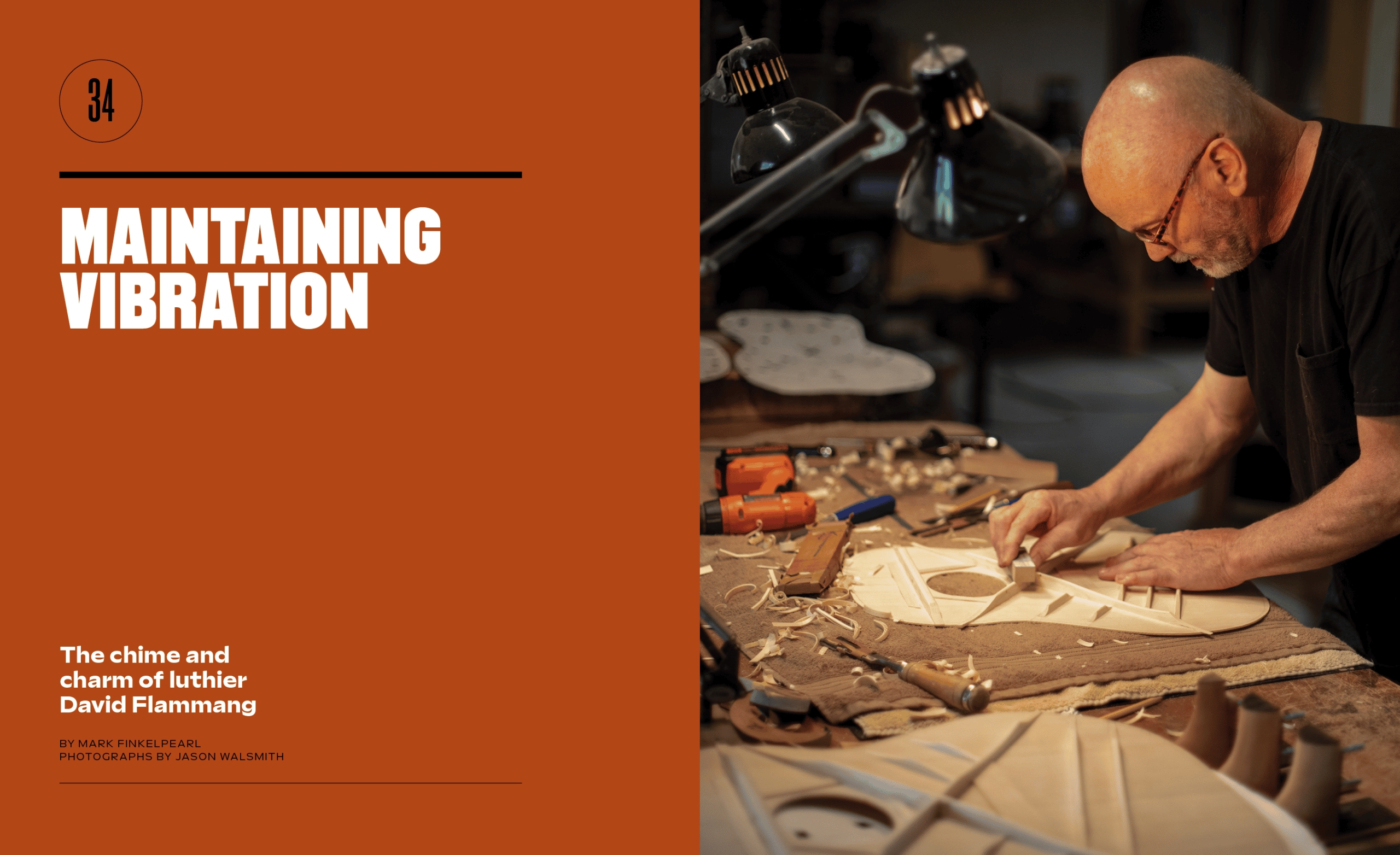 Jazz & fusionWhat’s Inside: Fretboard Journal 61Fretboard Journal
 Jazz & fusionOnce You Play Jazz Chords Like THIS, Everything Sounds BetterJens Larsen — jazz guitar lessons
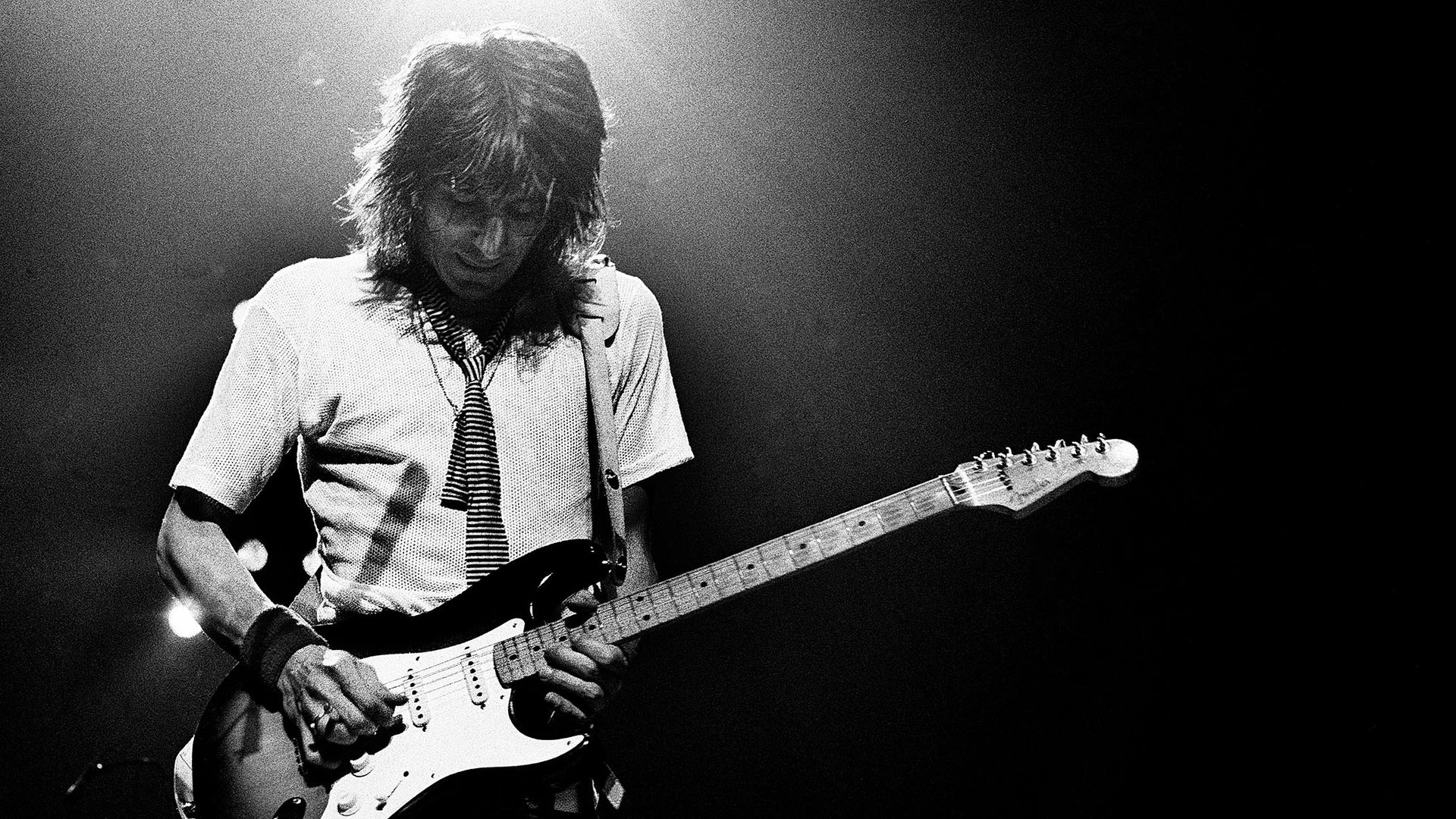 Jazz & fusionHow Ronnie Wood found his voice as a guitaristGuitar World
 Jazz & fusionThe Best Left-Hand Technique For Chords 😎 #jazzchordsThe Best Left-Hand Technique For Chords 😎 #jazzchords Jazz chords often have difficult stretches, but most of getting better at them is how you position your left hand. That part is easy to overlook. Which chord is the hardest stretch for you? Get the PDF on Patreon: https://www.patreon.com/posts/117204729Jens Larsen (YouTube)