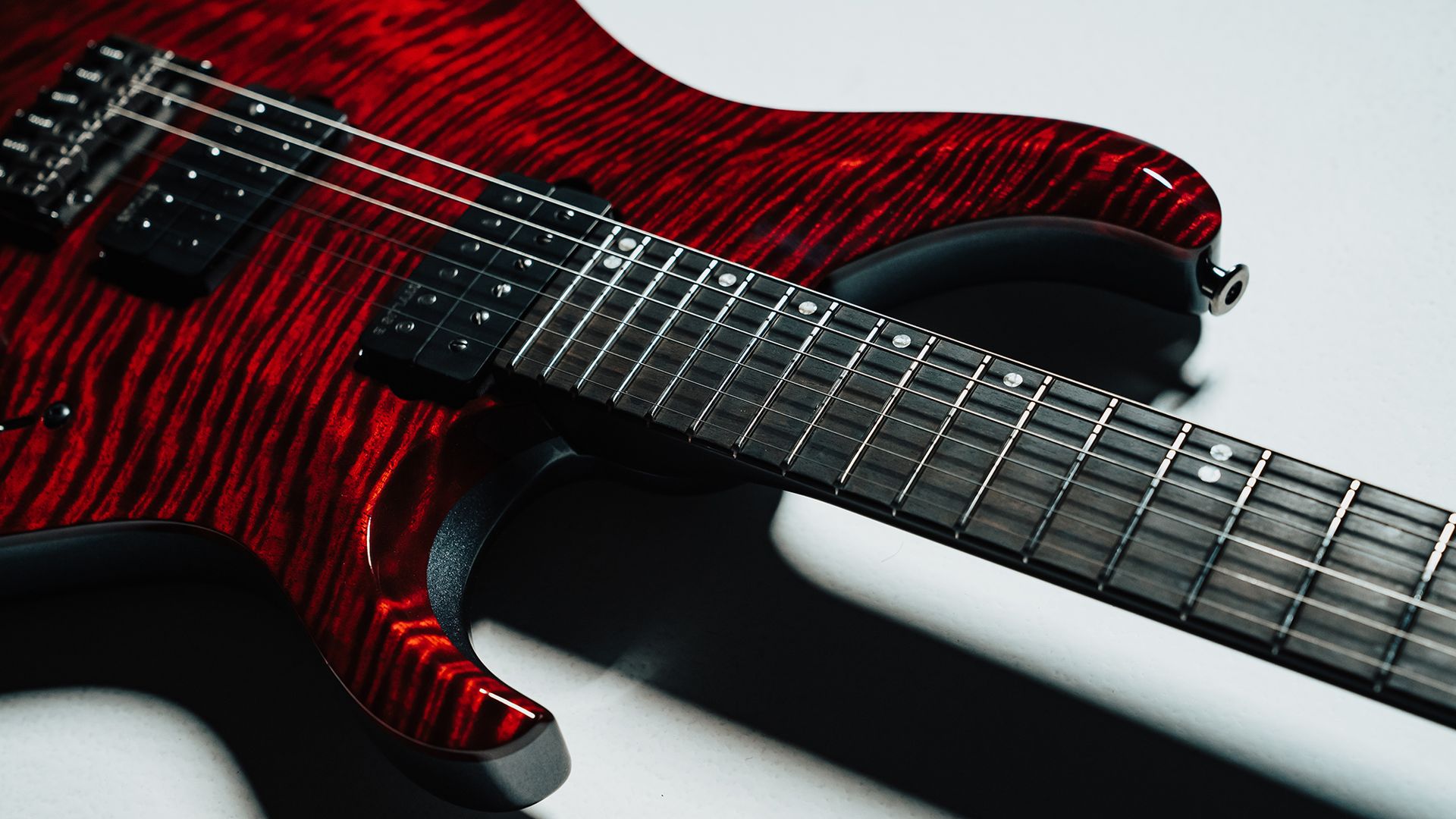
PRS reveals why it decided to ditch Bird inlays for its new Tekton range
13 November 2026 · Source: Guitar World
The firm’s radical new metal guitar family has turned heads, and the omission of its trademark inlays haven’t gone unnoticed
PRS recently doubled down on its metal guitar game and went all-in on a new electric guitar family, the Tekton series.
The firm's pedigree in making heavy guitars is well established. Mark Tremonti, new recruit Herman Li, and Mark Holcomb have all shown that PRS guitars can handle the heavy.
The new Tekton models, though, take that a step further. They feature contours galore, a speedy neck profile, and humbuckers designed with digital rigs in mind.
Sweeping changes have been made across the board, and its iconic Bird inlays – a love or hate feature for many – have also left their perch.
Speaking in the new issue of Guitarist, Director of New Products Engineering, Rob Carhart, has spoken about the small details that make all the difference on these new axes.
“We tried prototypes with birds, dots and even no fingerboard inlays,” he admits. “We wanted the finished guitar to look elegant but a little different from what people expect when they see a PRS, so we ended up with simpler, more utilitarian markers.”
(Image credit: Future/Olly Curtis)Last month, owner Paul Reed Smith laughed off a question about the firm’s 'dentist guitar' reputation during a fan Q&A with Andertons. But the approach to the Tektons suggests there is a real feeling in-house that these guitars had to distinguish themselves from the rest of the PRS lineup.
“We also included Luminlay side dots because they make it easier to see where you are on a dark stage,” Carhart expands. “The position of the volume and tone controls and the three-way switch changed during development, too.
“On a guitar with a tremolo, you don’t want the controls getting in the way of the arm.”
(Image credit: Future/Olly Curtis)This attention to detail has, in turn, led to high praise for the guitars. Guitar World especially has championed the ergonomics of the guitars and the sounds the seven-string model produces.
Carhart’s full interview features in the new issue of Guitarist. Print and digital copies can be ordered from Magazines Direct.
More in this topic
 Blues, rock & metalJosh Homme on Desert Rock #rockmusic #stonerrockRick Beato (YouTube)
 Blues, rock & metalJustice and Michael McDonald’s new GTA VI song sounds like a yacht rock ode to an ’80s Genesis bangerMusicRadar
 Blues, rock & metalMichael J. Fox, John Mayer and Brad Paisley recreate the iconic Back to the Future guitar sceneGuitar Player
 Blues, rock & metalVan Halen and Patty Smyth? Michael Anthony says it almost happened: “Ed was freaking out”The bassist confirms the Scandal frontwoman — and close friend of Valerie Bertinelli —was among those considered after David Lee Roth’s departureGuitar Player