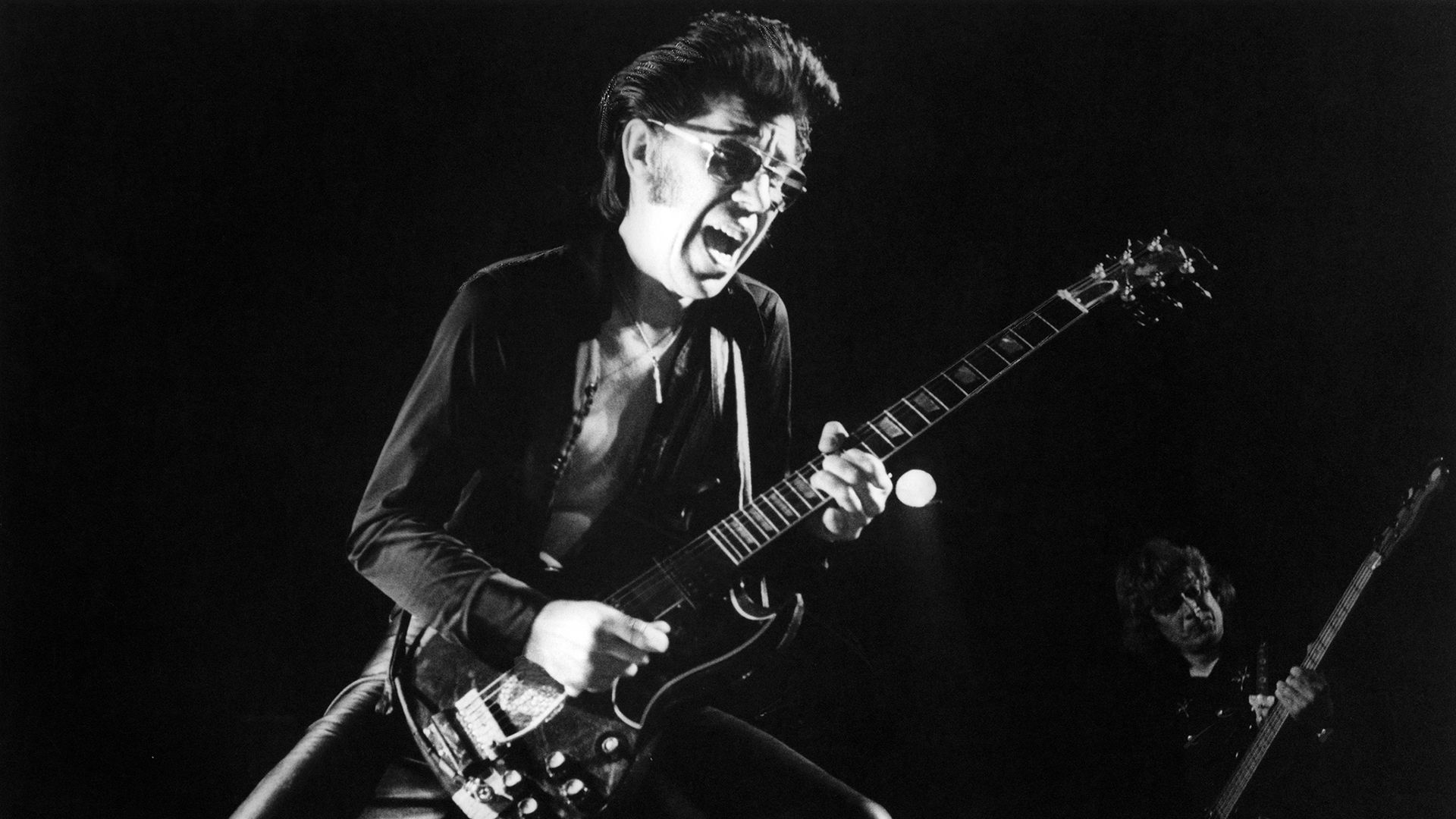
Link Wray on how Rumble changed the game for future guitar heroes
17 November 2026 · Source: Guitar World
Wray's pioneering approach to guitar tone inspired the likes of Jimmy Page and Neil Young
Link Wray may not be a household name, but he might very well be your favorite guitarist’s favorite guitarist. His instrumental single, Rumble, was one of the earliest songs in rock history to use both distortion and tremolo – and it changed the game for the guitarists who followed.
“Maybe if I’d had the right superstar push behind me then, I’d have had more success,” pondered Wray in a 1993 interview with Guitarist. “But then I wouldn’t have my freedom, I wouldn’t be an eagle. I just want to be free and do my own thing.”
It’s perhaps Wray’s unconventional approach to the instrument, and, in turn, his career, that led the slow, menacing Rumble to happen in the first place.
“Rumble was born because we had a group called The Diamonds at the record hop in Fredricksburg, Virginia. They were four guys who sang, and they had a hit called Strolling – it was a dance thing.”
Wray’s band asked him to play a Stroll – a style he wasn’t familiar with. So when the drummer started the beat, what came out was rather different: that iconic dang, dang, dang. A guitar classic was born.
Rumble’s distortion came from a rather curious, well, modification. “I had two little old amplifiers and my heavy Les Paul. It gave me a great sound that night, but it was too clean in the studio… and we had no boxes (effects) back then. So I just started making holes in the speakers with pins. They said I was crazy!”
The track’s success was far from guaranteed, however. When it came out, DJs in New York refused to play it.
“There were these teenage gangs… and whenever they had a fight, the headlines would call it a ‘rumble.’ One day I was being interviewed on the radio… and the disc jockey turned the mic up and said, ‘I’m not gonna play this shit,’ and he smashed the record right there, on the air… It was a smash in New York.”
By banning the record on air, the DJ did Wray a favor. In his own words, the incident “just made the kids want to go out and buy it more.”
It attracted the attention of a fellow guitar hero, too.
“Duane Eddy came on the Milt Grant show with his Rebel Rouser, and he patted me on the back and said, ‘Wow, I hope my record does half as well as yours.’”
“I said, ‘I’m sure it will, I love Rebel Rouser, man.’ So back in those days, it was just me and Duane Eddy. I guess that before me there was The Champs with Tequila, and later on there was The Fendermen, and Jack Nitzsche with The Lonely Surfer. But at the time I didn’t think anybody was doing what I was doing.”
And while Wray continued to release music up until 2000, he largely flew under the radar in the years following Rumble.
However, he went on to influence the likes of Jimmy Page, Iggy Pop and Neil Young – all of whom became household names – before finally receiving his long-overdue recognition in 2023, when he was inducted into the Rock and Roll Hall of Fame in the Musical Influence category.
Page even came out of his semi-retirement for the occasion – and, in a full-circle moment, introduced a whole new audience to Rumble and Link Wray.
More in this topic
 Blues, rock & metalBrian May revisits Queen’s Christmas classic featuring Freddie MercuryGuitar Player
 Blues, rock & metalMeet Stetson Heat Seeker, the Seattle cowboy punks who didn’t want to take guitar lessonsGuitar World
 Blues, rock & metalWhen Rory Gallagher supported Cream at their final show – and fell out with his brother over an autographGuitar World
 Blues, rock & metalTallon Electric Noise plugin review: "Beautifully disgusting"The pedal is a secret weapon amongst modern metal players, but how does it translate in plugin form?MusicRadar