
What is with the
I Finally Get Why These Guitars Cost So Much
26 October 2026 · Source: Rhett Shull (YouTube)
I got to spend a day inside the Collings guitar factory, and I came away with a much better idea of why these guitars feel the way they do. This is the full shop tour: the wood room, the machines, the people, and a brand new Collings 620 that weighs about six and a quarter pounds. We start in the wood room, where they keep tarps over the spruce because light changes the color of the wood, and they sort mahogany by weight per board foot so a 290 doesn't end up with the same blank as a CL or an I-
Video transcriptauthor captions · EN · RU
Click a timecode to jump to that moment in the video
What is with the
Что такое с брезент? Свет.) Есть какая-то древесина, особенно ель. Обесцвечивается светом.
tarps?
И когда вы смотрите на старые акустические гитары и видите, что пикгард выходит или Снимите мост, и вы увидите, насколько свет меняет саму древесину. То, что вы делаете, это управляете светом.
Light.]
Самое интересное в том, что ты приходишь сюда, это видеть, что ты должен курировать довольно широкую Спектр довольно конечным способом. Атмосфера здесь довольно осторожно поддерживается.
So there's some kind of wood, spruce in particular,
И это древесина, которую мы намерены использовать в ближайшем будущем, потому что вы ездите на велосипеде. вещи, которые вы импортируете, эбони, Розовый лес и многое другое. Но многое из этого высушивается здесь, и вы можете увидеть на поддонах, где он находится.
that discolors with light.
Наклеенный так, чтобы он оставался плоским и с воздухом вокруг него. Так много разных видов, Но сам вид никогда не завершит работу. Как мы уже говорили, Поведение этого материала имеет решающее значение для различных моделей, которые мы делаем.
And when you look at old acoustic guitars and you see a pickguard come off or a
Таким образом, с каждой акустической гитарой вы можете увидеть некоторые работы в процессе. Каждый инструмент, вот он: "О, вот страх, Адирондак из розового дерева. Розовая древесина, mahogany, rosewood triple O. Все это – собственный проект.
bridge come off and you see how much the light changes the wood itself.
И поэтому все эти различные виды обозначаются чем угодно, от цвета до вес к жесткости, Возраст. Там столько разнообразия. И в данный момент иногда вы можете прийти сюда завтра, и это выглядит совершенно Разные из-за того, как идет сортировка проекта.
So what you're doing is managing that light.
Но то, что вы увидите через этот проект, процесс сбора древесины, вы знаете, Адирондак собирается на ОМ. И сколько времени это займет? Если привезешь дрова, скажем, получишь груз. и он высыхает здесь. Как выглядит этот процесс?
The neat thing about coming in here is seeing you have to curate a pretty broad
Большая часть древесины, поступающей сюда, сухая и выдержанная. И то, что вы видите здесь - это своего рода акклиматизированное курирование. И сколько времени он проводит здесь, Многое зависит от того, сколько мы используем.
spectrum in a fairly finite way.
Так что, например, запас брекета мы можем прожевать его пучок довольно коротко. Порядок времени. Но иногда может быть, что есть этот африканский шпон. Через Испанию, которую мы можем импортировать раз в год.
So the atmosphere in here is pretty cautiously maintained.
Таким образом, вы смотрите на своего рода замещающую ценность так же, как и на стоимость использования. Но с розовым деревом, елью, махоган, зола, ebony, это действительно нужно сидеть в стабильном месте для Некоторое время.
And this is the wood that we intend to use in the near future because you're cycling
У нас есть печь сзади, которую мы можем добавить влагу или И это его собственная кривая обучения. Я имею в виду, кондиционирование древесины - это искусство. И есть много разных способов сделать это. Но, как мы говорили с различными кусочками красного дерева,
things that you're importing, ebony's,
Мы действительно пытаемся найти конкретный материал. Так что скажите, что вы собираетесь делать гитары из твердого тела при определенной гравитации. Обозначение, чтобы вы могли поддерживать голос, который вы предлагаете людям.
rosewoods, and lots of other things.
Вы не хотите, чтобы у вас были только удары в ваших результатах. И это тоже отсортировано по модели, как 290 получит другой фунт на ногу доски. Как C.L. Wood против I-35. И это действительно то, что делает возможным.
But much of that is dried here and then you can see in the pallets where it's
Потому что вы получаете кривую плотности колокола, чтобы знать об этом, Сортировать для этого. Так что, когда ты получишь красное дерево для своих твердых тел, Вы сортируете по весу на ногу доски. И знаете, для конкретной модели гитары,
stickered so that it's kept flat and with air available all around it.
Он должен находиться в пределах этого диапазона. Если он находится на верхнем или нижнем конце этого диапазона, Он входит в другую модель гитары, потому что вес, Специфическая гравитация махоганы влияет на голос гитары в одну сторону или другое. Ну, в структурных аспектах
So there's so many different species,
Первое впечатление, знаешь, это как если бы ты сделал лаконичный меньший размер, твердая гитара, и вы поднимаете ее, и это 10 фунтов, Вы сразу же задумываетесь об этом. И так, когда тебя сообщают самые убедительные вещи.
but the species alone is never going to finish the work.
История гитары, тогда вы пытаетесь держать ее в том диапазоне, где без даже услышав это, просто коснувшись его в первый раз, Он говорит: «О, я хочу быть вовлеченным в это. И я думаю, что у вас есть структурные аспекты. Только комфорт его, а также его голос.
Like we talked about a little while ago,
Так что кажется, что вы жонглируете многими этими аспектами. И вы знаете, чтобы у нас был довольно ограниченный доступ к действительно тому, что мы Но мы говорим обо всем, как шпон, Как шпон, как здесь, Это шпонные тарелки. Это мостик для эбони-мостов, чтобы понравиться линии.
the behavior of that material is critical to the different models that we make.
Как и испанский кедр, который будет подкладкой. И поэтому они начинают процесс фрезерования и позволяют ему дышать некоторое время. Боже, это лучшая фрезерная комната, в которой я когда-либо был. И наш первый прототип водяной гитары. Здесь у всех есть чувство юмора.
So with every acoustic guitar you can see some work in progress here.
Самый первый водяной убор, который я купила, Мои парни обменялись делами на меня, Возьми с собой гитару домой, купил шесть пачек. Уложить семью в постель, разбить пиво, Он открыл дело, и эта штука сидела там. И я такой: "Что они сделали?"
Every instrument, here's an "Oh, here's a dread,
А потом я подумала: "Боже мой, они действительно вырвали твою мелодию. И мне пришлось перевернуть это. Там Адам. И я попытался настроить его и сыграть, Но я даже не смог его настроить. Так что я просто позвонил ему. Я сказал, вам лучше держать мою гитару в хорошем месте.
here's a rosewood dread, an Adirondack
Нет, нет. Есть инженерия. Офис там. Там я живу с парой моих ребят. И так все приспособления, все прототипы, Все, что мы создаем, сначала проходит через эти машины Прежде чем они поступят в производство.
rosewood dread,
Да, это одно дело. Другое дело, чтобы сделать вещь, которая держит то, что вы делаете. Знаете, вы можете видеть эти бланки моста, которые выходят сюда и Просто вложив его. Есть много планов, которые включаются. Вы знаете, вы можете увидеть мандолинские мосты.
mahogany, rosewood triple O."
3D-моделирование не только инструментов, но из всего оборудования и делать это дома означает, что это не вилка и игра Операция. У вас есть 3D-модель на всем протяжении. И есть много истории и много Билл Коллинз здесь каждый день.
Everything is its own project.
Итак, эти две машины Хааса здесь в основном для строительства Атмосферы, джиги и тому подобное? И работая на прототипе электрического, Знаешь, мы создадим гитару. Мы пропустим первый сюда, докажите программы, убедитесь, что все работает, прежде чем мы передадим его этим
And so all of these different species are designated by anything from color to
Парни здесь, чтобы сделать его производство. Готча. Пути инструментов продолжают обновляться, чтобы вы могли иметь лучшее Результат, лучшие поверхности. И со временем, знаешь, Вся древесина может вести себя немного по-другому,
weight to stiffness,
Поэтому они просто продолжают развивать подход к нему, чтобы мы могли получить от этого то, что мы хотим. Отличный выстрел. Пытаюсь понять, работает ли это.
age.
То, что вы можете увидеть с этим персоналом и этой договоренностью, У нас есть много руководств, которые меняются, как розовый лес, который там снимают. но различные области, вы можете видеть щитки изготовляются, шеи вырезаются, мосты строятся, Вершины и спинки - предтолщина.
There's so much variety.
И поэтому мы можем собирать мелкие компоненты, но как только мы получим этот материал в готовом виде, Вот где она распадается и становится своей собственной реальностью. Да, вы можете видеть вместо того, чтобы иметь стопку из 40 таких, И ты просто вырезаешь эту.
And at the moment, sometimes you might come in here tomorrow and it looks completely
Поэтому он может чувствовать себя немного потенциально неэффективным, Но он также говорит: нет, это то, на чем мы сейчас фокусируемся. Вы знаете, сделать шпон для пигхедов, вы можете увидеть инструмент там, который показывает угол наклона головки, различные отпечатки шпона.
different because of the way the sorting project's going.
Для нас это относительно новая модель, но эти обработки, как раз там, где вставка будет для логотипа. Таким образом, вы можете увидеть все внутренние компоненты там, чтобы держать все вниз в вакууме, Сделать один за раз таким способом.
But what you'll see is through that project,
Я имею в виду, вы действительно ищете детали для казни, чтобы не быть Сломать или разбить. Итак, Бен подробно описывает конкретную модель и масштаб...
the wood picking process, you know,
И когда эти шеи выходят из этого процесс, они сделаны, сделано или есть отделка кожи? О нет, тонны. На них все еще есть шпон, Потом они возвращаются, мы делаем профиль "Пегхед", и мы также делаем заднюю поверхность на колышке, прежде чем это действительно сделано,
the Adirondack going on an OM.
сделано. Есть довольно немного артистизма, который собирается пойти, чтобы связать эти механические поверхности вместе, потому что текстура резцов и материала никогда не что-то, на чем можно закончить. Поэтому я думаю, что мы работаем с
So how long does it take?
очень чистый и последовательный характер, разработанный в гитары, которые затем могут быть искусно одеты так, чтобы консистенция была в предложении и держать что Идентичность бренда нетронутой. Все это на наших боковые сгибы здесь. Мы все это построили в доме.
You bring wood in, let's say you get a shipment in,
Ты построил бендеры в доме? Да, да. Он предназначен для того, чтобы иметь overbend так что все перегнуто так когда сторона остывает, возвращается в ту форму, в которой она должна быть. И это заняло много времени взад и вперед.
and it's drying in here.
Как будто я сделал четыре или пять резьбовых изгибов, прежде чем приземлился на Правильная формула Для перегиба. Билл хотел бы: "Здесь есть небольшая квартира. Сделай еще один». И я такой: "Боже мой. Так много работы, чтобы сделать один из них».
What does that process look like?
И у вас есть приспособление для каждой модели? Это для сержанта. Это номер 00. Все это разные модели. И у нас есть акклиматизирующие формы, в которые стороны входят После наклона, чтобы они могли остыть. Вы можете видеть, что у них есть дыры.
So most of the wood coming in here is dry and conditioned.
Так что эти отверстия просверлены здесь, чтобы воздух попал туда и дал ему остыть, но Кроме того, держите свою форму. Вот как они хотят меня Нужно отшивать кучу впадин и прочего, когда они шлифуют. Они хотят, чтобы она была плоской. Речь идет не только о создании гитар.
And what you're looking at in here is kind of an acclimated curation.
Он строит все то, что вам нужно, чтобы построить гитару так, как вы хотите. построенный. Это круто. Вот что мы делаем. Смотреть, как Билл говорит о старых инструментах в начале своей карьеры, Он многое починил. И глядя на то, что он интерпретировал
And how much time it spends in here,
как своего рода история процесса, не только историю самого инструмента, Пытаясь решить проблему, как говорил Клинт: как он получил этот дизайн, чтобы быть согнутым. Так что ничего не принуждают. Это оказывает реальное влияние на его способность выживать время и звук.
a lot of it depends on how much of it we use.
Так что гитары расслабляются, в основном. Видите ли, у нас есть гидравлический пресс, который был построен внутри дома. Делать дела Коллингса. И она была перенастроена. Мы нажимаем ламинатные гитары с большим прессом I-Beam. Гидравлический пресс.
So brace stock, for instance, we might chew through a bundle of it in a pretty short
Да, мы сделали гидравлический пресс в технике. Она построена здесь из... Эти парни сделали очень многое. Мы позвонили парням Тейлора и сказали: "Эй, чувак, как бы ты поступила с этим?" Но я покажу тебе, что мы с ним делаем.
order of time.
Знаешь, ты видишь, что мы связываемся здесь. мы соберемся здесь, а затем выстроим в очередь весь этот ламинированный материал вот так Вы можете видеть ламинатные заказы, над которыми мы работаем.
But sometimes it might be that there's this African veneer
И причина, по которой он красный, заключается в том, что они предваряют его к финишу. И это работает как гид пальто. Когда мы склеиваем, шлифуем и собираем, Это показатель того, как далеко вы работаете и как клей влияет на него. Значит, ты не из-за шлифовки и работы.
via Spain that we might import once a year.
Точно, если ты начнешь видеть здесь голое деревянное место. То, как все реагирует на это, очень полезно. Индикатор. Но здесь можно увидеть ламинированные материалы. Некоторые из центральных блоков, которые входят в наши ламинированные гитары. Они будут выведены на поверхность.
So you're looking at kind of a replacement value as much as a usage value.
Итак, обозначение видов и удельная гравитация этих центральных кленов кусочки вместе с части адаптеров винтажно вдохновлены, но мы используем разные спецификации, чтобы иметь разные голоса. Так что это определенно не одна часть подходит для всех.
But with rosewoods, spruces,
У каждого сорта есть свой голос, и он проходит через Пространственные изменения. А потом они собираются по одному. Вот центральная структура, объединяющая один из наших i30s. Вы можете видеть вот один приклеенный там, где это просто голова
mahogany, ash,
и хвостовой блок с системой брекетов трестл. То, что вы строите - это центральная структура. резонансная структура, которая определяет внутреннюю часть одного из наших полых тел модели. Я хочу представить тебя Джеффу. Джефф, Бретт. Джефф здесь уже 20 лет.
ebony, it really does need to sit in a stable place for
Он отшлифовал тысячи таких штук. Приятно познакомиться. Приятно познакомиться. Вы проводите большую часть дня на Тонкая настройка этого песка. После сборки. чувак, должно быть, это важно. Как будто это часть тебя. Просто, да, просто поиграй немного и скажи: Ладно.
quite some time.
Мы всё исправим. Ты видишь, как мы опустим свет. Мы можем создать рекурсию и форму. Вот как мы это делаем с маленьким кусочком. Джефф, сколько часов у тебя будет на этой гитаре? Вот этот я начал в 11. и почти готово. Так что это около четырех часов в одном из них.
We have a kiln out back that we can add moisture or
Мы также имеем дело с различными видами лесов. Каждый из них привносит свой вызов. И для того, чтобы они были последовательными, гладкий, не громоздкий, не странный. Знаешь, с некоторыми из них мы боремся немного. Некоторые из них приходят вместе. Не знаю, это как-то зависит.
dry out. And that's its own learning curve.
Знаешь, нас всегда учили, Билл всегда давал нам время. Да, это не магазин спешки. Знаешь, мы их делаем правильно. Делайте это правильно или нет вовсе. То есть вы можете весь день работать на гитаре и просто выбросить ее. Знаешь, такое случается не так часто.
I mean, conditioning wood is an art.
Но вы можете видеть в этой ситуации, что у вас есть джентльмен, который ставит эта окончательная текстура предварительно завершается на этом конечном результате, работая рядом с человеком, который ставит лады и накладывает связывание на Разговоры все время остаются связанными.
And there's a lot of different ways to do it.
Мы не можем просто разлучиться. Это помогает нам получить обратную связь от ребят, которые, Как и Аарон в конце дороги, сделать настройку и проработать ее через отделочные материалы. Да, думаю, хотя ты и занимаешься этим достаточно долго,
But like we were talking about with various pieces of mahogany,
У вас, вероятно, не очень много отзывов каждый день. Я имею в виду, я рад получить обратную связь. Да, конечно. Я имею в виду, это как все, что ты делаешь, Вы не можете допустить этого, вообще не можете позволить автопилот. Ты должен остаться в нем.
is really trying to find specific material.
Ладно, чувак, ты оставишь здесь несколько царапин. Ладно, я вернусь и заберу. Знаешь, такое бывает. Знаешь, я много лет играю. Мы все играем. Мы хотим, чтобы каждая гитара, которую мы делаем, чувствовала себя вашей любимой Моджо, которого мы бросаем, Я не знаю.
So say you're going to make solid body mahogany guitars at a specific gravity
Таким же образом, у вас есть индивидуальные проекты, и мы делать подсказки на этапах, где вы можете увидеть стоимость инструментов в день, которые будут Проверенные, детальные, запечатанные вещи там. Знаешь, мандолины на неделю стоят. Один день стоит плоских топов.
designation so that you can maintain the voice that you're offering people.
И знаешь, один день стоит лакового шлифования. Готовимся к завтрашнему распылению. Но то, что у вас есть - это задача.
You don't want to have just kickers in your outcomes.
Каждый день мы делаем три последних пальто, Три секундные пальто, первые пальто. И всегда есть, знаешь, вид специального вторичного пальто или небольшая регулировка, происходящая ранее в процесс. Но вы пытаетесь сделать три из всего каждый день плюс все что угодно
And that's sorted by model too, like a 290 will get a different pound per board foot
Особая работа, которую мы делаем на стороне. Но да, там довольно мощный дым. Но да, отсюда и все оборудование. Да, мы хотим побыть там слишком долго. И она будет мокрой отшлифованной и измельченной. И они будут мочить его песком в трех разных уровнях песка.
than like C.L. Wood versus an I-35.
Я начну с 800 граммов, сделаю весь инструмент 800 грит. затем перейти на 1500 грит, а затем закончить очень тонкий 2500 песок. И вы можете увидеть небольшую коллекцию всех различных шлифовальных блоков, чтобы попасть в
And that's really what makes it possible.
различные области, будь то рекурвная область или она попадает в воздух Отрезанная часть головного убора. Знаешь, у нас есть все эти пользовательские блоки, чтобы попасть во все эти области. Мы используем табличку
Because you are getting a bell curve of density to be aware of it,
Измерить каждый гитара под напряжением для ласковой работы, Разрезание орехов, Я просто измеряю всю работу, которую мы проделали.
to sort for it.
Операция "Через Холл" - это наша установка на электрогитаре. Это та часть, где вы можете увидеть их до и после маршрута пикапа. Так что мы подпишем их, убедимся, что у нас есть все детали заказа так, как мы хотим. Возьмите их и направьте в один день для подготовки.
So when you get the mahogany in for your solid bodies,
На следующий день мы делаем кропотливую работу и проводим их. Рэйчел делает почти все наши проводки. Значит, ты ежедневно проводишь полые тела и полупусты. Да, на самом деле это полностью секрет. Так что мы делаем эту штуку, называемую подковой, своего рода упряжкой.
you're sorting by weight per board foot.
По сути, мы собираемся прикрепить следующий пикап. Проведите этот провод через канал прямо здесь. И как только мы получим это в теле, У меня тут куча полотенца, как у меня. Включите их, а затем припайте следующий пикап к этой упряжке. И все это проходит здесь. Все идет в сад.
And you know, for a specific model of guitar,
Так что мы довольно привыкли находить упряжку, которая развернется и мы можем ее построить. Но тогда это позволяет нам кормить его. И все длины установлены там, где расстояние довольно хорошо на месте. К тому времени, как ты свернешь его в подково,
it needs to fall within this range.
это просто очень аккуратно поднимется на месте без вида матча борьбы Вы спрашивали. Да, да. Некоторые хорошие необязательные инструменты будут стоить того с точки зрения операции Это то же самое, что толкать вещи на место и вытягивать вещи. Мне нравится этот инструмент.
If it is on the high end or low end of that range,
Немного пластика. Он делает большую работу с точки зрения того, чтобы не царапать ничего вместо вытяжки Конструкция нелепая. Я работаю здесь уже пять лет, и я до сих пор знаю, где Худшие из них идут. Да, я получаю их от Рейчел вот так. Подключение и ничего больше.
it goes into a different model of guitar because the weight,
Тогда я приеду сюда и уберу fretboard, вскройте связывание, просверлите любое другое отверстие, которое может понадобиться. Приготовьте гитару к получению деталей, Приготовьте все детали к игре на гитаре.
the specific gravity of the mahogany is impacting the voice of the guitar one way or
Знаешь, сейчас я просто хотел убедиться, что все эти выступы и края - это все очистить так, чтобы не получить никаких чипсов или чего-либо от финиша. Делать полости или тарелки. Ух ты, работа Рейчел. Боже, так чисто.
another. Well, in the structural aspects,
Я изменил много пикапов на гитарах, и моя проводка никогда не выходит наружу. Это должно выглядеть как украшение. Это то же самое. Зак работает над гитарами клиентов. Как дела? Да, эта гитара, в которую мы вошли вчера с 2008 года. И этот джентльмен получил эту гитару
the first impression, you know, it's like if you're making a concise,
После долгого разговора с Биллом, Я был здесь, и он так гордился этим. Но интересно это увидеть. Что спустя 18 лет, Это гитара с подписью Билла, и она была переработана. Я думаю, они сменили пикапы, но мы поняли.
smaller size, solid guitar and you pick it up and it's 10 pounds,
вернуться, чтобы помочь ему вернуть его в студию, чтобы он мог делать то, что ему нужно. Ух ты, сделаешь все это, а потом уходишь, Ладно, команда, вот ваш конечный результат. А потом мы войдем, сядьте и убедитесь, что он делает все, что вы должны. Вы знаете, сделали выстрел,
you have second thoughts about it immediately.
Всё правильно? И поэтому у нас постоянный разговор. Вот это резное красное дерево и клен. 620. Он имеет различные варианты от инкрустации до пикапов здесь, чтобы закончить. Это первый случай с P9. Да, конечно, это первый, кого они так разбили.
And so when you're being informed by the most compelling things
Знаешь, это одна из наших новых моделей. Это 620 номер 50. На данный момент это один из них с точки зрения финиша. Мы сделали два из этого дерева. Мы смотрели на тело раньше, когда шли по нему. Но это то, что вы наверняка видели на саммите fretboard.
of guitar history, then you're kind of trying to keep it in that range where without
Да, я играл это на саммите fretboard. Да, это круто. Это особенная гитара. Это шкала 24 и 8 дюйма с использованием некоторых, Типа пикапов в стиле 60-60. Но другое, что мы собираемся сделать с нашим подходом к этому, это то, что мы Мы поставим эту шею до конца.
even hearing it, just touching it for the first time,
Мы так обрабатываем детали из нержавеющей стали. Мы ссылаемся на винтажную схему, Но я действительно обращаю внимание на этот голос. Деревянные мосты, масштабирование, Все эти вещи не только для внешности или ощущения. Я имею в виду, все эти комбинации напряженности,
it says, oh, I want to be involved with this.
струнный калибр, вы voicing это с каждым выбор. Самое интересное в этом - чувствовать вес. Я думаю, что гитары любят меньше шести с половиной фунтов. Кажется, шесть с четвертью. Это так красиво. У нас есть три горные страны, которые висят там. Джо, это наш двойник за 14.
And so I think you've got structural aspects,
Боже мой, так светло. Я вернусь внутрь. О, стреляй. У вас есть эта фотография? Вот так. Ух ты.
just the comfort of it as well as its voice.
Они заработали девять плюс триста семьдесятанда. Думаю, вы могли бы заработать триста семьдесят. Двадцать плюс.
So it does feel like you're juggling a lot of those aspects.
Замечательно. Ему 24 часа. Удивительная гитара.
And you know, so for us to have a fairly limited access to really what we
—
want. But we're talking everything from like a veneer,
—
like a peghead veneer, like over here,
—
these are veneer plates.
—
It's a bridge material for ebony bridges to like the line.
—
Like the Spanish cedar that will be the linings.
—
And so they begin the milling process and let it breathe for a while.
—
God, this is the best milling room I've ever been in.
—
And our first prototype water ooh guitar.
—
Everybody's got a sense of humor around here.
—
The very first water loo that I bought,
—
my guys swapped cases on me,
—
took the guitar home with me, bought a six pack,
—
put the family to bed, cracked open a beer,
—
opened up the case and this thing was sitting there.
—
And I'm like, what did they?
—
And then I was like, oh my God, they really yanked your tune.
—
Yeah. And so I had to flip it around.
—
There's Adam.
—
And so I tried to tune it and play it,
—
but I couldn't even get it in tune.
—
So I just called him.
—
I said, you guys better have my guitar in a good place.
—
No, I'm not.
—
There's an engineering
—
office back there.
—
That's where I live with a couple of my guys.
—
And so all the fixtures, all the prototypes,
—
everything that we create runs across these machines first
—
before they go into production.
—
Yeah. It's one thing to make the thing.
—
It's another thing to make the thing that holds the thing you're making,
—
you know? And so, you know, you could see these bridge blanks coming out here and
—
just nesting it.
—
There's a lot of planning that goes into,
—
you know, you can see mandolin bridge spaces,
—
but the 3D modeling of not just the instruments,
—
but of all the equipment and doing that in house means that it's not a plug and play
—
operation. You've got a 3D model all the way through.
—
And there's a lot of history and a lot of
—
Bill Collins still here every day.
—
So these two Haas machines here, are they mainly for building
—
fixtures and jigs and stuff like that?
—
Okay. And running prototype electric,
—
you know, we'll create a guitar.
—
We'll run the first one over here,
—
prove out the programs, make sure everything works before we pass it on to these
—
guys over here to make it production.
—
Gotcha.
—
The toolpaths continue to get updated so that you can have the best
—
outcome, the best surfaces.
—
And so over time, you know,
—
all the wood can behave a little differently,
—
so they just continue to nurture the approach to it so we can
—
get what we want out of it.
—
That's pretty shot perfect.
—
That's trying to see if it works.
—
What you can see is with this staff and this arrangement,
—
we've got a lot of the manuals changing like the rosewood being taken down there,
—
but different areas, you can see fingerboards being manufactured,
—
necks being carved, bridges being made,
—
tops and backs being pre-thickness.
—
And so we can batch small components,
—
but once we get that material in a ready to use fashion,
—
that's where it splits out and becomes its own reality.
—
Yeah, what you can see is rather than having a stack of 40 of those,
—
and you just carving that one.
—
So it can feel a little potentially inefficient,
—
but it's also saying, no, this is what we're focusing on right now.
—
You know, making a peghead veneer,
—
you can see the tooling in there that shows headstock angle,
—
different peghead veneer footprints.
—
It's a relatively new model for us,
—
but these machining, just where the inlay will be for the logo.
—
So you can see all of the in-house
—
components there to hold it all down in vacuum,
—
making one at a time that way.
—
I mean, you're really looking for the detail for the execution so that you're not
—
chipping it or cracking it.
—
So Ben is detailing the specific model and scale and...
—
So when those necks come out of that
—
process, are they done, done, or is there skin finishing?
—
Oh no, tons. They still have the veneer on them,
—
then they come back out, we do the peghead profile,
—
and we also do the back surface on the peghead before it is actually done,
—
done. There's quite a bit of artistry that's going to go in to tie these mechanical
—
surfaces together because the texture of the cutters and the material is never
—
something you can put a finish on.
—
So I think what we're working with is a
—
very clean and consistent character designed into the guitars that then
—
can be artfully dressed so that the consistency is in the offering and keep that
—
brand identity intact.
—
These are all on our
—
side benders over here.
—
Oh yeah. We built all of these in the house.
—
You built the benders in the house?
—
Yeah, yeah.
—
It's designed to have an
—
overbend so everything is overbend so when the side
—
cools off, it springs back into the actual shape that it's supposed to be in.
—
And that took a lot of back and forth.
—
Like I probably made four or five thread benders before I actually landed on the
—
right formula
—
for the overbend.
—
Bill would just like, "Ah, there's a little flat here.
—
Make another one."
—
And I was like, "Oh my God.
—
So much work to make one of them."
—
And so you have a fixture for each model?
—
That's for the DS.
—
That one's the 00.
—
These are all different models.
—
And then we have these acclimating molds that the sides go into
—
after the bent so they can cool down.
—
You can see they have the holes.
—
So these holes are all drilled in here to let air get in there and let it cool but
—
also hold its shape.
—
This is how they want me
—
having to sand out a bunch of hollows and stuff when they're sanding.
—
They want it flat.
—
It's not just building the guitars.
—
It's building all of the stuff that you need to build the guitar the way you want it
—
built.
—
That's awesome.
—
That's what we do.
—
Watching Bill talk about old instruments early in his career,
—
he fixed a lot of stuff.
—
And looking at what he was interpreting
—
as sort of the history of the process,
—
not just the history of the instrument itself,
—
but trying to problem solve, like Clint was saying,
—
the way he's got this design to be over bent.
—
So nothing's being forced.
—
That has a real impact on its ability to survive time and sound.
—
So the guitars relax, basically.
—
Cool. So you see we've got a hydraulic press back there that was built in-house
—
to make the Collings cases.
—
And it's been re-adapted.
—
We press our laminate guitars with that big I-beam press back there,
—
that hydraulic press.
—
Yeah, we made that hydraulic press in engineering.
—
It's just built here out of, you know,
—
these guys did quite the thing.
—
We did call the Taylor guys and like,
—
"Hey man, how would you go about this?"
—
But I'll show you what we do with it.
—
You know, you can see we bind here,
—
we assemble next here, and then we queue up all this laminate material here so
—
you can see laminate orders that we're working on.
—
And the reason why it's red is they'll pre-stain it for the finish that it's going
—
to be. And that kind of works as like a guide coat.
—
As we're gluing and sanding and assembling,
—
it's an indicator of how far you're working and how the glue affects it.
—
Gotcha. So you're not like over sanding or working.
—
Exactly. Like if you start to see a bare wood spot here.
—
So how everything responds to it is a very helpful
—
indicator.
—
But you can see the laminate materials laid up here.
—
Some of the center blocks that go in some of our laminate guitars.
—
These will be machined into the surfaces.
—
So the species designation and specific gravity of these center maple
—
pieces along with the
—
adapter pieces are vintage inspired,
—
but we use different specs to have different voices.
—
So it's definitely not a one-part-fits-all.
—
It's every variety has its own voice and that comes across through
—
dimensional changes.
—
And then they're assembled one at a time.
—
Here's a center structure coming together for one of our i30s.
—
You can see here's one glued up where it's just the head
—
and tail block with the trestle brace system.
—
What you're building is the center structure,
—
the resonance structure that defines the interior of one of our hollow body
—
models.
—
I want to introduce you to Jeff.
—
This Jeff. Jeff, Brett.
—
Hey Jeff. Jeff's been here 20 years or so.
—
He's sanded thousands of these things.
—
Yeah. Nice to meet you, man.
—
Nice to meet you.
—
You spend the better part of a day on
—
fine tuning this sand.
—
After assembly. Yeah, the next got to be,
—
man, it's got to feel like it's important.
—
Like it's part of you.
—
It's just, yeah, you got to just play on it a little bit and go,
—
okay.
—
We got it. We tweak it a little bit more.
—
You can see like we'll lower the light.
—
We can create the recurve and the shape.
—
See? That's how we do it with the little bit.
—
So Jeff, how many hours will you have in this guitar?
—
this one here, I started this one at about 11
—
and it's almost done.
—
So it's about four hours in one of these.
—
We have to deal with the different kinds of woods too.
—
So each one of them brings their own challenge.
—
And to get them consistent shape,
—
smooth, not lumpy, not weird.
—
Yeah. You know, some of them we wrestle with a little bit.
—
Some of them come along.
—
I don't know. It just kind of depends.
—
You know, we were always taught, Bill always gave us the time we needed.
—
Yeah. This is not a rush shop.
—
You know, we make them right.
—
Do it right or not at all.
—
So you mean you could work all day on a guitar and just have it thrown away.
—
You know, it's like that doesn't happen very often.
—
But what you can see in this situation is that you have the gentleman that's putting
—
this final texture pre-finish on this end result,
—
working next to the person that's putting in frets and putting the binding on the
—
conversation stays tied together all the time.
—
We can't just separate ourselves.
—
It helps for us to get feedback back from the guys who,
—
like from Aaron at the end of the road,
—
doing the setup and working it through finishing stuff.
—
Yeah. I imagine though you've been doing this long enough,
—
you probably don't have very much feedback each day.
—
Right. I mean, oh, I'm happy to get feedback.
—
Yeah. Sure.
—
I mean, it's like anything you do,
—
you can't allow these things, can't allow autopilot at all.
—
You got to stay in it.
—
All right, man. You're leaving a few scratches here.
—
All right. I'll go back and get them.
—
You know, it's that kind of stuff.
—
You know, I've been playing a lot of years.
—
We all play. We want every guitar that we do to kind of feel like your favorite
—
guitar. Yeah. You know, Mojo we throw down,
—
you know? I don't know.
—
So same way, you've got individual projects going and we
—
do cue them up in stages where you can see a day's worth of instruments that will be
—
inspected, detailed, sealed things down there.
—
You know, a week's worth of mandolins,
—
a day's worth of flat tops.
—
And you know, a day's worth of lacquer sanding,
—
getting ready to be sprayed tomorrow.
—
But what you have is a task.
—
Yeah. Every day we're doing three final coats,
—
three second coats, some first coats.
—
And then there's always a, you know,
—
kind of a special secondary coat or a small adjustment happening earlier in the
—
process. But you try to do three of everything every day plus whatever
—
special work we're doing on the side.
—
But yeah, pretty powerful fume there.
—
But yeah, hence all the equipment.
—
Yeah. We want to hang out there too long.
—
And it's going to be wet sanded and buffed out.
—
And they're going to wet sand it in three different grit levels.
—
I'm going to start with 800 grit, do the whole instrument 800 grit,
—
then move to 1500 grit and then end the very fine 2500 grit.
—
And you can see a little collection of all the different sanding blocks to get in
—
the different areas, whether it's a recurve area or whether it's getting in the air
—
cut portion of the headstock.
—
You know, we've got all these custom blocks to get in all those areas.
—
We do use a plaque
—
to measure every
—
guitar under tension for fret work,
—
nut cutting,
—
really just measuring all this work that we've done.
—
Operation Across the Hall here is we do our electric guitar setup here.
—
So this is the part where you can see them pre and post pickup route.
—
So we cue them up, make sure we've got all the order details the way we want,
—
take them and route them to one day for preparation.
—
The next day we're doing fret work and wiring them.
—
Rachel does almost all of our wiring.
—
So you're wiring up hollow bodies and semi hollows daily.
—
Yes, actually are the secret entirely.
—
So we make this thing called a horseshoe sort of harness.
—
Essentially what we're doing is we're going to attach the next pickup,
—
sneak that wire through this channel right here.
—
And then once we've got that in the body coming out,
—
I get like a bunch of towels as I have over here,
—
pop them on and then solder that next pickup to this harness right here.
—
And then so it all goes in through here.
—
All goes into the garden.
—
So we got pretty used to finding a harness that will unrack and we can build it.
—
But then what it's allowing us to do is feed it in.
—
And but all the lengths are set to where the spacing is pretty well in place.
—
So by the time you curl it in horseshoe it back,
—
it'll just lift very carefully in the place without the kind of the wrestling match
—
you were asking.
—
Yeah, yeah, yeah.
—
Some good non-scarring tools are going to be worth that in terms of the operation
—
part of like pushing things into place and pulling things through.
—
I love this tool.
—
It's a little plastic down.
—
It does great work in terms of not scratching anything instead of the effleting
—
thing. Got the finishes ridiculous.
—
It's gorgeous. I have worked here for like five years and I still know where the
—
worst of them are going.
—
Yeah, I get them from Rachel like this
—
wired up and nothing else.
—
So then I'll come over here and clean up the fretboard,
—
pop up the binding, drill any other hole it might need.
—
Get the guitar ready to receive the parts,
—
get all the parts ready to go on the guitar.
—
You know, right now I was just making sure this all these ledges and edges are all
—
clean so that you don't get any chips or anything from finish.
—
Getting all the cavities made or the plates in there.
—
Wow. Rachel's handiwork.
—
God, so clean.
—
I've changed a lot of pickups on guitars and my wiring never ever comes out looking
—
like that. It's got to look like jewelry.
—
It's that's the same.
—
Then we have Zach is over here working on some customer guitars.
—
How's it going?
—
Yeah, this that guitar we walked in yesterday from 2008
—
and that gentleman got that guitar
—
after a long discussion with Bill,
—
I was here and he was he's so proud of it.
—
But it's interesting to see it.
—
What 18 years later,
—
kind of that's a Bill signature guitar and it's been reworked some.
—
I think they changed out pickups, but we got it.
—
back to kind of help him get it back into the studio so he can do what he needs to
—
do. Wow. You get them all done and then you go,
—
okay, team, here's your end result.
—
And then we go into, okay, sit down and make sure it does everything you're supposed
—
to do. You know, did did the shot,
—
did everything right?
—
And and so we have an ongoing conversation.
—
Here's here's a this is a carved mahogany and and maple
—
620. It has various options from inlays to pickups here to finish.
—
This is the first one with P9s in it.
—
Yeah, sure is. It's the first one that they routed like this.
—
You know, it's a one of our newer models.
—
This is 620 number 50.
—
This is a one of one at the moment in terms of finish.
—
We made two with this wood.
—
We were looking at the body earlier while we were walking through.
—
But this is one that you probably saw at the fretboard summit.
—
Oh, yeah, I played this at fretboard summit.
—
Right. This thing's rad.
—
This is a special little guitar.
—
It's a 24 and an eighth inch scale using some,
—
you know, like early 60 60 style replica pickups.
—
But the different thing that we're going to do with our approach to this is we're
—
going to glue. We're going to set that neck all the way.
—
We're machining stainless steel parts like this.
—
We're referencing vintage circuit,
—
but really paying attention to that voice.
—
I mean, wooden bridges, the scaling,
—
all of that stuff isn't just for looks or feel.
—
I mean, all of these combinations of tensions,
—
string gauge,
—
you're voicing this with every
—
choice. The fun part about this is feel the weight.
—
I think that guitars like less than six and a half pounds.
—
I think it's like six and a quarter.
—
This is so beautiful.
—
We have three hill countries hanging up there too,
—
Joe. Yeah, this is our double over 14.
—
Oh, my God. So light.
—
I'm going to be back inside.
—
Oh, shoot.
—
Do you have that pic right?
—
This is.
—
Wow.
—
Oh, no. They made nine plus, three hundred seventyanda.
—
I thinkyou could make three hundred seventy.
—
One twenty plus, about.
—
That's remarkable.
—
It's 24 hours old.
—
That's amazing. That's an amazing guitar.
—
More in this topic
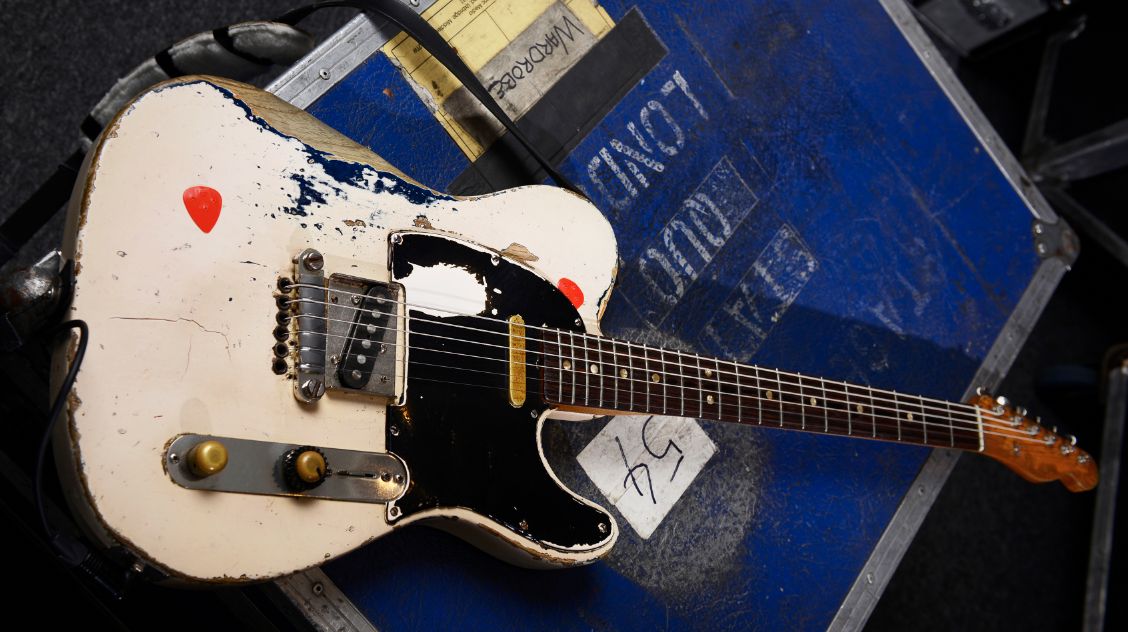 Gear & luthiery“A lot of sweat has gone into the wood”: Rick Parfitt’s “unbelievably weathered” No. 1 Tele is up for auction this monthMusicRadar
 Gear & luthierySharp Dressed Guitars! Gibson Custom 1959 & USA Billy Gibbons Pearly GatesAndertons Music Co (YouTube)
 Gear & luthieryThe inside story of Josh Homme’s brand new signature guitarGuitar.com
 Gear & luthieryHer Original Composition on a Rare Steel-String 😍🎸🎸 The guitar in this video: https://www.siccasguitars.com/products/ennio-giovanetti-2012-acustic 🎸 Siccas Luthiers — our own guitar line, set up and finally inspected in our Karlsruhe workshop: https://www.siccasguitars.com/collections/siccas-luthiers 💬 Questions about a guitar? Write us on WhatsApp: https://wa.me/4915565916795? 🎁 €50 welcome voucher when you join our weekly newsletter: https://mailchi.mp/siccasguitars/siccas-guitars-newsletter ▶ Become a Siccas Guitars Member from €4.99/monSiccasGuitars (YouTube)