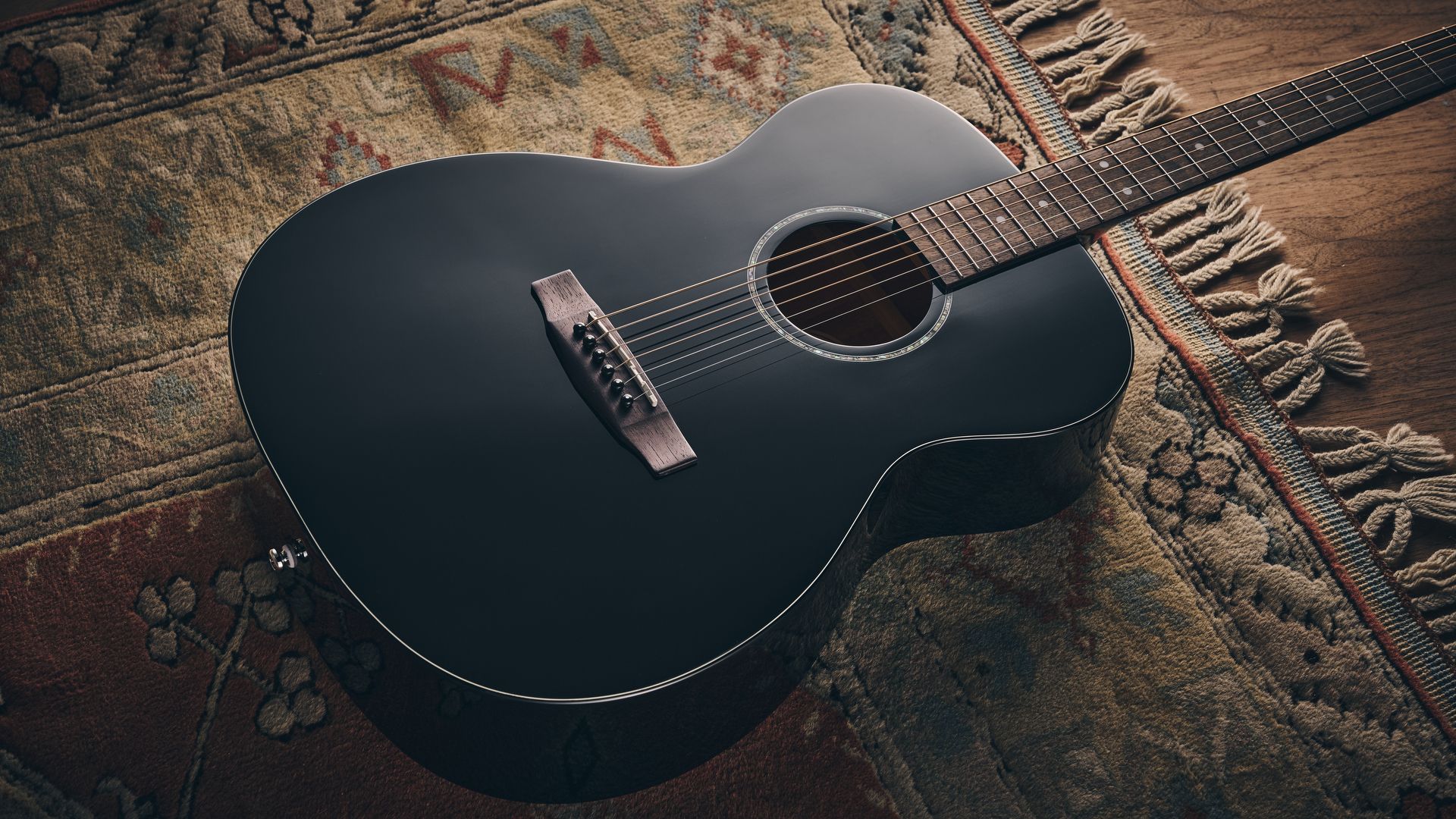
Cort L-60 review: "An exceptional sub-$300 budget acoustic guitar"
12 November 2026 · Source: Guitar World
The guitar-making giant delivers a brilliant no-frills acoustic that won't break the bank
What is it?
It’s easy to forget just how good modern guitarists have it today. Decades ago, finding an affordable, solid-topped acoustic guitar meant scouring pawnshops, braving questionable action, or settling for dead-sounding laminated boxes that made learning a chore. Today, thanks to refined manufacturing and fierce competition in the entry-to-mid-level market, value for money has reached an all-time high.
Affordable guitars like the Cort L-60 show how far budget-conscious acoustic design has come, offering genuine tonewood tops, refined bracing, and premium aesthetic appointments at prices that would have been unimaginable a generation ago.
Built around the smaller orchestra body style, the L-60 features a genuine solid spruce top, an Advanced X-bracing pattern designed to aid projection and dynamics, and a traditional dovetail neck joint. Black binding frames laminated mahogany back and sides, while the mahogany neck sports a laurel fingerboard.
(Image credit: Future)Up top we have a set of die-cast tuners, a PPS thermoplastic nut, and what Cort calls its “basic” headstock shape. Rounding out the specs is a laurel bridge and an ABS rosette designed to look like abalone.
There is now a lot of competition at this level
It’s worth noting that it has no electronics on board. This is just a straight-up acoustic guitar, although there is a CE version available with a cutaway and a pickup and preamp built in.
At a snidge under $300, this looks promising, but there is now a lot of competition at this level. So how does the L-60 fare against some cheap acoustic heavyweights? Well, let’s find out.
Specs
(Image credit: Cort)Launch price: $299 | £199 | €229 Made: Indonesia Body shape: OM (orchestra model) Body top: Solid Sitka spruce Top bracing: Advanced X-bracing Back & sides: Laminate mahogany Neck/shape: Mahogany / C-shape Scale/length: 25.5" (648 mm) Nut/width: PPS / 1 11/16" (43 mm) String spacing at bridge: 54 mm (~2 1/8") standard Cort OM spacing Fingerboard/Radius: Laurel / 15.75" (400 mm) Body depth: 101 mm Finish: Natural Gloss, Black Gloss (as reviewed) Bridge/pins: Laurel bridge / Black ABS pins with white dot Tuning Machines: Chrome die-cast sealed tuners Weight: 4.3 lbs (1.95 kg) Case: No Left-handed options: No Contact: Cort Guitars Build quality
(Image credit: Future)Build quality rating: ★★★★½
Black acoustics aren’t for everyone, but you don’t need to be Elvis Presley or Johnny Cash to appreciate them. I like the look of this guitar. It has an unfussy, simple, clean silhouette that appeals to me. You could say a lack of fancy appointments makes it basic, but I prefer to think of it as understated. And that can be classic.
This is a neatly constructed guitar with nothing at all out of place
Cor-Tek, the company behind Cort, manufactures guitars for a wealth of big brands from Ibanez to PRS, Squier to Schecter, so it should know a thing or two about making guitars, and well, it shows in this budget acoustic.
This is a neatly constructed guitar with nothing at all out of place. The finish is even and consistent over the entire instrument; the frets are well seated with no sharp edges, and the tuners feel smooth and plenty responsive.
Honestly, there’s nothing to nitpick here. The internal bracing is clean without unsightly glue squeezes, the neck joint sits tight against the body, and the binding has been neatly applied. For a sub-$300 instrument, the attention to detail is genuinely impressive.
Playability
(Image credit: Future)Playability rating: ★★★★½
I do have to keep reminding myself that this is a sub-$300 guitar
When I pick up the L-60, the first thing I notice is the neck profile. It’s a slim, beginner-friendly shape that feels tailored for newbies or players with smaller hands. It’s so slim that I can easily wrap my thumb fully over it with little to no effort. On that point, if you have particularly large hands, you may find it a little tight.
Out of the box, the action sits at a comfortable medium-low height of 1.6mm. There’s no fret buzz when digging in with a pick, yet it’s low enough that fretting bar chords near the nut doesn't turn into a finger workout. Some rookies may want it a little lower for the early stages of learning, but as it stands, for me, it feels pretty comfortable.
I found that the orchestra body shape sits comfortably against my torso whether I’m sat up playing “properly” or just lounging almost horizontal on the sofa in between ad breaks on the TV.
I will say that the finish on the neck is pretty thick. I’d personally prefer a satin finish on the back, as that is better at preventing your thumb from dragging during position switches, but that said, the finish does feel decent, if slightly glossy.
I do have to keep reminding myself that this is a sub-$300 guitar, though, and for that, it feels pretty great.
Sounds
(Image credit: Future)Sounds rating: ★★★★☆
It’s kind of hard to believe that the first-ever orchestra-size model, or OM, acoustic guitar was introduced by C.F. Martin & Co. way back in 1929.
Legend has it that it was originally designed to help banjo players transition to guitar during the swing band era. Built to cut through dense ensemble mixes with a punchy midrange, the OM-style has a more focused sound than its big brother, the dreadnought, but is louder and fuller than a parlor.
The tone is clear, direct, and mostly balanced
Nearly a century later, that classic blueprint remains one of the most versatile and beloved acoustic body shapes on the planet – and while I may not be a banjo player from the 1920s, I've always loved this size of acoustic.
Striking an open chord on the Cort L-60, the tone is clear, direct, and mostly balanced. As expected from a smaller spruce-and-mahogany body, the sound leans into the midrange with a focused attack. Sure, it doesn't rumble with the booming low end of a dreadnought, but the bass response is taut, articulate, and fairly satisfying to play.
The highs aren’t as sweet or harmonically complex as more expensive guitars, and it feels unfair to compare it to the hi-fi response of my Gibson J-45, but this Cort isn’t overly bright or glassy, either. It manages to avoid the harsh top end that often plagues cheaper entry-level acoustics.
Fingerstyle picking sounds crisp and clean, while light-to-medium strumming fills out nicely. It’s been a great sofa companion for the past couple of weeks, and one I keep picking up throughout the day, which is a good sign for any guitar.
Verdict
(Image credit: Future)Cort L-60 proves that you don't need to spend top dollar to get a genuinely good acoustic guitar
At the end of the day, the Cort L-60 proves that you don't need to spend top dollar to get a genuinely good acoustic guitar.
By focusing on a fundamental tone and neat construction rather than superficial glitz, Cort has delivered an affordable model that plays well, looks sleek, and sounds far better than its sub-$300 price tag suggests.
Whether you're a complete beginner looking for your first proper instrument or an experienced player seeking a reliable, hassle-free couch picker, the L-60 is a guitar that's well worth your time.
MusicRadar verdict: I'll get right to the point: the L-60 is an exceptional budget acoustic guitar that prioritizes essentials over unnecessary extras. It may seem like a plain Jane, but understated has its charms, and the solid spruce top, clean construction, and comfortable orchestra body make it one to watch in the sub-$300 price bracket.
Ratings scorecardTest
Results
Score
Build quality
Neatly constructed with an understated black finish and impressive attention to detail for its price.
★★★★½
Playability
A slim, beginner-friendly neck profile and comfortable orchestra body shape, ideal for newbies. They may prefer a lower action, though.
★★★★½
Sounds
Delivers a clear midrange-focused voice that never sounds too harsh.
★★★★☆
Overall
An impressive, budget-friendly solid-top acoustic that punches well above its weight class.
★★★★½
Also try
Fender CD-60S $199/£189/€229
With this Fender dreadnought, you have a leading brand producing an excellent acoustic guitar at an entry-level price. If you are looking for a larger guitar, then it's worth giving this one a try.
Read more: Fender CD-60S review
Yamaha FG800 $299/£279/€299
In my time in music retail, I've sold hundreds of these guitars over the years. Honestly, it may be modestly priced, but the sound generated by this beauty could easily come from a more expensive guitar, and in use, it’s reliable at holding its tune, too.
Read more: Yamaha FG800 review
D'Angelico Premier Gramercy $399/£329/€369
Well-made, easy to play, and with a visual flair that makes it stand out from the crowd, D'Angelico’s Premier Gramercy isn’t your average acoustic guitar for beginners, that’s for sure.
Read more: D'Angelico Premier Gramercy review
Hands-on videos
Cort Guitars & Basses
Best acoustic guitars for beginners: My top picks for new players, reviewed by a pro
More in this topic
 Fingerstyle & acousticBreaking in America: A Clip from Tommy Emmanuel: The Endless Road [Documentary Film]Tommy Emmanuel (YouTube)
 Fingerstyle & acousticWhy acoustic phenom Marcin is embracing electric guitarGuitar World
 Fingerstyle & acousticWatch Marcin turn up the volume on his heavy new single: “There is way more meat to the electric guitar”Guitar Player
 Fingerstyle & acousticMike Dawes: Playing Guitar Is Like Patting Your Head and Rubbing Your StomachPlaying percussive fingerstyle guitar can feel like patting your head and rubbing your stomach at the same time. Mike Dawes demonstrates the coordination involved in combining moving tapping-hand patterns, natural harmonics, and body percussion. With so much movement happening across the guitar, getting everything to work together takes patience and practice. It's a fascinating look at the physical coordination behind modern percussive fingerstyle guitar. Explore more guitar lessons and performaTrueFire (YouTube)