All Blues – Melody, Chords, and Improvisation
18 September 2026 · Source: JazzGuitar.be — Jazz Guitar Online lessons
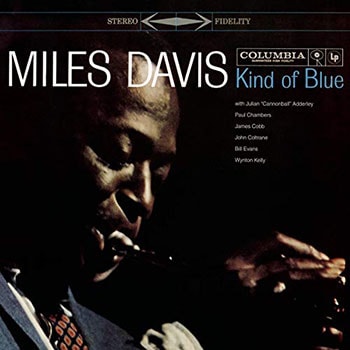
All Blues is one of Miles Davis’ best-known compositions and was recorded in 1959 for his album Kind of Blue. Its relaxed 6/8 rhythm, bluesy harmony, and simple melody make it relatively easy to learn, while still leaving room for more advanced ideas. All Blues is a 12-bar blues in G, but with a few […] The post All Blues – Melody, Chords, and Improvisation appeared first on Jazz Guitar Online | Free Jazz Guitar Lessons, Licks, Tips & Tricks. .
All Blues is one of Miles Davis’ best-known compositions and was recorded in 1959 for his album Kind of Blue. Its relaxed 6/8 rhythm, bluesy harmony, and simple melody make it relatively easy to learn, while still leaving room for more advanced ideas.
All Blues is a 12-bar blues in G, but with a few twists that set it apart from a standard blues. The tune has plenty of bluesy aspects, but it doesn’t have the usual blues chord progression.
Instead of using complex chord progressions, much of the music of Kind of Blue is based on modes and static harmony. This approach, known as modal jazz, gives the musicians freedom to develop melodic ideas.
While So What is based on the Dorian mode, All Blues is built around the Mixolydian mode. If you’re not familiar with these scales, take a look at our lesson on guitar modes.
In this lesson, you’ll learn the melody and how to improvise over All Blues. You’ll also get a guitar version of the original piano chords. Next, we’ll explore the bass line, harmony, and the scales you can use to solo over the changes, with eight example licks to show different ideas. At the end, you’ll learn a full solo that brings everything together.
Lesson Content
All Blues Melody
All Blues Chords
All Blues Bass Line
Harmonic Analysis & Scales
Scales for Improvising over G7
Scales for Improvising over Bars 5 and 6
Scales for Improvising over D7#9 and Eb7#9
All Blues Solo
Download the PDF, GP file, and backing track with JGO+ (Click here to join)
Recommended listening:
Miles Davis – Kind of Blue (1959)
Miles Davis (fast version) – My Funny Valentine: Miles Davis in Concert (1964)
George Benson – Jazz on a Sunday Afternoon Vol. I (1973)
Kenny Burrell – Handcrafted (1978)
Oscar Peterson (with Joe Pass) – Face to Face (1982)
Lenny Breau – Quietude (1985)
Larry Carlton – Last Nite (1987)
Emily Remler – Cookin’ at the Queens (1988)
Philip Catherine – September Sky (1988)
Larry Coryell – Monk, Trane, Miles & Me (1999)
Julian Lage – Encore (2009)
Chick Corea – Trilogy 2 (2019)
George Coleman / Mike Stern / Ron Carter / Jimmy Cobb – 4 Generations of Miles (2002)
All Blues – The Melody
The melody of All Blues is based mainly on the G Mixolydian mode, switching to G Dorian in bars 5 and 6.
In this arrangement, I play the melody two times. First, I use only single notes in the lower register. Then, I move the melody up an octave, add some harmonies in sixths, and include a few chords to make the guitar sound fuller.
All Blues – Chords
These All Blues chords are based on the characteristic piano vamp Bill Evans plays on the original recording. On guitar, you can get a similar sound by using simple three-note chord shapes that follow the changes.
You can also use the first four bars of these chords as an intro.
(% means the chords remain the same as in the previous bar)
All Blues – Bass Line
The bass line of All Blues is a key part of what makes the tune stand out. It stays the same throughout the first eight bars, including bars 5 and 6.
This is important because even though the chords in bars 5 and 6 are usually written as C7, the bass keeps playing the G line. This creates a C7 sound on top of a G pedal, which is also why G Dorian fits so well over these bars.
All Blues – Harmonic Analysis & Scales
Form: 12-bar blues
Key: G major
The main scale you can use to improvise over All Blues is G Mixolydian (G A B C D E F). This scale fits the G7 sound that dominates most of the tune.
Bars 5 and 6 are usually written as C7, but that label does not fully capture what happens in the original recording. The bass keeps playing G while the piano plays different versions of C7 on top, which creates a C7/G sound.
When you improvise over these two bars, you can switch to the G Dorian mode (G A Bb C D E F). The only difference from G Mixolydian is that B changes to Bb. This Bb is the flat third of G and the flat seventh of C7, which gives these bars their unique bluesy sound.
The chart below shows the full chord progression for All Blues, along with a scale analysis.
Scales for Improvising over G7
There are several scales you can use to improvise over the G7 sections of All Blues. Here are three of the most useful choices.
G Mixolydian
As mentioned above, the first mode of choice over G7 is the G Mixolydian mode:
Try not to stick to just one position. Practice playing the scale all over the neck:
G Major Blues Scale
You can also use the G major pentatonic scale (G A B D E) over G7, or the G major blues scale, which adds the flat third (Bb).
Here’s the root position of the G major blues scale. Again, don’t limit yourself to this position, and learn to use the scale across the entire neck. The blue note (Bb) is shown in blue.
The Bb works particularly well as a passing note: try sliding, hammering on, or pulling off from Bb to A or B. This creates some of the characteristic blues phrasing you’ll hear in All Blues.
G Minor Blues Scale
For a bluesier sound, you can also use the G minor pentatonic scale (G Bb C D F) or the G minor blues scale (G Bb C Db D F) over G7.
The minor blues scale sounds great over a dominant chord because the Bb in the scale and the B natural in G7 create tension. That clash between the minor third and major third is a key part of the blues sound.
Example 1 – G7
This first example uses the G Mixolydian scale in two positions, combined with chromatic notes and a Dsus4 arpeggio in the second bar.
Because of the bluesy character of All Blues, techniques such as double stops also work well, as you can hear in the last bar.
Example 2 – G7
In modal tunes like All Blues, the harmony doesn’t change a lot, so it’s important to find other ways to create variety in your solos. One way to do this is by using large intervals.
This example uses major and minor sixths derived from the G Mixolydian mode.
Example 3 – G7
Using arpeggio substitutions is another way to create more interesting sounds over a static G7 chord.
In the first bar of this example, I play an Fmaj7 arpeggio over G7.
Fmaj7 Arpeggio F A C E
Played over G7 b7 9 4 13
In bar 2, I play a Bm7b5 arpeggio over G7, outlining a G9 sound.
Bm7b5 Arpeggio B D F A
Played over G7 3 5 b7 9
Scales for Improvising over Bars 5 and 6
In many lead sheets, bars 5 and 6 of All Blues are written as C7, which is typical for a blues in G. But on the original recording, the bass keeps playing a G pedal while the harmony shifts from a G major to a G minor sound.
Saxophonist Jimmy Heath recalled that Miles specifically told his musicians not to go to the IV chord in this part of the tune. Instead, he wanted to keep the harmony modal, moving from G Mixolydian to a G Dorian sound.
G Dorian Mode
G Dorian uses the same notes as C Mixolydian, so this scale fits well whether you focus on the G pedal in the bass or the C7 harmony above.
G Minor Blues Scale
The G minor blues scale is another good choice for bars 5 and 6.
A good way to play this is to use G Mixolydian over the G7 sound in bars 1 to 4, then switch to the G minor blues scale in bars 5 and 6. Changing from B natural to Bb signals the move into the C7/G sound and adds a strong blues feel.
You could use the G minor blues scale over G7, but saving it for bars 5 and 6 creates more contrast and makes it stand out more.
Example 4 – From G Mixolydian to G Dorian
This example demonstrates three ideas:
1. In the first three bars, I play a phrase and then transpose it. Repeating and developing short melodic patterns like this works especially well in modal tunes, where the harmony doesn’t change much.
2. In a regular blues in G, bar 5 usually goes from G7 to the IV chord, C7. In All Blues, though, the bass stays on G and the harmony shifts from G major to G minor. Still, you can treat bar 4 much like you would when moving to C7 in a standard blues.
In bar 4, I use the G altered scale to build tension, which then resolves into bar 5.
3. In the last two bars, I switch to G Dorian and highlight the change from B natural over G7 to Bb over the G minor sound.
Scales for Improvising over D7#9 and Eb7#9
The D7#9 and Eb7#9 chords in bars 9 and 10 are the trickiest part of All Blues.
These dominant chords usually show up in minor blues, but in this case, they appear in the context of a major blues.
The notes Miles Davis uses over these chords make it hard to pick just one scale, and it’s not clear if he was even thinking about scales here.
In his solos, Miles uses both the and the natural 5 over these chords. The altered scale is a common choice over a 7#9 chord, but it doesn’t contain the natural 5.
Here are two scales you can use that include both of these notes.
The Half-Whole Diminished Scale
The half-whole diminished scale, also known as the dominant diminished scale, has both the and the natural 5.
Use D half-whole diminished over D7#9 and Eb half-whole diminished over Eb7#9.
The G Harmonic Minor Scale
You can also use the G harmonic minor scale (G A Bb C D Eb F#) over D7#9.
Relative to D7, these notes give you:
11 – 5 – b13 – b7 – 1 – b9 – 3
F natural (#9) isn’t part of G harmonic minor, but you can add it as a bluesy chromatic note. This way, you get both the (F) and the natural 5 (A) that Miles uses.
The Altered Scale
Another approach is to treat both chords as fully altered dominants. In that case, use the D altered scale over D7#9 and the Eb altered scale over Eb7#9.
This creates a more altered sound and leaves out the natural 5, but it works well if you want to add more tension to these two chords.
Example 5 – D7#9 Eb7#9
In this example, I use the G harmonic minor scale and add F natural (which is the b7 of G and of D7). F is the second note in the phrase.
Example 6 – D7#9 Eb7#9
This example uses simple dominant 7 arpeggios mixed with chromatic notes.
Example 7 – D7#9 Eb7#9
In this example, I repeat a simple pattern that emphasizes the (F) over D7#9, and finish with a chromatic idea in the last bar.
Example 8 – D7#9 Eb7#9
In this last example, I use two minor pentatonic scales, following each chord as it moves up a half step.
Over D7#9, I use the D minor pentatonic scale:
D Minor Pentatonic Scale D F G A C
Played over D7#9 1 11 5 b7
Over Eb7#9, I use the Eb minor pentatonic scale, which gives you the same intervals relative to Eb7: 1,, 11, 5, and b7.
All Blues – Solo
To wrap up this lesson, here is a two-chorus solo over All Blues that uses the ideas from the earlier examples.
The solo uses a mix of arpeggios, Mixolydian and altered scales, and the minor blues scale to create melodic lines that follow the harmony while keeping the tune’s bluesy character.
Download the PDF, GP file, and backing track with JGO+ (Click here to join)
The post All Blues – Melody, Chords, and Improvisation appeared first on Jazz Guitar Online | Free Jazz Guitar Lessons, Licks, Tips & Tricks..
More in this topic
 Jazz & fusionOriginal Danzig guitarist John Christ dies at 61Guitar World
 Jazz & fusionPlay G Minor Over C7? Wolf Marshall Explains This Bebop TrickTrueFire (YouTube)
 Jazz & fusionMake Your Guitar Arpeggios Sound More Like Bebop | David ShorrTrueFire (YouTube)
 Jazz & fusionYour 2027 Jazz Grammy Nominations PrimerE verybody loves the Grammys just as much as everybody hates the Grammys. Most of us feel the latter kind-of-way, because long ago Jethro Tull … Read More "Your 2027 Jazz Grammy Nominations Primer" The post Your 2027 Jazz Grammy Nominations Primer appeared first on JazzTimes .JazzTimes